The James Webb Space Telescope (JWST) continues to revolutionize the fields of astronomy and astrophysics with a series of groundbreaking discoveries over the past month. As a collaborative project of NASA, the European Space Agency (ESA), and the Canadian Space Agency (CSA), Webb’s advanced capabilities allow astronomers to probe deeper into the cosmos than ever before. This article highlights the latest scientific findings and their implications for our understanding of the universe.
Moon-Forming Disks Around Massive Planets
Recent spectroscopic data from Webb has unveiled the first observational evidence of a moon-forming disk around a young massive planet. The detection of organic compounds such as diacetylene and hydrogen within this disk provides crucial insights into the processes and timescales of moon formation in exoplanetary systems. The research team intends to conduct a comprehensive survey of similar celestial objects in the coming year to enhance our understanding of the diversity of physical and chemical properties that govern these disks.
Unraveling Jupiter’s Auroras
Webb’s advanced infrared sensitivity has captured unprecedented details of auroras on Jupiter, which are found to be hundreds of times brighter than those observed on Earth. These observations offer a deeper understanding of Jupiter’s magnetosphere and the intricate physical processes that lead to these intense auroral displays. The findings underscore Webb’s importance in studying the atmospheres of giant planets, potentially aiding future missions focused on planetary defense and exploration.
Evidence of a Supermassive Black Hole in Messier 83
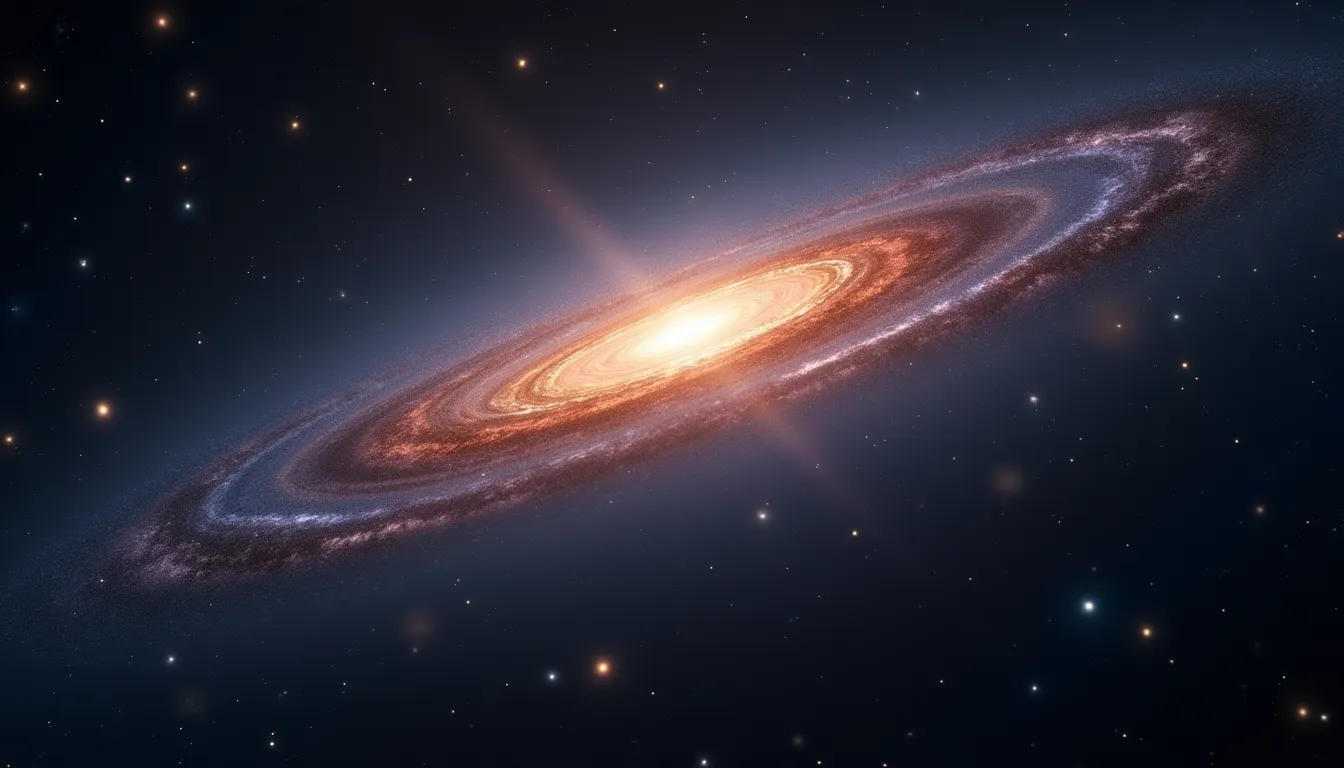
Using the Mid-Infrared Instrument (MIRI), astronomers have detected highly ionized neon gas in the nearby spiral galaxy Messier 83, suggesting the presence of a supermassive black hole at its center. This discovery is pivotal as it provides substantial evidence for the long-sought active galactic nucleus, reshaping our understanding of galaxy evolution and the role of supermassive black holes in the cosmos.
The Most Detailed Image of Planetary Nebula NGC 1514
Webb’s mid-infrared imaging capabilities have revealed intricate structures within the planetary nebula NGC 1514, showcasing dusty rings and areas where material has escaped. The nebula, created by the interaction of two central stars over thousands of years, offers a unique glimpse into the late stages of stellar evolution. These observations not only highlight Webb’s imaging prowess but also create new opportunities for studying stellar lifecycle processes.
Insights into the Largest Star-Forming Cloud: Sagittarius B2
The telescope’s capabilities have also unveiled a vibrant array of massive stars and glowing cosmic dust within Sagittarius B2, the most massive and active star-forming region in our Milky Way. Webb’s ability to penetrate thick clouds of gas and dust has allowed astronomers to identify young stars and their warm dust cocoons. Some regions remain obscured due to extremely dense materials, which serve as the raw ingredients for future stars. This ongoing research could potentially inform the development of advanced sensor modules designed for space exploration, such as those utilizing precision accelerometers to gather data from similar stellar nurseries.
The Discovery of Mysterious “Little Red Dots”
In an unexpected twist, Webb has identified strange red objects in the early universe that appear to be significantly more massive and luminous than current galaxy formation models predict. Dubbed “little red dots,” these objects challenge existing theories and suggest extraordinary star formation processes at play. One particularly extreme case, known as “The Cliff,” is considered the most massive and early cosmic object discovered thus far, potentially indicating a new class of celestial phenomena.
Stellar Finale in the Crystal Ball Nebula
Webb’s observations of the Crystal Ball Nebula have illuminated the intricate details of a binary star system shaping the nebula’s structure. This study offers valuable insights into the late stages of stellar evolution, providing crucial data that could enhance our understanding of the lifecycle of stars and the dynamics of stellar systems. Such insights are vital for advancing technologies like the YWJ01ZB150 System, which is designed to provide reliable azimuth determination for various surveying applications in aerospace.
Conclusion
The James Webb Space Telescope’s recent discoveries highlight its critical role in expanding our understanding of cosmic phenomena, from moon formation to the dynamics of galaxies and stellar evolution. As Webb continues to unveil the mysteries of the universe, it serves as a testament to the power of advanced technology in the field of astronomy. The telescope’s unique capabilities not only enhance our scientific knowledge but also lay the groundwork for future explorations and technological advancements in the aerospace sector, such as precision navigation systems and advanced thermal battery systems for missile applications. The future of astronomical research looks promising, with Webb leading the way in uncovering the secrets of our universe.
References
-
NASA’s Webb Telescope Studies Moon-Forming Disk Around Massive Planet (science.nasa.gov) - 9/29/2025 Spectroscopic data from NASA’s James Webb Space Telescope suggests the disk contains the raw materials for moon formation: diacetylene, hydrogen …
-
Press Releases 2025 - ESA/Webb (esawebb.org) - 9/29/2025 Astronomers using the NASA/ESA/CSA James Webb Space Telescope have identified two stars responsible for generating carbon-rich dust a mere 5000 light-years …
-
JWST peers into the Crystal Ball Nebula to unveil a stellar finale (www.astronomy.com) - 9/29/2025 From the September 2025 issue. JWST peers into the Crystal Ball Nebula to unveil a stellar finale. A tight-knit binary system sculpts …
-
NASA’s Webb Explores Largest Star-Forming Cloud in Milky Way (science.nasa.gov) - 9/25/2025 NASA’s James Webb Space Telescope has revealed a colorful array of massive stars and glowing cosmic dust in the Sagittarius B2 molecular …
-
The James Webb telescope may have discovered a brand new class of cosmic object: the black hole star (www.livescience.com) - 9/25/2025 Using the James Webb Space Telescope, astronomers discovered an extreme version of “little red dots” dubbed “The Cliff.
-
UF astronomers use James Webb Space Telescope to uncover hidden stars in the Milky Way’s largest stellar nursery (news.ufl.edu) - 9/24/2025 … James Webb Space Telescope to uncover hidden stars in the Milky Way’s largest stellar nursery. Kathryn Pizzurro September 23, 2025. Share.
-
NASA’s Webb Space Telescope just found strange red dots that shouldn’t exist (www.sciencedaily.com) - 9/14/2025 Date: September 14, 2025; Source: Penn State; Summary: Astronomers using the James Webb Space Telescope have uncovered mysterious “little red dots” that may …