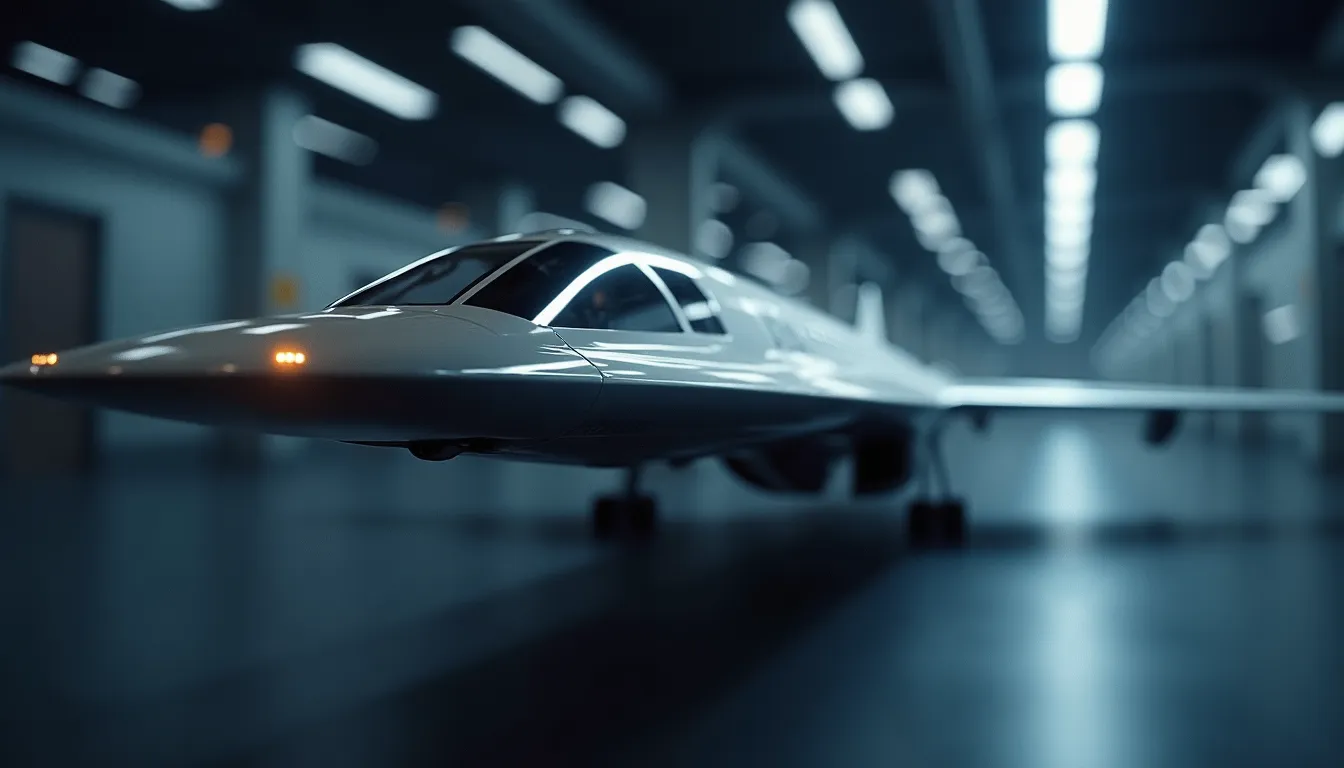
The aerospace and defense sectors are on the brink of a technological renaissance, characterized by significant advancements in artificial intelligence (AI), hypersonic technologies, and sustainable practices. As these innovations emerge, they are not only reshaping operational efficiencies but also paving the way for a more resilient and environmentally friendly future.
Key Technological Innovations
Artificial Intelligence and Autonomous Systems
Artificial intelligence is at the forefront of revolutionizing aerospace operations. By enabling smarter flight systems and enhancing automation, AI has shown potential to reduce development and maintenance times by as much as 30%. Moreover, the integration of AI into autonomous defense systems is enhancing safety and operational performance, particularly in high-stakes scenarios.
Urban Air Mobility (UAM) is a prime example of this transformation. The commercial deployment of AI-driven electric vertical takeoff and landing (eVTOL) aircraft is imminent, promising to alleviate urban congestion and modernize city transport systems. This shift not only enhances efficiency but also aligns with global sustainability goals.
Hypersonic Technologies
Hypersonic technologies, exemplified by Lockheed Martin’s hypersonic launcher and Hermeus’s Mach 5 aircraft, are advancing at an unprecedented pace. These innovations bring forth capabilities of extreme speed and maneuverability, drastically reducing response times in both military and commercial aviation. Furthermore, ongoing research is focused on environmentally friendly supersonic travel, incorporating advanced noise reduction techniques to mitigate the impact of sonic booms, thus addressing public concern over noise pollution.
Advanced Materials
A breakthrough in aerospace materials has arrived with NASA’s GRX-810 superalloy, awarded the title of Commercial Invention of the Year. This remarkable 3D-printable oxide dispersion strengthened superalloy can withstand temperatures exceeding 2,000°F while offering durability that lasts over 1,000 times longer than traditional alloys. Composed primarily of nickel, cobalt, and chromium with a ceramic oxide coating, GRX-810 stands to revolutionize sustainable aviation and space exploration by enhancing fuel efficiency and reducing operational costs.
Satellite and Space Technologies
In the realm of satellite technologies, FireSat is making waves as it was recently recognized among TIME’s Best Inventions of 2025. This satellite constellation is specifically designed for the early detection and tracking of wildfires, utilizing a sophisticated multispectral electro-optical/infrared payload. With capabilities to monitor Earth every 20 minutes, the constellation aims to protect lives and ecosystems by providing timely data for emergency response. The full deployment of over 50 satellites is anticipated by 2030, marking a significant leap in environmental monitoring capabilities.
Other Emerging Technologies
Further innovation includes DARPA’s X-65 active-flow-control demonstrator, which is set to resume flight testing. This project aims to explore novel aerodynamic control methods to enhance aircraft performance. Companies like Boeing are also making strides in developing hybrid-electric VTOL aircraft and autonomous ground control avoidance systems for military jets. Additionally, AI-powered satellite controllers have achieved significant milestones, demonstrating real-world attitude adjustments in orbit.
Sustainability and Environmental Focus
As the aerospace industry grapples with environmental challenges, there is a marked shift toward sustainability. The adoption of sustainable aviation fuels, electric propulsion systems, and decarbonization technologies is gaining momentum. Notably, the U.S. Department of Defense’s proposed budget for 2025 includes $849.8 billion, heavily investing in AI, unmanned systems, and space technologies that are aligned with sustainability initiatives. This focus on environmental stewardship is critical in fostering resilience across the industry.
Notable Industry Trends
The integration of AI and digitization is accelerating innovation cycles across various aspects of aerospace, including design, manufacturing, and operational processes. Technologies like high-performance MEMS accelerometers and advanced sensor modules are becoming integral in enhancing precision and reliability in navigation systems.
Moreover, geopolitical competition is fueling advancements in semiconductors, quantum computing, and AI data centers, which are essential for developing cutting-edge aerospace and defense technologies. Research into reusable spacecraft and modular unmanned aerial vehicles (UAVs) is also progressing, with startups and established firms alike driving the boundaries of spaceflight and cargo delivery.
Conclusion
The aerospace and defense sectors are experiencing a transformative phase, driven by innovations in AI, hypersonic technologies, and advanced materials. These developments not only promise enhanced operational efficiencies but also align with global sustainability efforts, setting the stage for a future where technology serves both humanity and the environment. As we move forward, continued investment and research in these areas will be crucial in shaping a safer, more efficient, and environmentally responsible aerospace industry.
References
-
Industry News Archives - AIAA - Shaping the future of aerospace (aiaa.org) - 12/5/2025 Aviation Week reports, “Boeing CFO Jay Malave said Dec. 2 that the company expects to report a $2 billion cash burn for all of 2025, better than…
-
Space shuttle design study maps path to breakthrough inventions (www.spacedaily.com) - 12/5/2025 Los Angeles CA (SPX) Dec 05, 2025 - Researchers examining NASA’s space shuttle development argue that the agency’s design approach offers a …
-
Driving Innovation: Key Trends Transforming Aerospace and … (orbysa.com) - 12/2/2025 The aerospace and defense industries are undergoing a substantial transformation driven by advancements in AI, autonomous systems, hypersonic …
-
The Week In Technology, Dec. 1-5, 2025 (aviationweek.com) - 12/2/2025 X-plane escapes cancellation; China’s hybrid powertrains; Modular cargo UAV, India’s indigenous aircraft.
-
How AI in aerospace is redefining the skies in 2025 - FounderNest (www.foundernest.com) - 10/23/2025 AI in aerospace is transforming flight through smarter design, sustainability, and automation, reshaping the industry for a greener future.
-
FireSat Honored Among TIME Best Inventions of 2025 (www.earthfirealliance.org) - 10/9/2025 Recognized in the Aerospace category, FireSat joins a collection of the world’s most groundbreaking inventions curated by TIME editors.
-
NASA’s Breakthrough Superalloy Wins Commercial Invention of the … (www.knobbe.com) - 10/2/2025 NASA Glenn Research Center’s new material, GRX-810, has been recognized as the Commercial Invention of the Year by NASA’s Inventions and …
-
Significant Developments in Aerospace Industry Signal Shift Toward … (www.alm.com) - 7/9/2018 Published on December 3, 2025, this comprehensive shift reflects ongoing commitments to environmental stewardship and industry resilience.
-
FireSat Honored Among TIME Best Inventions of 2025 (www.futurespaceflight.com) Recognized in the Aerospace category, FireSat joins a collection of the world’s most groundbreaking inventions curated by TIME editors.