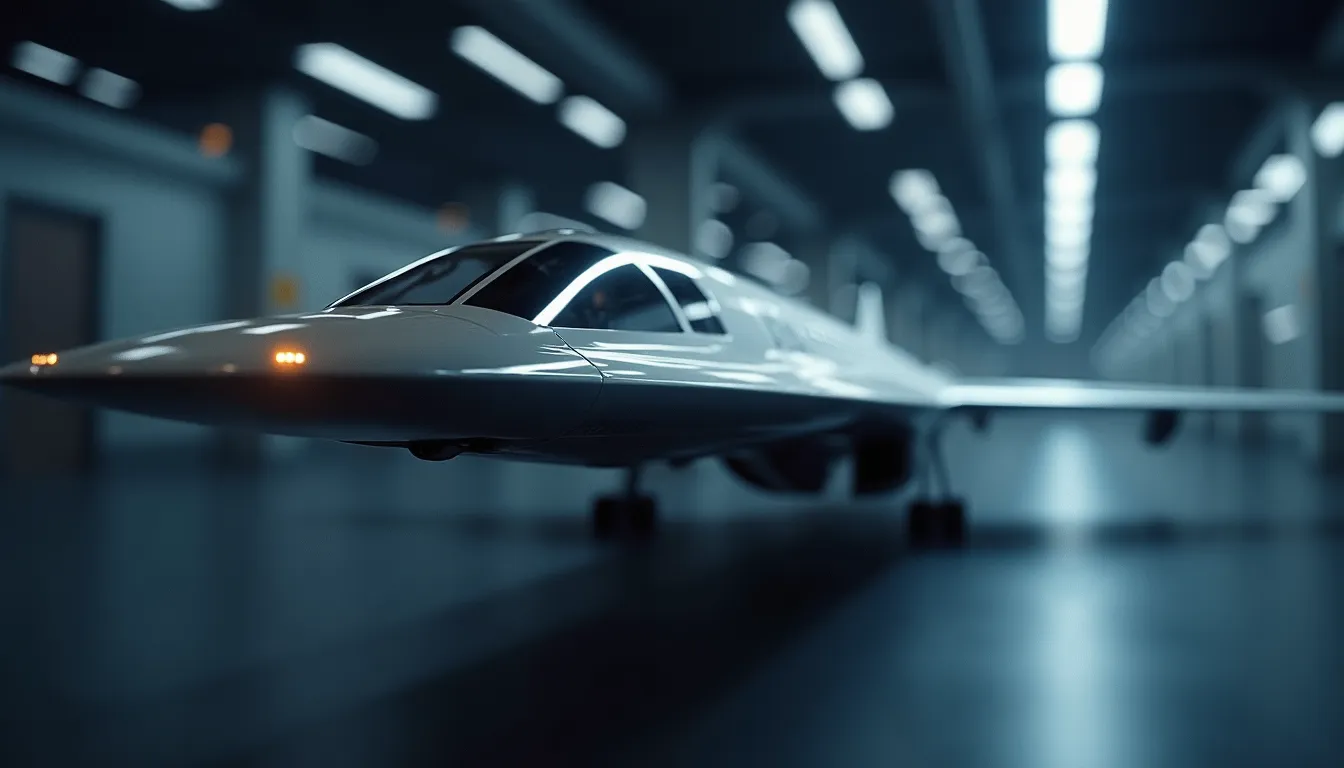
In the rapidly evolving landscape of aerospace and defense, recent developments underscore the significance of cutting-edge technologies like artificial intelligence (AI), autonomous systems, hypersonic capabilities, advanced satellite systems, and sustainable aviation technologies. These innovations are not only enhancing operational capabilities but also redefining the strategic priorities within these sectors.
The Role of Artificial Intelligence in Aerospace and Defense
Artificial intelligence stands at the forefront of advancements in both aerospace and military operations. From improving predictive maintenance protocols to enhancing threat detection and autonomous operations, AI is becoming indispensable.
Military training simulations increasingly utilize AI-driven decision support systems, enabling personnel to engage in realistic, high-stakes scenarios without the associated risks. Moreover, real-time threat monitoring systems are now standard in defense equipment, allowing for faster responses and improved situational awareness. As noted by experts at PTC, “AI is revolutionizing how military forces analyze data, predict outcomes, and prepare for potential conflicts.”
Autonomous Systems: The Future of Combat Operations
Unmanned aerial vehicles (UAVs) and autonomous combat platforms are redefining battlefield dynamics. The deployment of swarming drones enables faster, smarter operations that adapt mid-flight to support complex missions beyond mere surveillance. These systems are equipped with advanced sensor modules, such as the Advanced Sensor Module, which integrates a three-axis gyroscope, accelerometer, and magnetic sensor for enhanced motion sensing capabilities.
These innovations are not limited to military applications; they extend into commercial aviation, where autonomous systems are set to improve efficiency and reduce operational costs. The integration of precision accelerometers and high-performance MEMS accelerometers enhances navigation and operational effectiveness across various platforms.
Hypersonic Technologies: A New Era of Speed
The development of hypersonic missiles and aircraft, such as Lockheed Martin’s hypersonic launcher and Hermeus’s Mach 5 aircraft, is revolutionizing both military and commercial aviation. Hypersonic technologies offer unmatched speed and maneuverability, drastically reducing response times in critical situations.
Furthermore, advancements in commercial supersonic travel aim to mitigate environmental impacts, with designs focusing on noise reduction to minimize sonic booms. This shift towards sustainable hypersonic travel is indicative of a broader trend towards environmentally conscious aviation.
Advanced Satellite Capabilities
The landscape of satellite technology is undergoing a transformation, characterized by miniaturization, constellations of small satellites in low Earth orbit (LEO), and very high throughput satellites (VHTS). These innovations enable terabyte-per-second data transmission, significantly enhancing communication, surveillance, and geospatial intelligence capabilities.
Sustainable propulsion systems for satellites are also gaining traction, ensuring that advancements in space technology align with environmental sustainability goals. The continued investment in these technologies reflects a commitment to improving global connectivity and operational efficiency.
Sustainable Aviation Technologies: A Greener Future
The aerospace industry is increasingly focused on sustainability, with innovations such as electric vertical takeoff and landing (eVTOL) aircraft, hydrogen propulsion systems, and sustainable aviation fuels (SAFs) making headlines. These technologies aim to reduce carbon emissions and improve fuel efficiency, addressing the growing demand for environmentally friendly aviation solutions.
The integration of high-precision advanced navigation systems, utilizing fiber optic sensing coils, further supports the development of these sustainable solutions by enhancing the accuracy and stability of navigation systems across various platforms.
Emerging Defense Technologies
Emerging technologies such as directed energy weapons and the Internet of Military Things (IoMT) are enhancing operational flexibility and real-time data exchange in defense operations. The application of nanotechnology in self-healing armor systems represents a significant leap in protective measures for military personnel and equipment.
As the defense sector continues to innovate, companies are reporting substantial sales increases and backlogs, particularly in the drone and missile systems market, reflecting strong investment growth.
Conclusion
The aerospace and defense industries are undergoing a substantial transformation driven by advancements in AI, autonomous systems, hypersonic technologies, satellite capabilities, and sustainability initiatives. As these technologies evolve, they promise to reshape operational paradigms and enhance military capabilities, ensuring that both sectors remain at the forefront of global innovation. Looking ahead, the integration of these advancements will not only redefine defense strategies but also pave the way for a more sustainable and technologically advanced future in aviation.
References
-
The Week In Technology, Dec. 1-5, 2025 (aviationweek.com) - 12/2/2025 X-plane escapes cancellation; China’s hybrid powertrains; Modular cargo UAV, India’s indigenous aircraft.
-
Top Aerospace Technology Trends Driving the Future of Flight - BQP (www.bqpsim.com) - 11/19/2025 Discover 7 transformative aerospace technology trends from AI-driven design to quantum-powered simulation reshaping how aircraft are designed, built, …
-
2026 Aerospace and Defense Industry Outlook | Deloitte Insights (www.deloitte.com) - 11/13/2025 The aerospace and defense sector is entering a new phase of expansion, driven by advancements in AI, digital sustainment, and increasing …
-
Top 10 Aerospace and Defense Industry Trends | PTC (www.ptc.com) - 9/12/2025 Top 10 Aerospace and Defense Industry Trends · Implementation of new AI technologies · Increase of cybersecurity initiatives · Growing emphasis on …
-
Emerging trends in aerospace and defense 2025 - Dubai Airshow (www.dubaiairshow.aero) - 8/26/2025 “The Dubai Airshow 2025 conference is a vital platform for ideas and innovations that will define the next decade and beyond of aviation, space and defence.
-
New Technology Trends in Aerospace and Defense Industry [2025] (www.epicflow.com) - 8/21/2025 Current Trends in Aerospace Industry Remaining in 2025 · 1. Facilitating Decarbonization. · 2. Artificial Intelligence. · 3. 3D Printing. · 4.
-
Aerospace & Defense Industry Report – First Half 2025 - FOCUS (focusbankers.com) - 8/6/2025 Market & Investment Trends · Defense-tech VC flourished: over 400 firms raised nearly $13 billion in H1 2025—but uncertain exit environments due …
-
Top 5 Emerging Technologies in the Aerospace & Defence Sector (www.conro.com) - 4/23/2025 From AI in aerospace and defence to revolutionary new forms of flight and next-gen satellites, the sector is evolving fast.
-
Aerospace & Defense Outlook: Future Tech [2025] (www.logic-fruit.com) - 2/13/2025 Trends in the Aerospace Industry in 2025 · Artificial Intelligence · Digitization · Additive Manufacturing or 3D Printing · Advanced Satellite …
-
[PDF] Emerging trends in aerospace and defense 2025 (assets.kpmg.com) Geopolitical competition over access to technology (such as semiconductors, quantum computing technologies and AI data centers) is encouraging the development …