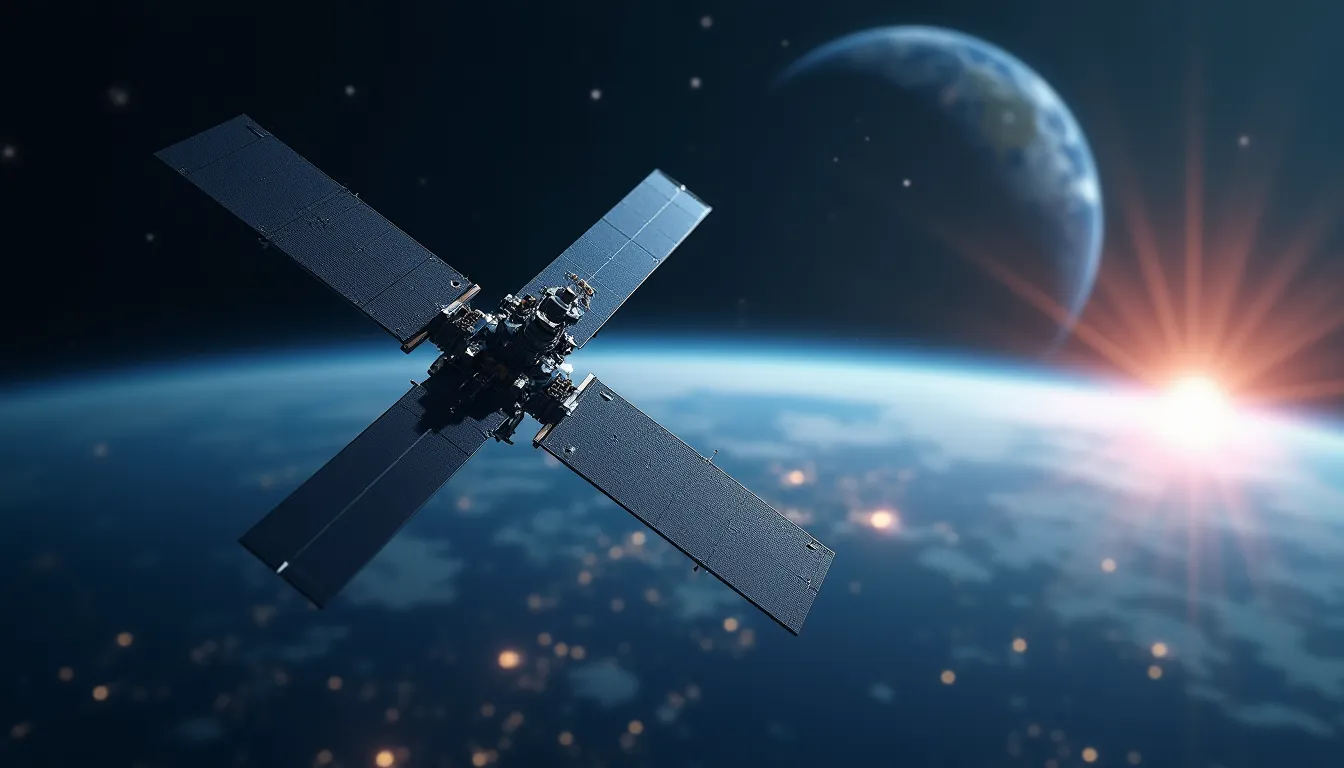
Recent advancements in the satellite sector are transforming the landscape of aerospace, defense, and technology. The integration of artificial intelligence (AI) into satellite operations, the expansion of satellite connectivity, innovations in propulsion technologies, and new cooperative ventures in navigation systems are driving these changes.
AI Integration in Satellite Operations
AI is increasingly becoming a cornerstone of satellite communications and operations. Experts from leading companies such as Eutelsat, Space42, Sky Perfect JSAT, and Spire Global emphasize AI’s transformative role in enhancing signal processing, network management, and predictive maintenance. By leveraging onboard AI and edge computing, satellites can process data in real-time while in orbit, significantly reducing latency and improving overall resilience.
“The fusion of multi-source data, including orbital imagery and ground sensor inputs, allows for dynamic Earth observation capabilities that provide actionable insights, particularly in disaster response and environmental monitoring,” stated a representative from Spire Global. The industry anticipates that within five years, autonomous satellite constellations will optimize resource allocation and operational efficiency in real time.
Evolving Satellite Connectivity Trends
The landscape of satellite connectivity is rapidly evolving, particularly with initiatives like Amazon’s Project Kuiper, which has successfully launched over 100 low Earth orbit (LEO) satellites as of September 2025. This ambitious project aims to deliver broadband and mobile satellite services to underserved regions, addressing connectivity gaps worldwide.
The trend towards multi-orbit hybrid connectivity—combining geostationary (GEO), medium Earth orbit (MEO), and LEO satellites—enables faster and more reliable data services. Partnerships, such as that between Apple and Globalstar, further illustrate this trend, allowing users to send emergency messages directly from their smartphones, showcasing the growing importance of mobile satellite services in everyday life.
Advances in Small Satellite Propulsion Technologies
A recent survey of small satellite propulsion systems indicates a significant increase in technology readiness levels (TRL) for propulsion technologies. The diversity and number of propulsion systems available have steadily grown over the past five years, reflecting ongoing innovation in small satellite maneuvering and mission capabilities.
These advancements are crucial for enhancing the operational lifespan and flexibility of small satellites, which are increasingly essential in both commercial and defense applications. The development of high-performance systems, such as precision accelerometers and quartz MEMS gyroscopes, is integral to improving navigation and maneuvering accuracy in these small satellites.
New Cooperative Efforts in Satellite Navigation
International collaboration is becoming a hallmark of advancements in satellite navigation. Notably, the partnership between the UAE’s National Space Science and Technology Center (NSSTC) and Thales Alenia Space aims to enhance the resilience and performance of Global Navigation Satellite Systems (GNSS) through Low Earth Orbit (LEO) Positioning, Navigation, and Timing (PNT) systems.
This cooperation, announced on November 19, 2025, highlights the potential of LEO-based navigation solutions to revolutionize the accuracy and reliability of satellite navigation, which is critical for both civil and military applications.
Tactical Satellite Innovations
In the realm of defense, the TacSat-3 tactical satellite exemplifies the shift toward rapid, on-orbit data processing. Equipped with advanced hyperspectral imaging capabilities, TacSat-3 can process around 100 hypercube data products monthly, providing military operations with quicker data exploitation times. This capability enhances situational awareness and operational readiness, showcasing the importance of advanced sensor modules in modern tactical applications.
Addressing Space Debris Challenges
Despite the advancements, challenges remain, particularly concerning space traffic management and safety. A notable incident occurred in November 2025 when China’s Shenzhou-20 spacecraft was struck by space debris, underscoring the ongoing risks associated with increased satellite activity in orbit. This incident serves as a wake-up call for the industry to prioritize space debris management to ensure the safety and longevity of satellite operations.
Conclusion
The satellite industry is on the brink of a transformative era, driven by advancements in AI, enhanced connectivity, innovative propulsion technologies, and international collaboration. As we look to the future, the successful integration of these technologies will not only optimize satellite operations but also expand their applications across various sectors, from telecommunications to defense. The ongoing evolution of satellite technology promises to redefine how we connect, navigate, and understand our world.
References
-
The National Space Science and Technology Center and Thales … (apscc.or.kr) - 11/24/2025 19 November 2025 – The National Space Science and Technology Center (NSSTC) of UAE and Thales Alenia Space cooperate to explore …
-
NASA’s Mars-bound ESCAPADE Mission Captures First ‘Selfies’ (science.nasa.gov) - 11/24/2025 The second ESCAPADE spacecraft also successfully took its first photos, but it was targeted toward deep space, so the images were simply black.
-
Space Brief 20 Nov 2025 - KeepTrack (keeptrack.space) - 11/20/2025 A batch of 28 satellites for the Starlink mega-constellation - SpaceX’s project for space-based Internet communication system. November 25.
-
The State of Satellite Connectivity (2025) - S&P Global (www.spglobal.com) - 11/6/2025 Satellite connectivity is evolving to reduce latency, dead zones and improve internet of things devices. Interest in residential satellite …
-
Satellite’s AI Future: The Big Debate | October/November 2025 (interactive.satellitetoday.com) - 10/7/2025 Experts from Eutelsat, Space42, Sky Perfect JSAT, and Spire Global weigh in on how AI will impact satellite operations and services.
-
TacSat-3 (Tactical Satellite-3) - eoPortal (www.eoportal.org) - 7/27/2022 - Between week 2 and 3 after liftoff, the satellite proved its tactical mode by collecting and processing hyperspectral imagery, downloaded a tactical product …
-
[PDF] 2023 Small Satellite Propulsion Technologies Compendium v1.41 (aerospace.org) Satellites that are multiple-units in size are measured in U. For example, a satellite that is 20 cm x 10 cm x 10 cm is 2U. Table 1: NASA satellite mass …
-
[PDF] The Space Economy in Figures | OECD (www.oecd.org) of emissions from greenhouse gases and the use of satellite data as open-source intelligence by news … And until recent developments in satellite technology, …
-
Critical and Emerging Technologies Index - Belfer Center (www.belfercenter.org) - 6/5/2025 China and Russia are also fielding formidable anti-satellite capabilities, offsetting the United States’ lead in space and increasing its …
-
[PDF] Small Spacecraft Technology State of the Art 2024 report - NASA (www.nasa.gov) - 2/14/2025 … 2% of launched mass into orbit over multiple years. Small satellite flight heritage has greatly increased since then as they have become the …