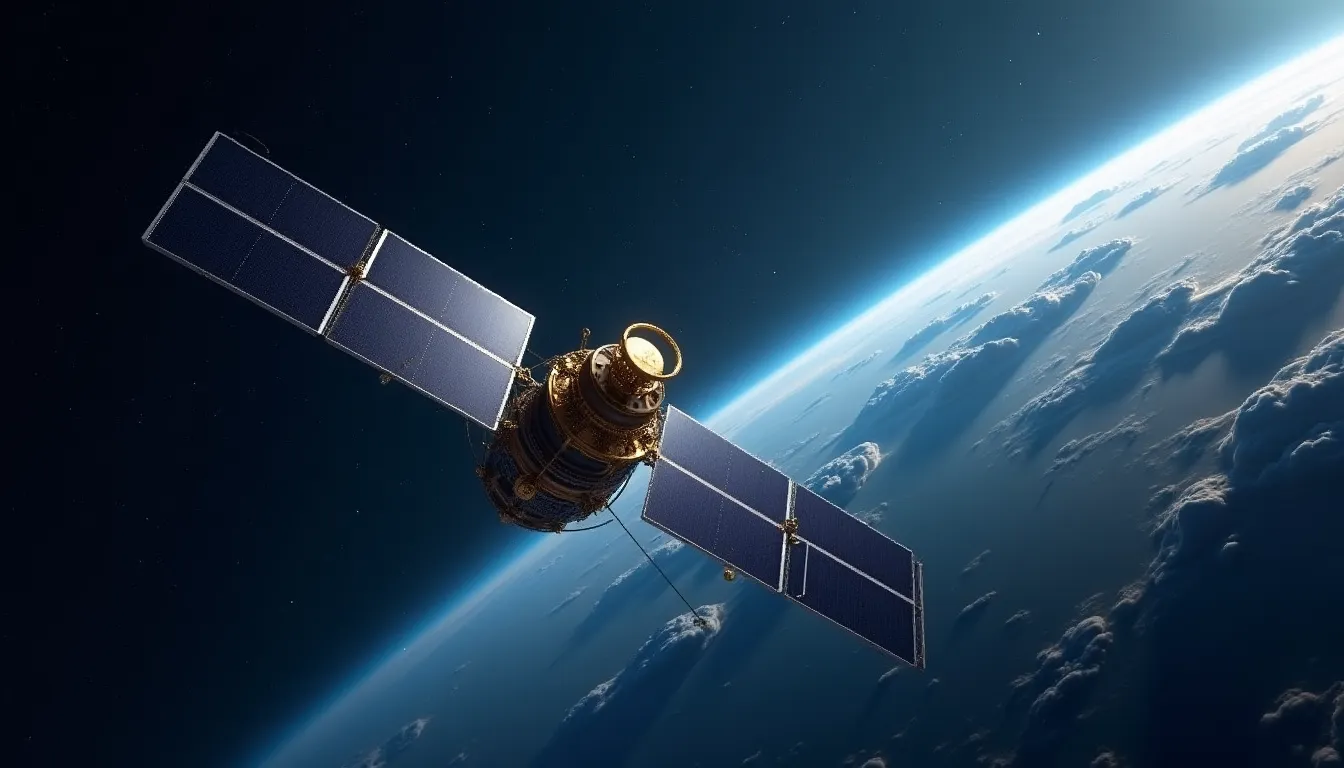
In the rapidly evolving landscape of the aerospace and defense industries, November 2025 has been marked by significant advancements and strategic developments. From the integration of artificial intelligence (AI) and autonomous systems to a strong push toward decarbonization, the sector is undergoing a transformation that promises to reshape operational capabilities and strategic postures globally.
AI and Autonomous Systems: A New Era of Warfare
One of the most notable trends has been the increasing reliance on AI and autonomous systems in both military and civilian applications. The U.S. Air Force, in collaboration with Lockheed Martin, has successfully demonstrated the capability of fifth-generation fighter jets to command drones in real-time. This innovative approach, known as manned-unmanned teaming (MUM-T), exemplifies the future of aerial combat where human pilots and unmanned aerial vehicles (UAVs) work seamlessly together to enhance mission effectiveness.
Australia is also making significant strides in this domain, committing $11 billion towards the development of a fleet of autonomous undersea drones. This strategic investment reflects a broader global shift towards AI-driven naval warfare, reinforcing allied deterrence in the Indo-Pacific region. The integration of advanced sensor modules, such as the Advanced 9-DOF MEMS IMU, will further enhance these systems’ capabilities, providing exceptional stability and comprehensive motion sensing that is critical for complex naval operations.
Advanced Weapon Systems: Precision on the Battlefield
The advancement of sophisticated weapon systems is another critical area of focus. Moldova has recently fielded the ATMOS 200 155mm wheeled self-propelled howitzer, a platform designed to provide enhanced long-range precision fire capabilities. This system features shoot-and-scoot mobility, allowing for rapid deployment and repositioning in dynamic combat environments.
On the other side of the globe, China showcased its GJ-11 stealth drone in conjunction with the J-20 fifth-generation fighter jet. This coordinated demonstration underscores the maturation of unmanned combat aviation within China’s military strategy, highlighting an integrated strike and electronic warfare package that could potentially alter regional power dynamics.
Decarbonization and Digital Transformation: A Greener Future
As global concerns about climate change escalate, the aerospace industry is prioritizing decarbonization efforts. Key players are investing in electric propulsion technologies and exploring greener alternatives to traditional fuels. The integration of high-precision fiber optic sensing coils in aircraft systems represents a move towards more efficient and environmentally friendly operations, enhancing overall performance while reducing carbon footprints.
Furthermore, the adoption of Industry 4.0 technologies, including additive manufacturing and advanced navigation systems, is driving digital transformation across the sector. These innovations not only improve efficiency but also facilitate the rapid prototyping and deployment of new technologies, ensuring that the aerospace and defense sectors remain competitive and responsive to emerging challenges.
Cybersecurity and Space-Based Systems: Safeguarding the Future
As military and commercial operations increasingly rely on interconnected systems, the importance of robust cybersecurity measures cannot be overstated. AI is playing a crucial role in mitigating cyber threats, with advanced algorithms capable of real-time data analysis and rapid response to breaches. These innovations are vital for maintaining the integrity of sensitive defense systems and ensuring operational continuity.
Moreover, the development of next-generation communication, navigation, surveillance, and reconnaissance (CNSR) capabilities is a top priority. Real-time, global space-based systems are being designed to support a wide range of applications, from tactical military operations to civilian communications, thereby enhancing situational awareness and operational effectiveness.
Conclusion
The aerospace and defense sectors are on the brink of a transformative era, fueled by advancements in AI, autonomous systems, and a commitment to sustainability. As nations invest in these technologies, the implications for military strategy and global security are profound. Looking ahead, the integration of high-performance systems, such as precision accelerometers and thermal battery systems, will likely play a pivotal role in shaping the future of warfare and aerospace operations, ensuring that these industries not only meet current demands but also anticipate future challenges.
References
-
Aerospace Daily & Defense Report, November 20, 2025 (aviationweek.com) - 11/20/2025 FADA will start seriously ramping up work early next year to develop its synthetic aperture radar know-how as it works to start deploying a …
-
Media - Lockheed Martin - Releases (news.lockheedmartin.com) - 11/19/2025 Nov 19, 2025. Lockheed Martin Uses 5th Gen Fighter to Command Drone in Flight · Nov 18, 2025. Lockheed Martin and Diehl Defence Announce Strategic Collaboration …
-
Top Global Defense News of the Week: Land, Air, and Sea Highlights (www.armyrecognition.com) - 11/15/2025 Major defense news from November 10 to 15, 2025, highlights a worldwide focus on deterrence, long-range strike capabilities, and advanced …
-
Aerospace, Defense & Government Services | Industry Update Fall 25 (www.mcfcorpfin.com) - 10/24/2025 Aerospace · New trade deal restores zero-for-zero aerospace tariffs · GE Aerospace reaches five-year labor agreement to end three-week strike.
-
[PDF] Aerospace Industry: Current Status and Trends of the Global Value … (publications.iadb.org) - 9/21/2025 In this sense, this report aims to provide an overview of the aerospace industry at large, with a particular focus on its potential for LAC …
-
New Technology Trends in Aerospace and Defense Industry [2025] (www.epicflow.com) - 8/21/2025 Current Trends in Aerospace Industry Remaining in 2025 · 1. Facilitating Decarbonization. · 2. Artificial Intelligence. · 3. 3D Printing. · 4.
-
[PDF] Commission on the Future of the United States Aerospace Industry (www.nasa.gov) ing, a comprehensive overview and a sense of mission. Substantive research indicates that the most consis- tent predictors of student math and science …
-
[PDF] EMERGING TECHNOLOGIES AND NATIONAL SECURITY (www.boozallen.com) “Expanding Domestic Manufacturing of Secure, Custom. Chips for Defense Needs.” DARPA, Mar. 2021, https://www. darpa.mil/news-events/2021-03-18. “ERI Overview …
-
A Closer Look at the Defense and Aerospace Industry (www.confluence.com) - 4/3/2025 Form PF 101: An overview of the SEC’s latest private fund reporting requirements and deadlines · Book a demo. Newest Resources. Press Release …
-
[PDF] 2022 Space Safety Compendium - The Aerospace Corporation (aerospace.org) … 1 shows a matrixed overview of what legal, policy, and regulatory issues might need to be addressed. In general, two scenarios exist: (1) debris removal …