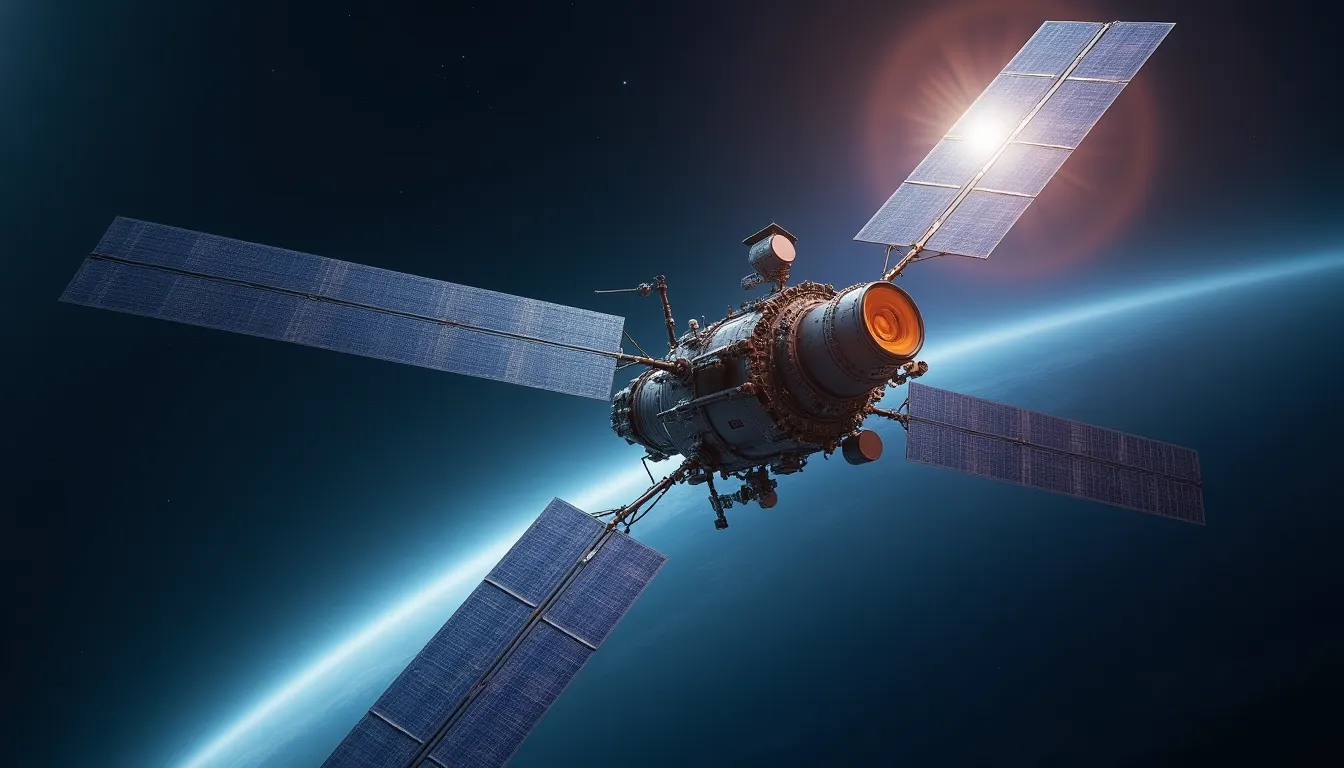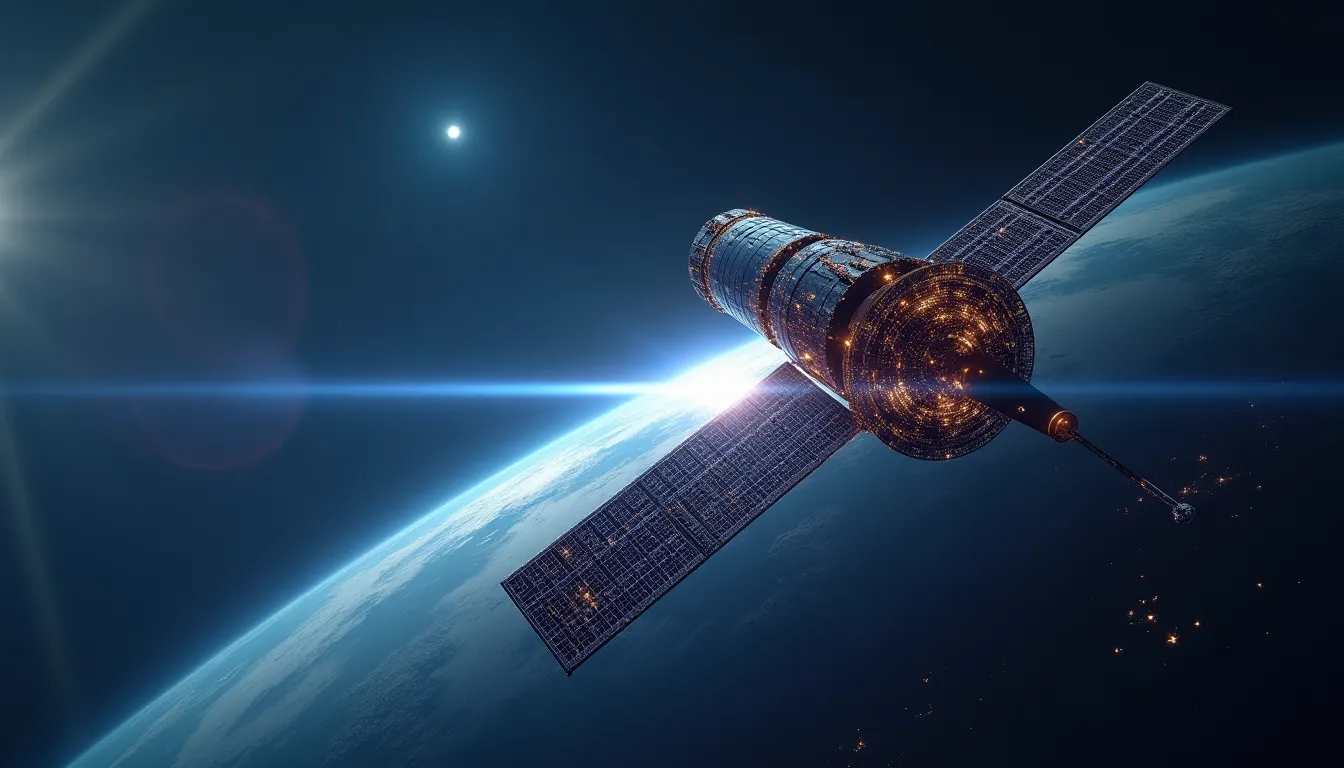
November 2025 marks a pivotal month in the satellite sector, showcasing a plethora of significant launches and innovative technological advancements. This article delves into the latest missions, the integration of AI in satellite operations, and the evolving landscape of defense and dual-use applications.
Major Launches and Missions
NASA’s Notable Ventures
Despite a U.S. government shutdown impacting staffing levels, NASA continues to push boundaries with its ambitious missions. Among these is the EscaPADE project, which involves the deployment of twin satellites destined for Mars. Additionally, the Sentinel-6B satellite, aimed at enhancing oceanographic monitoring, is set to launch aboard a SpaceX Falcon 9 rocket. This mission underscores NASA’s commitment to advancing climate science and environmental monitoring.
European Space Agency’s Triumph
The European Space Agency (ESA) has successfully launched Sentinel-1D, marking the completion of the first-generation Copernicus Synthetic Aperture Radar (SAR) constellation. Built by Airbus, Sentinel-1D is designed to provide continuous, all-weather, day-and-night radar imaging, crucial for monitoring global land, sea, and emergency situations. With a projected operational lifespan exceeding seven years, this satellite enhances our ability to respond to natural disasters and environmental changes.
Private Sector Innovations
SpaceX is also making headlines with its rapid deployment of Starlink satellites. On November 6, 2025, a Falcon 9 rocket successfully launched 28 additional satellites, further bolstering global broadband connectivity. Notably, the same launch carried the first Nvidia H100 GPU into orbit, part of a pioneering project by startup Starcloud to explore the feasibility of space-based AI data centers. This marks a significant step toward integrating advanced computing capabilities in low Earth orbit (LEO).
International Contributions
India’s space agency has set a new record with the launch of its heaviest communications satellite, tipping the scales at approximately 4,400 kg. This development not only enhances India’s position in the global space race but also reflects the growing capabilities of emerging space nations.
Technological and Operational Advances
The Role of AI in Satellite Operations
Artificial intelligence is becoming a cornerstone of satellite management and data analysis. Companies like Spire Global leverage AI to optimize scheduling and manage extensive ground station networks. The integration of AI is vital for developing software-defined satellites and ensuring compliance with 3GPP standards for universal non-terrestrial network services. This technology enhances the efficiency of satellite operations, allowing for real-time data processing and decision-making.
Advances in SAR Technology
The Synthetic Aperture Radar technology embodied by Sentinel-1D allows for uninterrupted Earth observation, capable of penetrating clouds and vegetation. This capability is essential for monitoring geohazards such as volcanic uplift and ground deformation. Notably, NTT has pioneered a method for detecting early signs of road cave-ins through SAR data analysis, employing advanced techniques in polarization and scattering of radio waves.
Connectivity Trends: LEO vs. GEO
Low Earth Orbit (LEO) satellites are increasingly challenging the traditional dominance of Geostationary Earth Orbit (GEO) systems. LEO satellites offer lower latency and higher speeds, typically ranging from 100 to 200 Mbps. This shift is largely enabled by reusable rocket technology, exemplified by SpaceX’s Falcon 9 and the anticipated Starship. As a result, LEO constellations are set to become the backbone of global broadband and IoT communications.
Space-Based Data Centers
The concept of space-based data centers is gaining traction, driven by the recent deployment of the Nvidia H100 GPU. Advocates for this technology highlight the potential benefits of continuous solar power and reduced environmental impact compared to terrestrial data centers. However, the economic viability of such projects remains uncertain until launch costs decrease significantly, presenting challenges in achieving scalable infrastructure in orbit.
Defense and Dual-Use Developments
Iceye’s Aerospace Services
Iceye has unveiled new aerospace services tailored for defense clients, although specific technical details remain under wraps. As satellite technology becomes increasingly dual-use, the potential applications in both civilian and military contexts are expanding.
ESA’s Dual-Use Initiatives
The ESA is advancing plans for dual-use satellites that serve both civilian and defense purposes. This reflects a broader trend toward convergence in the aerospace and defense sectors, where the lines between civilian and military applications are increasingly blurred. This evolution is critical as nations recognize the strategic advantages of leveraging satellite technology across multiple domains.
Conclusion
In summary, November 2025 has been marked by substantial progress in satellite technology, highlighted by critical missions, the integration of artificial intelligence, and the emergence of dual-use capabilities. The advancements in SAR imaging, AI-driven operations, and LEO connectivity are transforming both civilian and defense applications. As we look ahead, the potential for space-based infrastructure, including data centers and enhanced communication networks, promises to redefine our approach to technology and connectivity in the coming years. The future of aerospace and defense lies in the continued innovation and integration of these groundbreaking technologies.
References
-
The State of Satellite Connectivity (2025) - S&P Global (www.spglobal.com) - 11/7/2025 Satellite connectivity is evolving to reduce latency, dead zones and improve internet of things devices. Interest in residential satellite …
-
World’s First Demonstration of a Method for Detecting Early Signs of … (group.ntt) - 11/7/2025 World’s First Demonstration of a Method for Detecting Early Signs of Road Cave-ins Using Reflected Radio Waves from SAR Satellites
-
November 2025 - Spaceflight Now (spaceflightnow.com) - 11/7/2025 SpaceX launches 28 Starlink satellites on Falcon 9 rocket from Vandenberg SFB · November 6, 2025 Will Robinson-Smith.
-
Eyes turn to space to feed power-hungry data centers - Tech Xplore (techxplore.com) - 11/6/2025 Tech firms are floating the idea of building data centers in space and tapping into the sun’s energy to meet out-of-this-world power demands …
-
Space Brief 6 Nov 2025 - KeepTrack (keeptrack.space) - 11/6/2025 Today’s briefing covers Iceye’s new aerospace service for defense clients, ESA’s plan for dual-use satellites, and key defense agreements …
-
November Space Missions: 1st Nvidia Chip in Orbit, Mars … - Observer (observer.com) - 11/5/2025 From NASA’s Mars-bound EscaPADE to SpaceX’s Sentinel-6B, November 2025 is packed with major launches across the U.S., Europe and Asia.
-
Sentinel-1D: the radar that never sleeps - Airbus (www.airbus.com) - 11/5/2025 The ESA Sentinel-1D launch, with its Airbus-built synthetic-aperture radar SAR , completes the first generation constellation.
-
Satellite’s AI Future: The Big Debate | October/November 2025 (interactive.satellitetoday.com) - 10/7/2025 Experts from Eutelsat, Space42, Sky Perfect JSAT, and Spire Global weigh in on how AI will impact satellite operations and services.