As the aerospace and defense industries continue to evolve, satellite technology stands at the forefront of innovation. From advancements in satellite launches to the integration of artificial intelligence (AI), the landscape of space-based technologies is rapidly changing. This article delves into recent developments, the impact of AI on satellite operations, and the ongoing challenges posed by space debris.
Recent Commercial Satellite Launches and Capacity Expansion
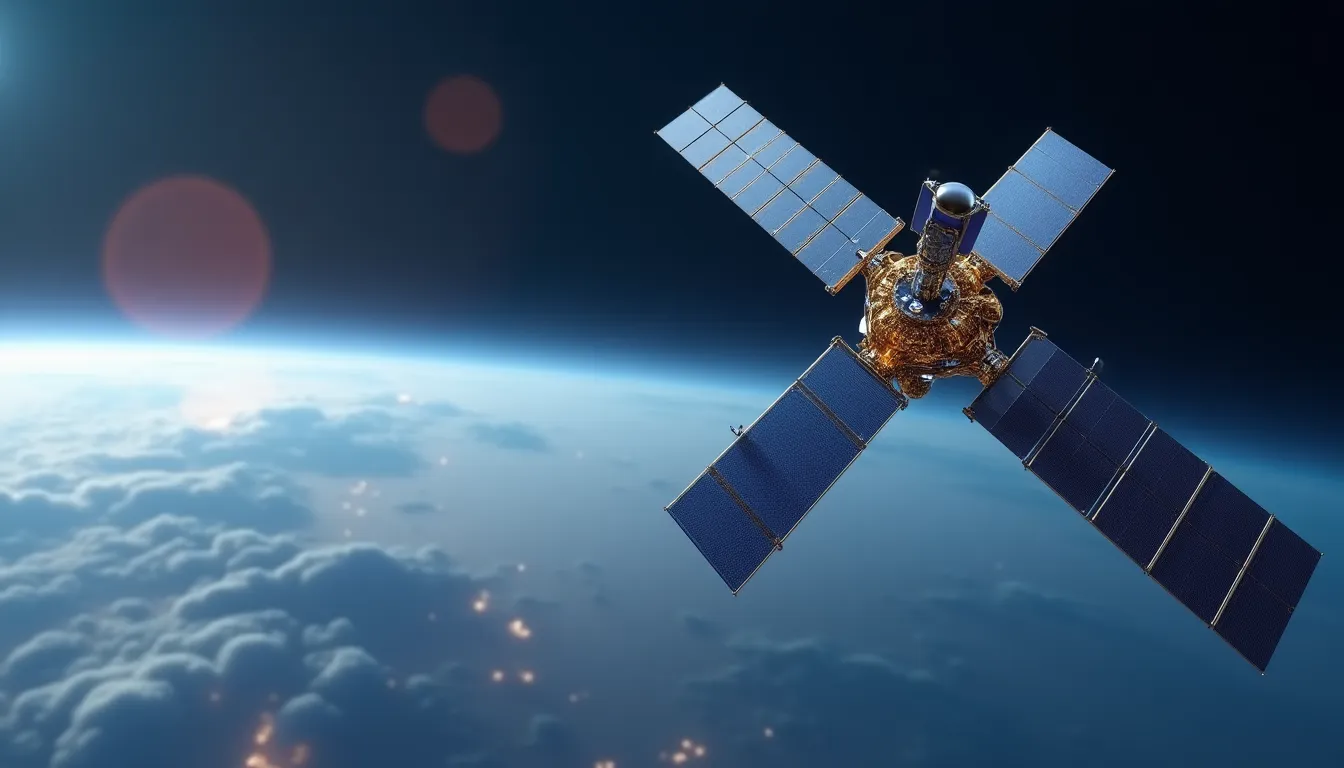
The satellite industry has witnessed significant growth, particularly with the upcoming deployment of Viasat’s ultra-high-capacity ViaSat-3 F2 satellite. Scheduled to launch on November 5, 2025, this satellite will embark on a journey to geostationary orbit at 79° west longitude, aiming to enter service by early 2026.
Dynamic Capabilities of ViaSat-3 F2
Featuring dynamic beam-forming capabilities, ViaSat-3 F2 is designed to deploy bandwidth in real-time, focusing on high-demand areas. This functionality is crucial for applications such as in-flight Wi-Fi for commercial aviation, fixed broadband internet for homes, and resilient connectivity for governmental and defense operations. The satellite’s advanced architecture will enhance broadband coverage across the Americas, addressing the growing demand for reliable internet services.
In tandem with Viasat’s initiatives, Satellogic has announced its NextGen very-high-resolution satellite platform, set to launch on October 13, 2025. This platform boasts 30 centimeter-class resolution across all visible and multispectral bands, equipped with real-time AI processing capabilities onboard. Built on the successful NewSat architecture, it is designed for international collaboration and technology transfer initiatives, with the first satellite expected to be operational by 2027.
The Role of Artificial Intelligence in Satellite Operations
The integration of AI is revolutionizing how satellites operate and manage data. Experts predict that within the next five years, the industry will witness the emergence of autonomous constellations capable of real-time optimization of both space and ground assets according to customer demand.
Key Trends in AI Integration
- On-board AI and Edge Computing: Satellites are increasingly equipped with in-orbit neural networks that facilitate real-time modeling, fault detection, and recovery by processing data directly in space. This reduces latency and enhances resilience.
- Multi-source Data Fusion: AI is adept at combining orbital imagery with data from aerial platforms and ground-based sensors, fostering dynamic planetary monitoring capabilities.
- Advanced Imagery Analysis: Companies like Sky Perfect JSAT are leveraging multimodal data, including optical, synthetic aperture radar (SAR), and LiDAR, to provide precise insights and real-time space intelligence.
These advancements are not only improving operational efficiency but also enhancing the accuracy of data analysis, crucial for applications ranging from environmental monitoring to national security.
Navigating Space Environment and Operations Challenges
As satellite technology advances, various environmental factors pose challenges to operational efficacy. For instance, high electron flux conditions predicted for November 10-13 and again for November 27-December 2, 2025, may affect satellite operations in geosynchronous orbit. These conditions necessitate robust design and operational strategies to mitigate potential disruptions.
The Growing Concern of Space Debris
Recent incidents involving space debris have underscored the urgency for increased international collaboration on debris mitigation and tracking. Events such as collisions between debris and operational satellites highlight the need for proactive measures to ensure the safety and longevity of space assets. The development of advanced tracking systems and debris removal technologies is paramount in addressing this critical issue.
NASA’s Upcoming Missions
In the realm of exploration, NASA is preparing for its ESCAPADE mission to Mars, featuring twin satellites dubbed Blue and Gold. Set to launch in early November 2025, these satellites will play a pivotal role in studying the Martian atmosphere and its interactions with solar wind, contributing valuable data for future explorations.
Conclusion
The future of satellite technology is marked by unprecedented advancements in capabilities and applications. As commercial launches like ViaSat-3 F2 and Satellogic’s NextGen platform pave the way for enhanced connectivity and data analysis, the integration of AI continues to redefine operational frameworks. However, the challenges posed by space debris and environmental factors demand ongoing innovation and international cooperation. As the aerospace and defense sectors navigate this dynamic landscape, the focus on advanced technologies, such as high-precision navigation systems and advanced sensor modules, will be crucial in ensuring the continued success and reliability of satellite operations.
References
-
Space Debris Struck a Chinese Spacecraft – How the Incident Could Be a Wake-up Call for International Collaboration (news.gatech.edu) - 11/14/2025
-
Space Brief 13 Nov 2025 (keeptrack.space) - 11/14/2025 High electron flux at geosynchronous orbit predicted on 10-13 Nov and again on 27 Nov-02 Dec, which may impact satellite operations. … satellite …
-
ViaSat-3 F2 Satellite Scheduled to Launch November 5, 2025 (www.viasat.com) - 10/31/2025 Viasat’s ultra-high-capacity VS-3 F2 satellite has completed its cross-country flight from Los Angeles International Airport (LAX) to …
-
Satellogic Launches Very-High Resolution NextGen Satellite … (satellogic.com) - 10/13/2025 November 3, 2025. Satellogic Appoints Industry Veteran Jeff Kerridge to Lead Global Sales and Drive Next Phase of Growth · October 16, 2025 …
-
Satellite’s AI Future: The Big Debate | October/November 2025 (interactive.satellitetoday.com) - 10/7/2025 Experts from Eutelsat, Space42, Sky Perfect JSAT, and Spire Global weigh in on how AI will impact satellite operations and services.
-
NASA’s ESCAPADE mission to Mars—twin satellites dubbed Blue and Gold will launch in early November (phys.org) NASA’s ESCAPADE mission to Mars—twin satellites dubbed Blue and Gold will launch in early November · Science goals · A new way of doing things.