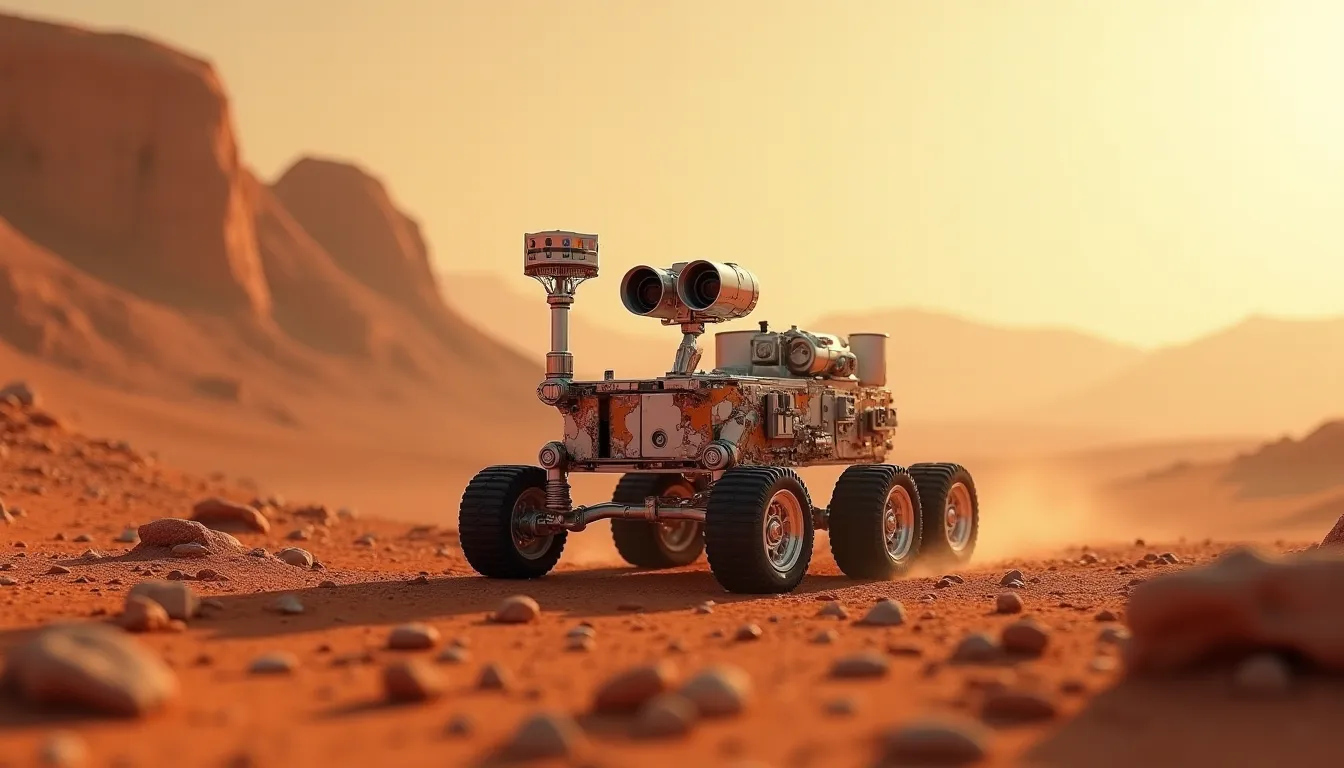
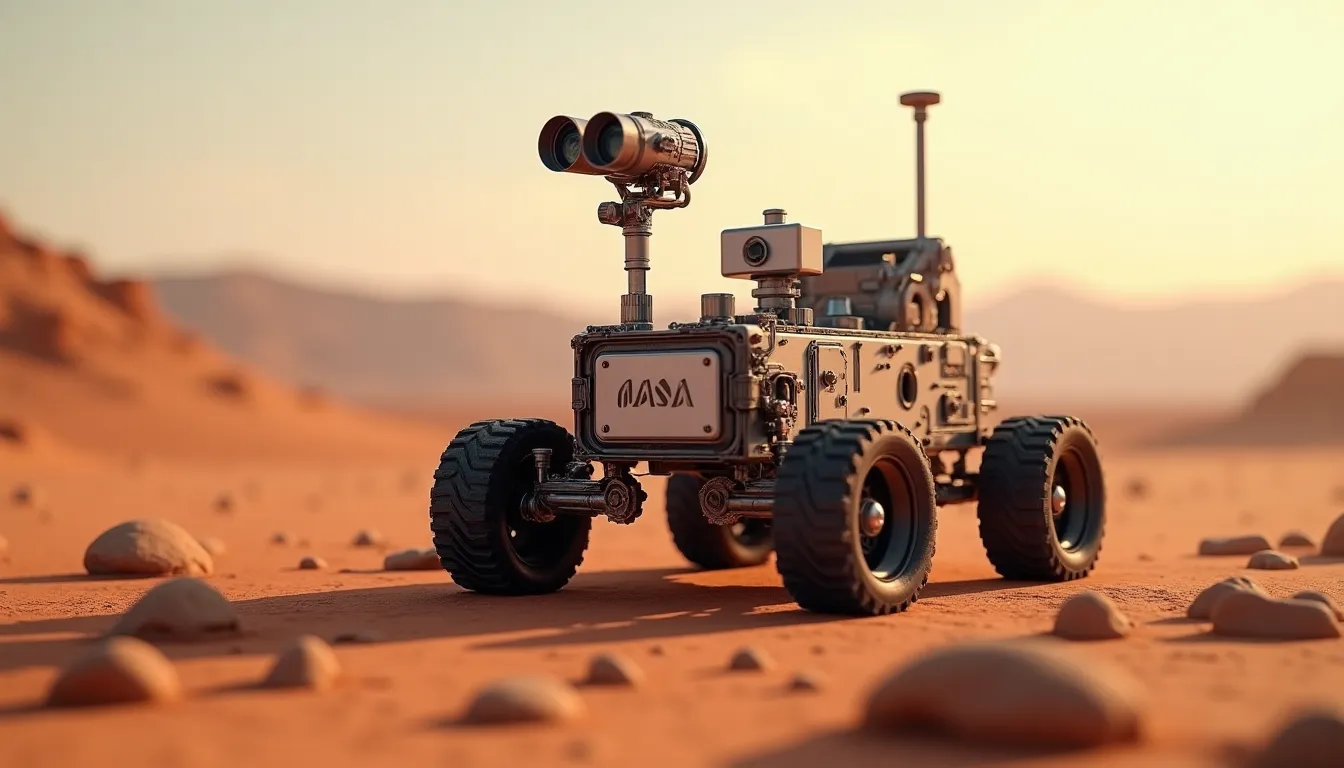
NASA’s Curiosity rover has made significant strides in the exploration of Mars, recently celebrating 13 years of continuous operation on the Red Planet. Since its landing in Gale Crater on August 6, 2012, Curiosity has traversed over 22 miles (35 kilometers) and has been actively investigating the planet’s past habitability. As of November 13, 2025, the rover has operated for 4,718 sols (Martian days), demonstrating remarkable durability and adaptability despite the mechanical wear typical of long-term space missions.
Recent Milestones and Mission Status
Curiosity’s longevity is a testament to the robust engineering and design of its systems. Initially intended for a two-year mission, the rover’s objectives have expanded significantly, driven by its ongoing scientific discoveries. The rover’s operational success is attributed to its advanced navigation system, which incorporates high-performance MEMS accelerometers, ensuring superior stability and precision essential for traversing the challenging Martian terrain.
Current Scientific Operations
Boxwork Terrain Investigation
Currently, Curiosity is investigating the unique geological formations known as boxwork terrain, characterized by intricate ridges and hollows. This terrain may have formed through processes of cementation and erosion, offering insights into Mars’ geological history. Curiosity has recently completed its 44th drilling operation, utilizing a suite of scientific instruments including the Mars Hand Lens Imager (MAHLI), Mastcam, ChemCam, and Alpha Particle X-ray Spectrometer (APXS) to analyze both the smoother bedrock and more nodular formations.
Evidence of Ancient Water
Among the most significant findings from Curiosity’s investigations is the evidence of ancient underground water. Recent geological analysis suggests that Mars may have had habitable conditions for a longer period than previously estimated, with liquid water and a thicker atmosphere playing critical roles in the planet’s potential to support microbial life. This discovery underscores the importance of advanced sensor modules, such as the 9-DOF MEMS IMU, which provide comprehensive motion sensing capabilities crucial for navigating and conducting scientific research on Mars.
Technological Enhancements
In a bid to extend Curiosity’s operational lifespan, a series of software upgrades were implemented in August 2025. These enhancements have significantly increased the rover’s autonomy, enabling it to multitask more efficiently and enter a sleep mode when its daily objectives are met. This capability conserves energy from its aging thermal battery systems, allowing Curiosity to continue its mission effectively.
Moreover, engineers have devised creative workarounds to manage the wear and tear on the rover’s wheels, employing adaptive driving strategies that ensure it can navigate the Martian landscape despite mechanical challenges. As it continues to operate, Curiosity’s sophisticated control systems, including high-performance CMOS imaging capabilities, allow for detailed studies of the Martian environment.
Upcoming Public Engagement
On November 19, 2025, Ashwin Vasavada, project scientist at NASA’s Jet Propulsion Laboratory, will present a Watson Lecture titled “Thirteen Years in the Dust: How a Robot Showed that Mars Was Once Habitable.” This event will provide an overview of Curiosity’s groundbreaking findings regarding Mars’ habitability and the necessary conditions for life, drawing on the collaborative efforts of a global team of over 500 scientists.
Mission Context and Future Prospects
Curiosity’s mission has vastly expanded our understanding of Mars, contributing to the broader goals of planetary science and human exploration. The rover’s ability to analyze geological and atmospheric data informs future missions, including the potential for human habitation. As the mission proceeds, advancements in navigation technology, such as high-precision fiber optic sensing coils, will continue to support safe and effective exploration of Mars.
Conclusion
As NASA’s Curiosity rover approaches its 14th year on Mars, its legacy is one of exploration and discovery. With ongoing research revealing crucial insights into the planet’s past, including the presence of water, Curiosity stands at the forefront of our quest to understand not only Mars but the potential for life beyond Earth. The future of Martian exploration looks promising, driven by technological innovations and the relentless pursuit of knowledge about our neighboring planet.
References
-
Curiosity Blog, Sols 4682-4688: Seven Mars Years - NASA Science (science.nasa.gov) - 11/14/2025 Curiosity captured the image using its Front Hazard Avoidance Camera (Front Hazcam) on Oct. 9, 2025 — Sol 4684, or Martian day 4,684 of the Mars …
-
Evidence of Ancient Underground Water Reveals Mars May Have … (nyuad.nyu.edu) - 11/11/2025 Evidence of Ancient Underground Water Reveals Mars May Have Stayed Habitable Longer Than Believed. 11112025 Curiosity Rover Surface Water Atri …
-
Watson Lecture: Ashwin Vasavada (PhD ‘98) Discusses … - Caltech (www.caltech.edu) - 11/6/2025 Has life ever existed on Mars? On November 19, 2025, at 7:30 p.m., Ashwin Vasavada (PhD ‘98), a project scientist at the Jet Propulsion …
-
NASA’s ESCAPADE mission to Mars — twin UC Berkeley satellites … (news.berkeley.edu) - 11/5/2025 November 5, 2025. UPDATE 11/13/25: After two launch delays because of weather and a solar storm, New Glenn launched from Cape Canaveral at 3 …
-
JPL’s Watson Lecture to Explore Mars Discoveries with Curiosity … (www.coloradoboulevard.net) - 11/4/2025 On November 19, 2025, JPL will celebrate this legacy of exploration with the next Watson Lecture, an evening dedicated to the spirit of …
-
NASA’s Mars rover Curiosity captures stunning details of alien rock … (www.sciencedaily.com) - 9/23/2025 Curiosity is exploring Mars’ boxwork terrain, where ridges and hollows may have formed from cementation and erosion. The rover has been …
-
Curiosity rover celebrates 13 years on Mars with well-deserved naps … (www.space.com) - 8/6/2025 Curiosity rover celebrates 13 years on Mars with well-deserved naps and Red Planet ‘coral’. News. By Sharmila Kuthunur published August 6, 2025.
-
Curiosity Rover Updates - NASA Science (science.nasa.gov) - 5/27/2025 12, 2025 Curiosity continues to image, analyze, and traverse through a landscape characterized by higher standing ridges separating low-lying depressions… …
-
Curiosity (rover) - Wikipedia (en.wikipedia.org) - 8/6/2012 The rover is still operational, and as of 13 November 2025, Curiosity has been active on Mars for 4718 sols (4847 total days; 13 years, 99 days) since its …