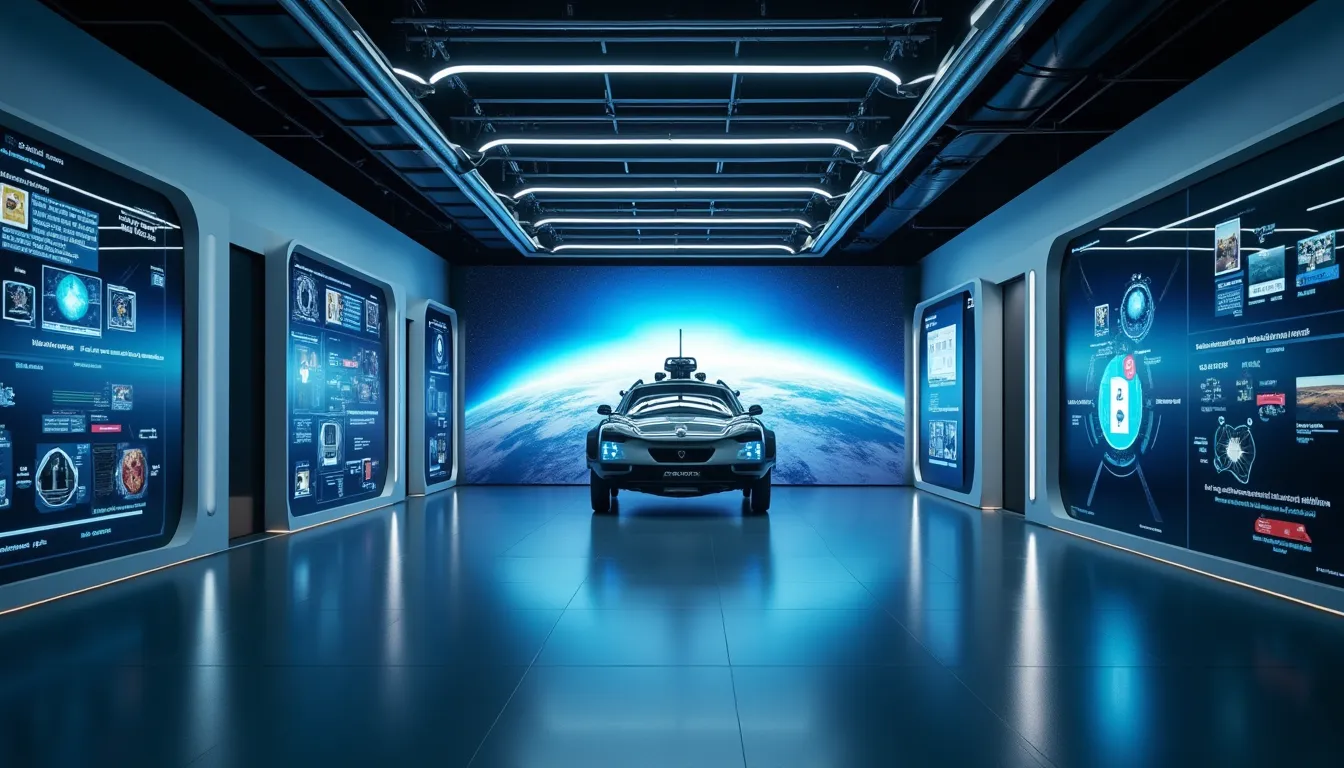
The Mars Moment: Why Now is the Time to Build the Future
The exploration of Mars has long captivated the human imagination, serving as a beacon of adventure and scientific inquiry. As we stand at the precipice of a new era in Mars exploration, experts agree: now is the time to invest in the technologies and strategies that will pave the way for human life on the Red Planet. This article delves into the current advancements in Mars exploration, the technologies enabling these endeavors, and the profound implications for humanity’s future.
The Current Landscape of Mars Exploration
In recent years, missions to Mars have accelerated, driven by a convergence of scientific ambition and technological innovation. NASA’s Perseverance rover, which successfully landed on Mars in February 2021, is equipped with advanced instruments designed to search for signs of ancient microbial life and collect samples for future return to Earth. The rover’s suite of technologies, including precision accelerometers and high-resolution cameras, allows it to navigate the Martian terrain with unprecedented accuracy.
International Collaboration and Private Sector Involvement
The Mars exploration landscape is not solely dominated by government space agencies. Private companies like SpaceX have emerged as key players, aiming to establish human settlements on Mars by the 2030s. Elon Musk’s vision for a self-sustaining city on Mars hinges on advancements in rocket technology and life support systems, which are being developed at an astounding pace. As Musk stated, “The future of humanity lies in becoming a multi-planetary species, and Mars is our first step.”
Technological Innovations Powering Mars Missions
As we look to the future, several key technologies are critical to the success of Mars missions. Notably, energy storage solutions are paramount. The harsh Martian environment presents unique challenges for sustaining life and operations. Here, the High-Voltage Thermal Battery System (CDR090FLX) emerges as a pivotal solution. This system offers a voltage range of 71.6V to 100V and capacities from 400As to 24000As, providing reliable power sources essential for equipment and habitats on Mars, especially during long-duration missions.
Robotics and Autonomous Systems
Robotic exploration has set the groundwork for human missions. Advanced inertial navigation systems are enabling autonomous navigation of rovers and drones on Mars, allowing them to operate in environments where human presence is limited. These systems enhance the ability to gather data and conduct experiments without direct human control, making exploratory missions both safer and more efficient.
The Path Forward: Challenges and Opportunities
Despite the exciting advancements, challenges remain. The journey to Mars is fraught with technical, operational, and ethical hurdles. Radiation exposure, psychological effects of isolation, and the logistics of transporting human crews are all critical issues that need addressing before we can establish a permanent human presence. Expert Dr. Emily Carter, a leading researcher in aerospace engineering, emphasizes the importance of developing robust thermal management systems to protect astronauts from extreme temperatures on Mars.
The Role of International Partnerships
Collaborative efforts between nations can significantly enhance the success of Mars missions. The Artemis Accords, which promote peaceful exploration of outer space, are a step toward fostering international cooperation on Mars. As countries come together to share knowledge and resources, the collective effort will bolster technological advancements and reduce costs associated with exploration.
Conclusion: A Vision for the Future
As we embark on this new chapter in space exploration, the potential of Mars to become a second home for humanity is within reach. The integration of advanced technologies, such as precision accelerometers and high-voltage thermal battery systems, will be pivotal in making these dreams a reality. As Dr. Carter aptly notes, “Investing in technology today is investing in our future on Mars. Every advancement brings us one step closer to making human life on Mars feasible.”
With continued investment and innovation, humanity stands poised on the brink of a monumental leap into the cosmos. Mars is not just a destination; it is a testament to our drive for exploration and our quest for knowledge. The time to act is now.
References
-
Mars Research - defensenews.com (defensenews.com)
-
Mars Research - aviationweek.com (aviationweek.com)
-
Mars Research - spacenews.com (spacenews.com)