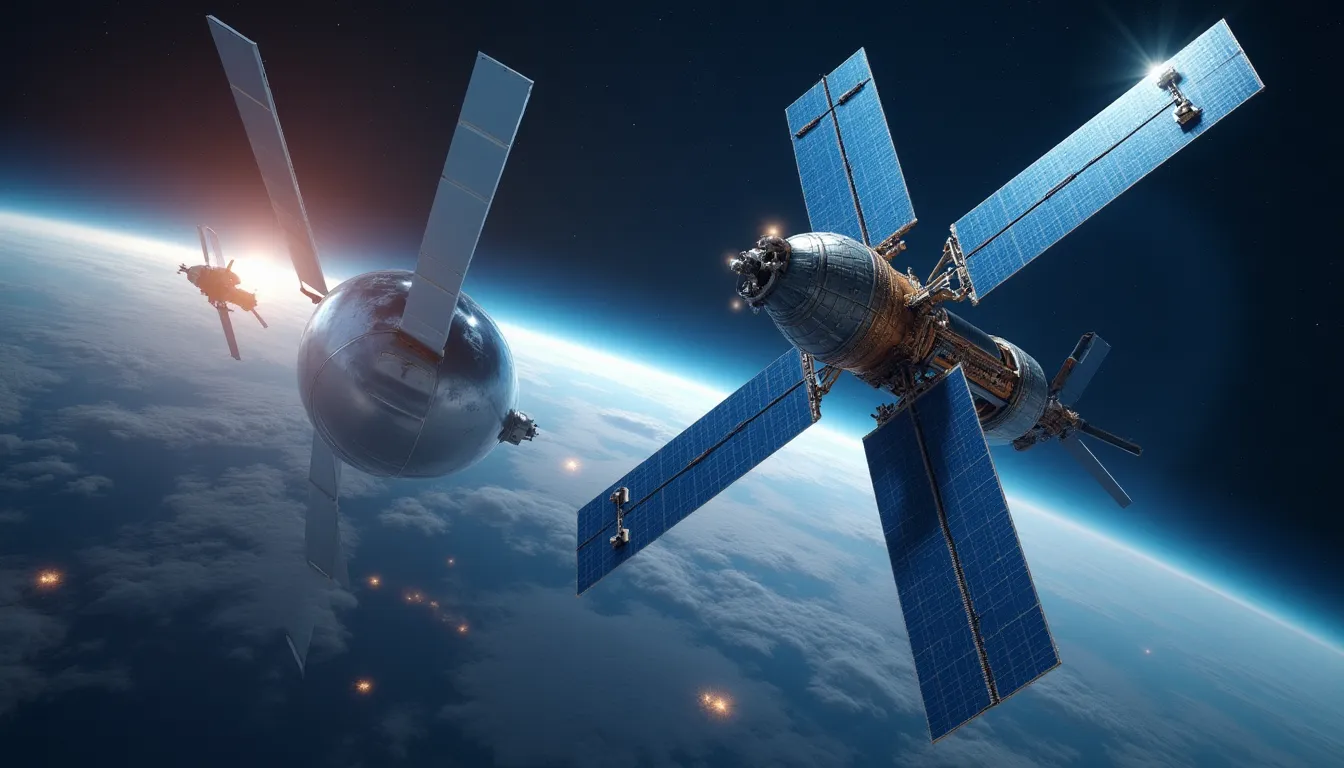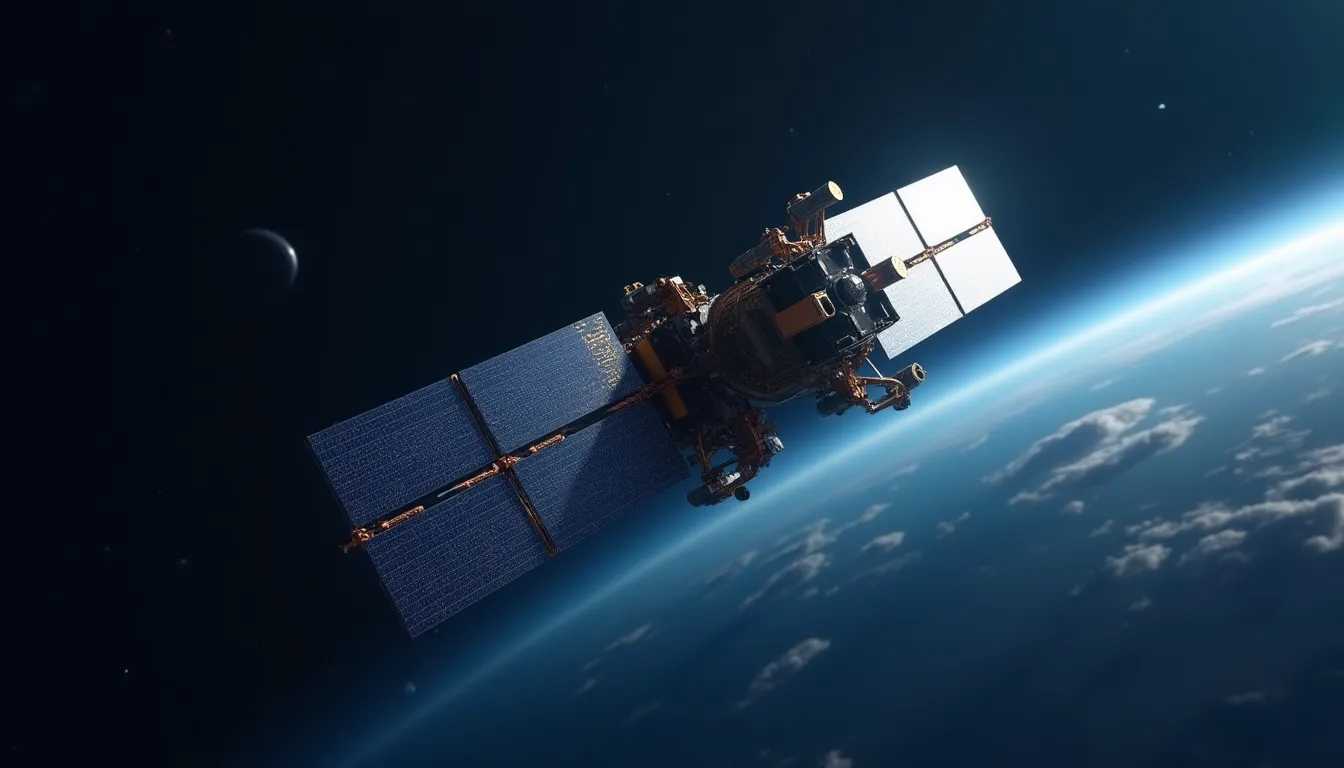
The aerospace and defense sectors are on the brink of a transformative era, driven by cutting-edge satellite technology. As new missions are launched and Low-Earth Orbit (LEO) constellations expand, the impact on communication, navigation, and space weather monitoring is profound. This article delves into the latest developments in satellite missions, the significant growth of LEO satellites, and the technological innovations that are redefining the industry.
New Space Weather Missions Launching Soon
In an effort to enhance our understanding of space weather phenomena, NASA and the National Oceanic and Atmospheric Administration (NOAA) are set to launch three pivotal missions aboard a SpaceX Falcon 9 rocket, scheduled for September 24, 2025. These missions aim to bolster our capabilities in forecasting space weather events that can disrupt satellite operations and technology on Earth.
Key Missions:
- NASA’s Interstellar Mapping and Acceleration Probe (IMAP): This satellite will study particles originating from both the Sun and interstellar space, providing insights into cosmic ray acceleration and solar particle behavior.
- NOAA’s Space Weather Follow On – Lagrange 1 (SWFO-L1): Positioned at the L1 Lagrange point, this satellite will continuously monitor solar storms, delivering real-time data critical for protecting satellites and power grids from geomagnetic storms.
- NASA’s Carruthers Geocorona Observatory: This observatory will focus on analyzing Earth’s hydrogen corona, contributing valuable data for understanding the planet’s atmospheric dynamics.
The successful execution of these missions will significantly enhance our predictive capabilities regarding solar activity, which is crucial for safeguarding satellite communications and defense systems.
Rapid Expansion of LEO Satellite Constellations
The satellite industry is witnessing unparalleled growth, particularly in the realm of Low-Earth Orbit (LEO) satellites. Currently, approximately 7,000 satellites orbit Earth, but projections indicate this number could balloon to 70,000 within the next five years.
LEO satellites offer distinct advantages over traditional geostationary (GEO) satellites, including reduced latency and improved bandwidth. However, this rapid expansion necessitates a dense network of ground stations capable of tracking the fast-moving satellites and ensuring continuous communication.
Ground Station Infrastructure
Investment in ground station technology is crucial to support this satellite proliferation. Advanced systems, such as the ZQXXSGDSS System, featuring high-performance single-tube PIN quadrant detectors, are vital for precise laser beam positioning and tracking applications. These advancements will enable seamless handoffs between ground stations as satellites traverse the sky, maintaining uninterrupted service for communication and data transmission.
Technological Advances in Satellite Communications and Propulsion
The evolution of satellite technology is not solely marked by increased numbers; it encompasses significant advancements in communication and propulsion systems, enhancing operational capabilities.
Optical Communication Innovations
Recently, Voyager Space Holdings acquired optical communication technology from BridgeComm, which is poised to revolutionize satellite data transmission. Utilizing laser-based systems, this technology promises higher bandwidth and lower latency compared to conventional radio frequency communications. Such capabilities are essential for the burgeoning demands of data-heavy applications, including Earth observation and global connectivity.
Enhanced Propulsion Technologies
Meanwhile, Quantum Space has acquired multi-modal propulsion technology from Phase Four, which will improve maneuverability and flexibility for satellites in orbit. These innovations ensure that satellites can adapt to changing mission parameters and enhance their operational lifespan, providing substantial benefits for both commercial and defense applications.
The integration of high-precision MEMS accelerometers and quartz MEMS gyroscopes within these systems further enhances navigation accuracy and stability, ensuring that satellites can execute complex maneuvers with precision.
Conclusion
The satellite industry is entering an exciting phase characterized by new missions, rapid expansion of LEO constellations, and technological breakthroughs that redefine capabilities. As organizations like NASA and NOAA prepare for critical launches and companies invest in advanced ground station infrastructure, the future of satellite technology looks promising. These developments will not only enhance our understanding of space weather but also ensure robust communication networks and improved Earth observation, paving the way for innovative applications across various sectors.
As we look toward the future, the synergy between advanced satellite systems and emerging technologies will continue to drive the aerospace and defense industries, creating opportunities that were previously unimaginable.
References
-
NASA Science News Conference on Three New Space … - YouTube (www.youtube.com) - 9/22/2025 NASA Science News Conference on Three New Space Weather Missions (Sept. 21, 2025). 16K views · Streamed 21 hours ago …more. NASA. 12.5M.
-
As Satellites Multiply, Ground Stations Draw Focus | ThinQ by EQT (eqtgroup.com) - 9/22/2025 A proliferation of satellites in space is sparking a wave of investment on Earth. A proposed deal with Eutelsat aims to create the largest …
-
NASA, SpaceX Now Targeting Sept. 24 for Space Weather Launch (science.nasa.gov) - 9/22/2025 NASA and SpaceX are now targeting 7:30 a.m. EDT, Wednesday Sept. 24 for the launch of NASA and the National Oceanic and Atmospheric …
-
Voyager Acquires Optical Technology from BridgeComm (www.satellitetoday.com) - 9/22/2025
-
Lift Off: First look at the Space Stage agenda at Disrupt 2025 (techcrunch.com) - 9/22/2025 The first reveal of the Space Stage agenda at TechCrunch Disrupt 2025, happening October 27-29 in SF. Explore it and register here.
-
Quantum Space Acquires Phase Four’s Propulsion Tech (payloadspace.com) - 9/22/2025 Quantum Space announced the acquisition of Phase Four’s multi-modal propulsion tech on Monday for an undisclosed amount.
-
2025 NASA News Releases (www.nasa.gov) - 4/11/2025 NASA, Northrop Grumman, and SpaceX are targeting no earlier than 6:11 p.m. EDT, Sunday, Sept. 14, for the next launch to deliver science investigations, …