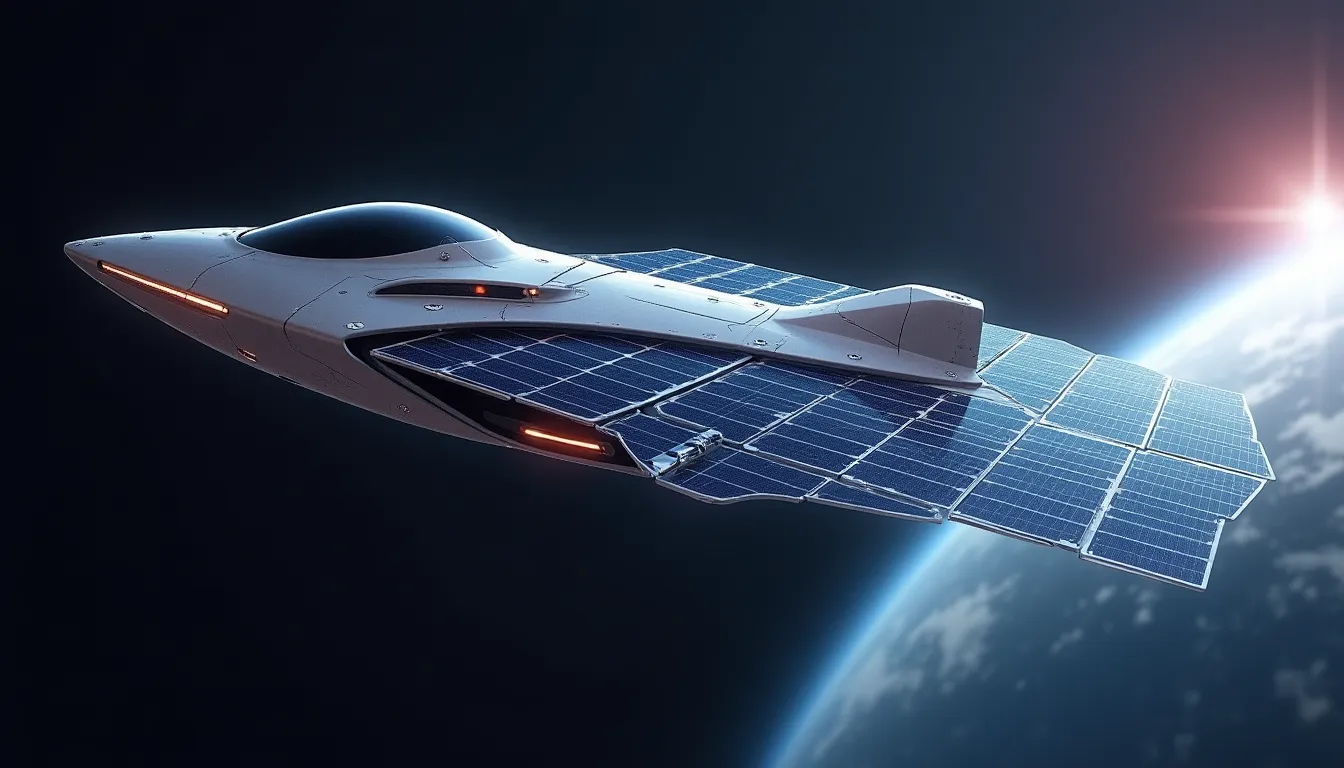
As the world transitions to cleaner energy sources, space-based solar power (SBSP) has emerged as a revolutionary solution, promising to deliver sustainable and reliable energy from orbit. Recent advancements indicate that SBSP could become commercially viable as early as 2026, promising significant benefits across various sectors including aerospace, defense, and technology. This article delves into the latest developments, technical innovations, and the potential impact of SBSP.
Recent Developments in Space-Based Solar Power
In the past month, several key players, including NASA and innovative startups such as Space Solar in the UK, have made substantial progress toward demonstrating the feasibility of SBSP. With enhancements in microwave and laser transmission technologies, the autonomous assembly of orbital arrays, and lightweight photovoltaic materials, the groundwork for commercial applications is being laid.
Key Players and Projects
-
NASA’s ISS Upgrades: On January 2, 2026, astronauts conducted spacewalks to install International Roll-Out Solar Arrays (IROSAs) on the International Space Station (ISS). These upgrades not only enhance the ISS’s power capabilities but also support ongoing SBSP research. According to astronaut Mike Fincke, this initiative is crucial for developing technologies that will facilitate SBSP deployment in the future.
-
Space Solar Cassiopeia: This UK-based initiative has successfully tested a 1.8 km-wide modular solar array capable of achieving 360-degree wireless power transmission via radio waves, marking a significant milestone for orbital demonstrations.
-
Star Catcher Pilots: Launched on January 7, 2026, these pilots focus on scaling power transmission to Low Earth Orbit (LEO) satellites and data centers, which could provide dispatchable energy solutions for various applications.
-
8MSolar Orbital Farms: These km-scale solar arrays are designed to supply power both to Earth and for interplanetary missions, significantly reducing the need for refueling during exploration activities.
Technical Advancements Driving SBSP
Enhanced Transmission and Efficiency
Recent prototypes have demonstrated the ability to achieve energy transmission efficiencies surpassing terrestrial solar systems by 2 to 5 times. The modular SBSP systems are capable of achieving uninterrupted insolation of 1,366 W/m², with GaAs/InP photovoltaic cells converting up to 50% of that energy into usable power.
The Star Catcher pilots utilize advanced microwave transmission techniques to beam enhanced solar flux directly to satellites and data centers, creating a new paradigm for energy distribution. Additionally, innovative reflector designs from companies like Blue Origin concentrate sunlight five times more efficiently onto photovoltaic islands, enabling the establishment of 10 GW stations through multiple affordable launches—each costing between $0.5 and $1 per watt, making them competitive with offshore wind energy.
Autonomous Orbital Assembly
The deployment of SBSP systems is being revolutionized by autonomous robotic technologies capable of assembling kilometer-scale arrays without the need for extravehicular activities (EVAs). This capability is crucial for constructing vast solar farms in geostationary orbit (GEO) using flexible, lightweight materials that optimize mass for deployment.
Sector Impacts of Space Solar Power
Aerospace Applications
The integration of SBSP technologies in aerospace could enable long-duration interplanetary missions by providing a reliable power source that operates independently of atmospheric conditions. These orbital farms could reduce logistical burdens associated with traditional fuel supplies, enhancing mission sustainability and efficiency.
Defense and Military Operations
In the defense sector, SBSP represents a strategic asset for energy independence, particularly in remote or military operations. The ability to dispatch power from satellites positioned over any point on Earth could transform the operational capabilities of military installations, providing a constant and reliable energy source without reliance on terrestrial infrastructure.
Technological Advancements
For the technology sector, continuous clean energy from SBSP holds the potential to revolutionize data centers, allowing for 24/7 operations without the environmental drawbacks associated with fossil fuels. Rectenna systems, designed to receive beamed power, can operate independently of weather conditions, ensuring a stable power supply for critical infrastructure.
Challenges Ahead
Despite the promising advancements, several challenges remain. Attracting private capital for the necessary infrastructure development is crucial, as is addressing regulatory concerns surrounding space debris and Kessler syndrome. The establishment of clear regulatory frameworks will be essential to ensure the safe deployment and operation of SBSP systems in orbit.
Conclusion
As we stand on the threshold of a new era in energy production, space-based solar power emerges as a viable solution to address the ever-growing global energy demands. With significant advancements in technology and strategic investments from key players, SBSP is set to play a pivotal role in the aerospace, defense, and technology sectors. The next few years will be critical in determining how effectively this innovative energy source can be harnessed to create a sustainable future for humanity.
References
-
7 New Solar Panel Technology Trends for 2026 - GreenLancer (www.greenlancer.com) - 1/22/2026 Explore the latest solar panel technology, new solar panel technology, and solar energy technology trends improving efficiency.
-
Space-Based Solar Power 2026: Advancements Driving Continuous … (www.techtimes.com) - 1/7/2026 Space-based solar power advances with microwave and laser transmission, orbital assembly, and cost reductions, aiming for 24/7 clean energy …
-
The Future of Energy: Space Solar Power Innovations Set for 2026 (orbysa.com) - 1/2/2026 With pivotal advancements expected in 2026, NASA and a host of private startups are leading the charge to harness solar energy in orbit and beam …
-
What Solar’s 2025 Breakthroughs Mean for 2026 - YouTube (www.youtube.com) - 12/16/2025 … solar farm. California startups landed major infrastructure deals. And Chinese manufacturers started licensing the technology for mass …
-
Why we need space-based solar power (SBSP) (www.weforum.org) - 10/8/2025 Now technically and economically viable, space-based solar power (SBSP) could be a new abundant sustainable energy source.
-
A Glimpse at the Future of Space-Based Solar Power (www.nrucfc.coop) - 8/11/2025 Space-based solar power is being explored by scientists as a solution to deliver energy from orbital solar arrays back down to Earth.
-
Space Solar Power: The Future of Clean Energy | ISDC 2026 (isdc.nss.org) - 3/20/2025 Discover how space solar power (SBSP) can revolutionize clean energy. Join ISDC 2025 in Orlando to explore the future of limitless, sustainable power!
-
Solar Power in Space and Interplanetary Exploration (2026) | 8MSolar (8msolar.com) - 12/2/2024 Explore the transformative potential of space-based solar power for interplanetary exploration and sustainable energy solutions with 8M Solar.