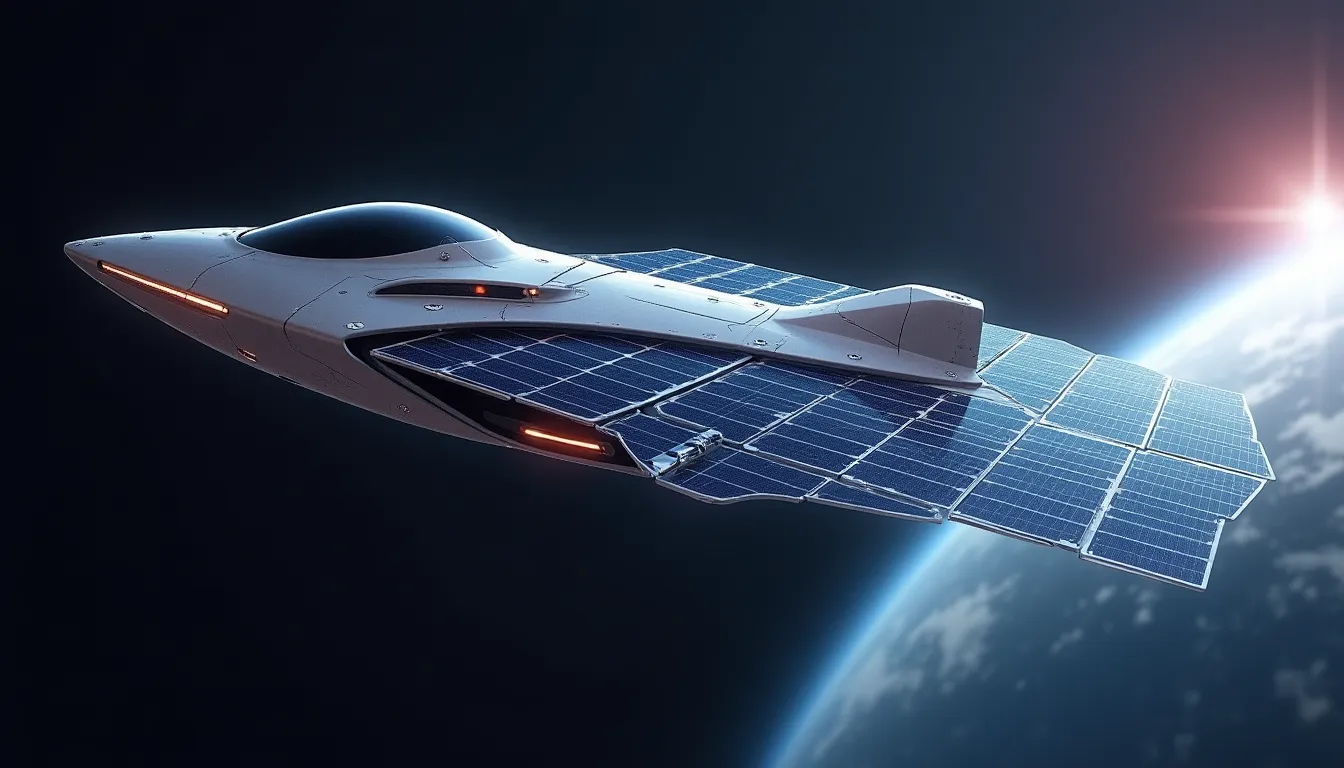
As the world seeks sustainable energy solutions, space solar power (SSP) emerges as a promising frontier. With pivotal advancements expected in 2026, NASA and a host of private startups are leading the charge to harness solar energy in orbit and beam it back to Earth. This article delves into the latest developments, technical innovations, and the potential implications for the aerospace and defense sectors.
Recent Developments in Space Solar Power
Recent months have seen an uptick in activities surrounding SSP, with a strong emphasis on demonstrating the viability of solar energy collection and transmission technologies. Key milestones are slated for 2026, underscoring the sector’s rapid evolution.
NASA’s International Space Station (ISS) Upgrades
NASA is set to enhance the ISS with significant upgrades aimed at integrating SSP technologies. Two critical spacewalks are scheduled for January 8 and January 15, 2026, to prepare the 2A power channel for the International Space Station Roll-Out Solar Arrays (IROSAs). These upgrades will not only replace aging solar panels but will also incorporate advanced navigation aids, thereby boosting the power capacity of the ISS for ongoing research and potential SSP applications. According to astronaut Mike Fincke, “These enhancements will allow us to explore the viability of solar power in ways we never thought possible.”
Private Sector Initiatives
Private companies are also making strides in SSP technology. Notably, StarCatcher is preparing for its 2026 demonstration of space-to-ground power beaming using laser systems. Similarly, Aetherflux, a project backed by Robinhood co-founder Baiju Bhatt, has secured funding to deploy laser-based energy transmission from orbit to terrestrial sites.
In the UK, Space Solar has made headlines with its Cassiopeia project, a modular system boasting a width of 1.8 kilometers. Recent lab tests revealed success in achieving 360-degree wireless power transmission via radio waves, paving the way for future orbital deployments. These initiatives highlight the growing interest in energy solutions that can operate around the clock, promising continuous energy delivery across various sectors.
Technical Innovations and Implications
The technical advancements in power beaming technologies are at the core of SSP’s potential. The integration of laser-based systems by companies like Aetherflux and StarCatcher offers a glimpse into a future where energy can be transmitted wirelessly, addressing some of the most pressing energy challenges on Earth.
Power Beaming Technologies
Both laser-based and radio wave transmission methods are being explored. Laser beaming, as demonstrated by Aetherflux and StarCatcher, allows for precise, high-efficiency energy transmission. In contrast, Space Solar’s Cassiopeia project showcases the effectiveness of radio waves for broader wireless energy distribution. These technologies have potential applications not only in civilian energy markets but also in military operations, where remote powering of assets could enhance mission capabilities.
Modular Design and Scalability
Cassiopeia’s modular design exemplifies the future of orbital energy solutions. Its scalable architecture enables the construction of gigawatt-class stations, which can be assembled in orbit and integrated with existing satellite infrastructures. This modularity could revolutionize how we approach space construction and energy systems, making them more adaptable and efficient.
Orbital Context and Safety Considerations
As SSP technologies evolve, the operational environment in low Earth orbit (LEO) is also changing. Notably, SpaceX’s decision to lower Starlink satellite orbits to 298 miles will alleviate congestion in this increasingly crowded space. This adjustment not only enhances the safety of mega-constellations but also supports safer deployment of SSP satellites, mitigating collision risks.
The Role of Advanced Navigation Systems
With the rise of SSP, the need for precise positioning and tracking systems becomes paramount. Advanced Navigation Systems featuring high-performance MEMS accelerometers will be essential for maintaining stable operations in orbit. These systems will ensure that energy transmission remains accurate and efficient, crucial for both civilian and defense applications.
Conclusion
The advancements in space solar power signal a transformative moment in energy innovation. As 2026 approaches, the combined efforts of NASA and private enterprises are poised to redefine how we harness and transmit energy from space. With the potential to disrupt traditional energy paradigms, SSP could play a significant role in meeting global energy demands while addressing sustainability challenges. As we stand on the cusp of this new era, the implications for the aerospace, defense, and technology sectors are profound, potentially reshaping energy consumption on Earth for generations to come.
References
-
Starlink to lower satellite orbits in 2026 amid space congestion (interestingengineering.com) - 1/2/2026 SpaceX’s Starlink will lower satellites to 298 miles in 2026 to boost space safety and reduce collision risk.
-
Harnessing the Cosmos: The Rise of Space Solar Power … (orbysa.com) - 1/1/2026 Complementing the efforts of private startups, NASA is also advancing its solar power capabilities on the ISS. Scheduled for January 2026 …
-
2026 to be a key moment in space innovation (www.arabnews.com) - 1/1/2026 The deployment of large-scale orbital solar power stations will have a key year in 2026, potentially impacting the energy sector over the coming …
-
G1 to G2 watches issued for Jan 01-03, 2026 (www.swpc.noaa.gov) - 1/1/2026 G1 to G2 watches (Minor to Moderate): CMEs are anticipated to affect Earth and lead to increased geomagnetic activity at the dawn of 2026: …