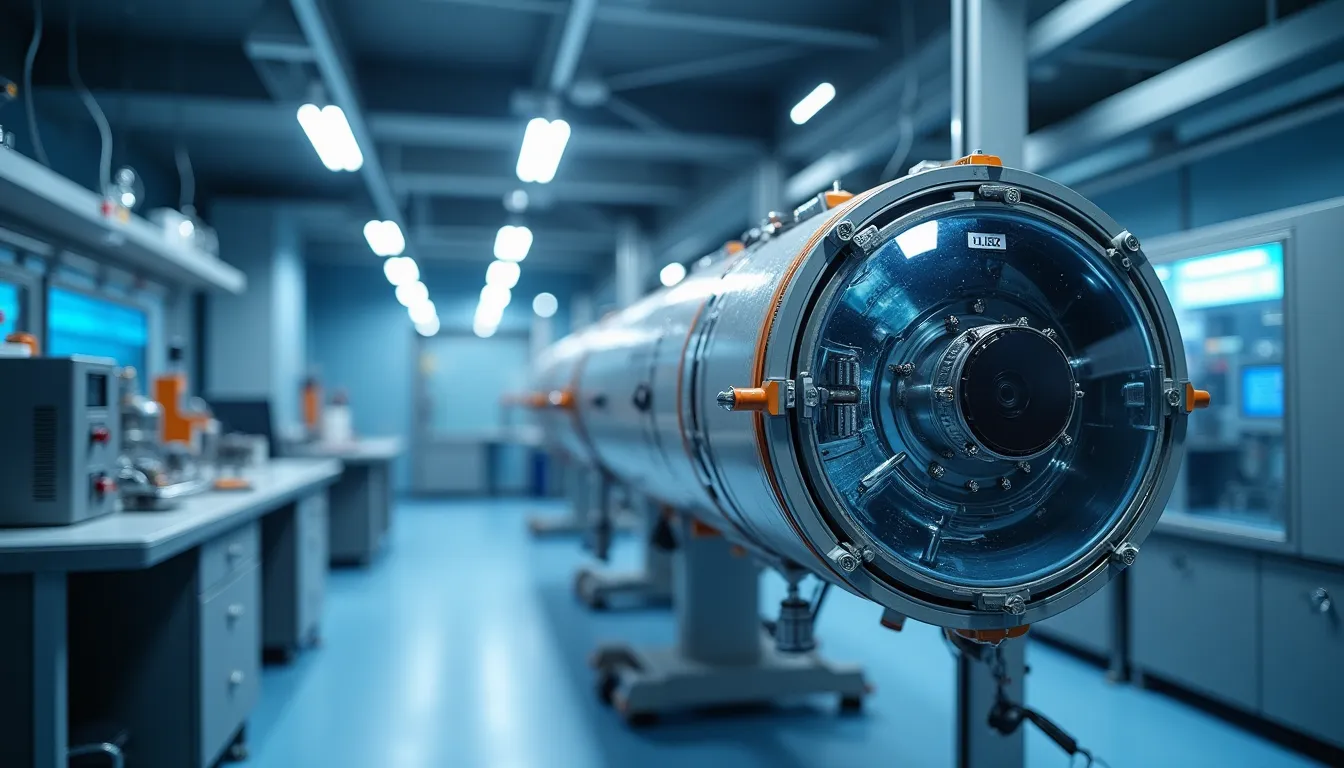
As the number of satellites in low Earth orbit (LEO) continues to rise, concerns about space debris have reached critical levels. With the proliferation of satellite constellations, the potential for collisions is increasing, threatening both operational satellites and future space missions. To address this growing challenge, industry leaders are developing innovative solutions for space debris removal, focusing on advanced technologies and collaborative efforts.
Advancements in Active Debris Removal Technologies
Recent developments in space debris removal have been marked by the introduction of advanced reusable servicer technologies and active removal missions. Notably, Astroscale has unveiled U.S. Patent No. 12,234,043 B2, which describes a multi-object removal system capable of capturing and detumbling large, unprepared debris objects, such as defunct satellites and spent rocket bodies. This breakthrough builds on the company’s previous ELSA-M mission, set to launch in 2026, which focuses on the removal of ‘prepared’ satellites.
Astroscale’s Chief Technology Officer, Mike Lindsay, emphasized the system’s cost efficiency and environmental benefits, stating, “By utilizing reusable servicers, we can significantly reduce the atmospheric pollution associated with traditional methods of debris removal, which often involve expending costly equipment.”
Airbus’s Innovative Capture Systems
Another key player in the space debris removal sector is Airbus, which is actively developing a variety of capture technologies, including harpoons and nets. These systems have been successfully tested in the RemoveDEBRIS mission, demonstrating their capability to capture objects up to two meters in diameter. Furthermore, Airbus’s Detumbler technology stabilizes debris during the removal process, ensuring safe and controlled reentry into the Earth’s atmosphere.
Airbus’s active removal systems are designed to minimize risks to populated areas by controlling reentry trajectories to approximately 150 kilometers perigee. This initiative supports the CNES TechForSpaceCare program, which integrates space situational awareness tools like the ART telescope and SBOC camera to enhance debris tracking and management efforts.
Innovative Debris Mitigation Proposals from Launchspace Technologies
Launchspace Technologies is also making strides in debris remediation by proposing the deployment of debris mitigation payloads on the Airbus Bartolomeo platform aboard the International Space Station (ISS). Their approach involves constellations of Debris Collection Units utilizing impact pads and sensors to capture debris in LEO efficiently. Supported by U.S. Air Force studies and a NASA Space Act Agreement, this initiative aims to create a robust framework for debris capture and spacecraft shielding.
Government Initiatives and Industry Collaboration
Recognizing the urgent need to address space debris, the National Reconnaissance Office (NRO) is taking proactive measures. The NRO’s Deputy Director recently warned of the increasing risks posed by satellite proliferation at a technology symposium, emphasizing the importance of implementing hardened satellites and effective end-of-life processes. The NRO also leads initiatives such as SILENTBARKER, a project aimed at enhancing space situational awareness through advanced geo-orbit sensors and quantum magnetometers for improved debris detection and collision avoidance.
Commercial Incentives and Economic Models
As the space industry evolves, so do the economic models surrounding debris removal. A study conducted by the Stevens Institute outlines various incentives for debris remediators, indicating that operators can benefit from safer orbital environments without incurring high costs. This study proposes shared financial models that could facilitate collaboration among private companies, government agencies, and research institutions in the pursuit of debris mitigation.
Tools for Predicting Orbital Safety
To further bolster debris management efforts, organizations like the Aerospace Corporation have developed tools such as the Collision Risk Assessment and Decision Support (CORDS) system. This platform predicts potential collisions and reentries, enhancing the overall safety and survivability of space missions for Air Force, NRO, and NASA operations.
Conclusion
The imperative to manage space debris is increasingly recognized across the aerospace sector. Innovative solutions from companies like Astroscale, Airbus, and Launchspace Technologies, coupled with government initiatives, are paving the way for a more sustainable orbital environment. As these technologies mature and collaboration intensifies, the future of space debris removal looks promising, ensuring that our endeavors in space remain safe and viable for generations to come. The integration of advanced systems such as high-performance MEMS accelerometers and precision laser tracking technologies will play a crucial role in enhancing the effectiveness of these debris removal efforts, ultimately safeguarding the integrity of our space environment.
References
-
Astroscale’s New Patent Transforms Space Debris Removal (www.astroscale.com) - 7/29/2025 Astroscale’s New Patent Transforms Space Debris Removal … Reusable servicers and controlled reentry pave the way for sustainable operations in …
-
Protection against space debris pollution - Airbus (www.airbus.com) - 12/3/2024 Airbus is developing technologies for active debris removal in space with the support of the program TechForSpaceCare from CNES.
-
Press Releases and News - Launchspace Technologies (launchspacetechnologies.com) Launchspace is on the International Space Station to Measure Orbital Debris · Launchspace Technologies Announces Capital Raise to Combat Orbital Debris Threat.
-
DDNRO Warns of Risks from Space Debris at Tech Symposium (www.nro.gov) - 3/23/2026 A dramatic rise in the number of satellites on orbit is increasing the amount of space debris, posing a critical threat to the capabilities …
-
Space Debris and Space Traffic Management (aerospace.org) - 1/29/2026 Aerospace is addressing the issue of space debris and space traffic management by developing tools for analyzing potential collisions, studying reentry breakups …
-
Space Debris Endangers Future Space Missions — But There’s a … (www.stevens.edu) - 12/4/2025 Meanwhile space operators stand a lot to gain from debris removal. Their satellites can operate more safely and efficiently, so they save money …
-
Quarterly News - ARES | Orbital Debris Program Office (orbitaldebris.jsc.nasa.gov) The ODQN publishes some of the latest events in orbital debris research, offers orbital debris news and statistics, and presents project reviews and meeting …
-
[PDF] Clear Orbit, Secure Future: A Call to Action on Space Debris (reports.weforum.org) - 1/28/2026 Most technology solutions from prevention to monitoring, active debris removal. (ADR) or in-orbit servicing are still technically immature …