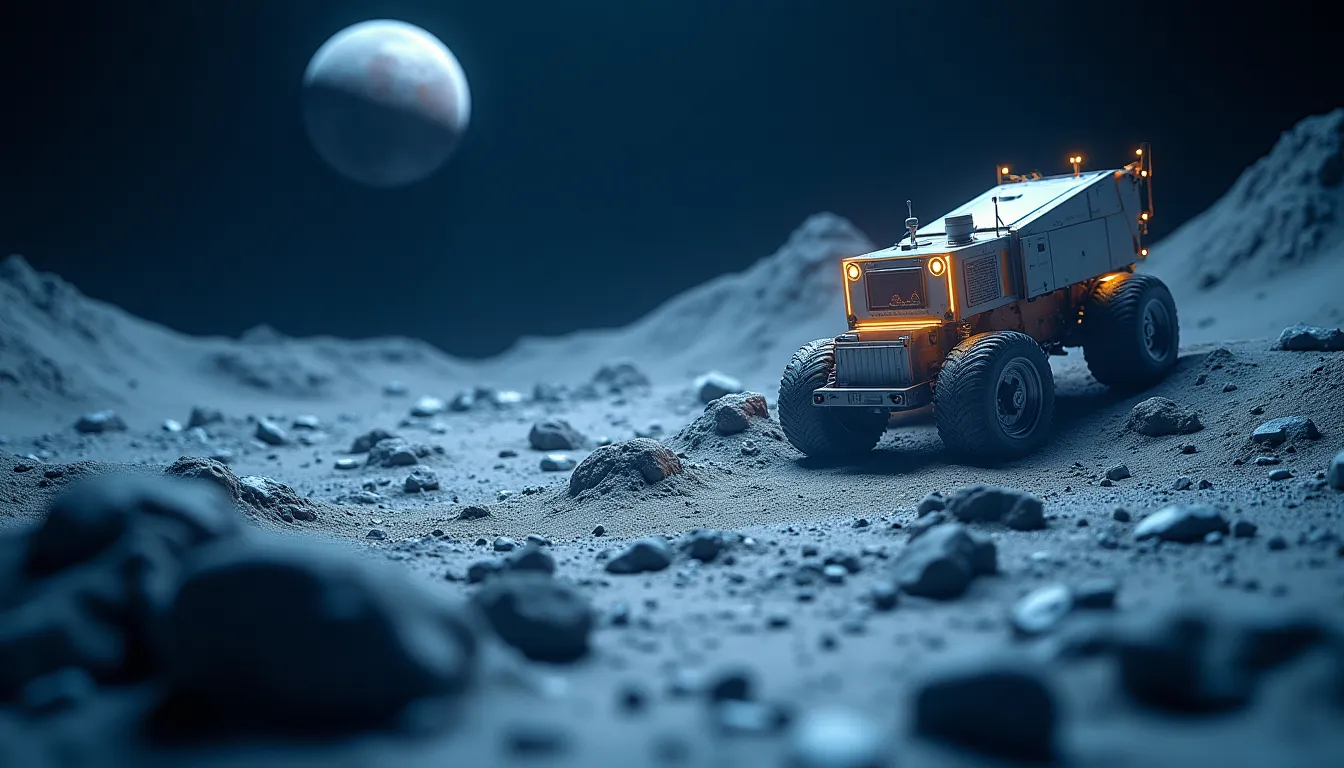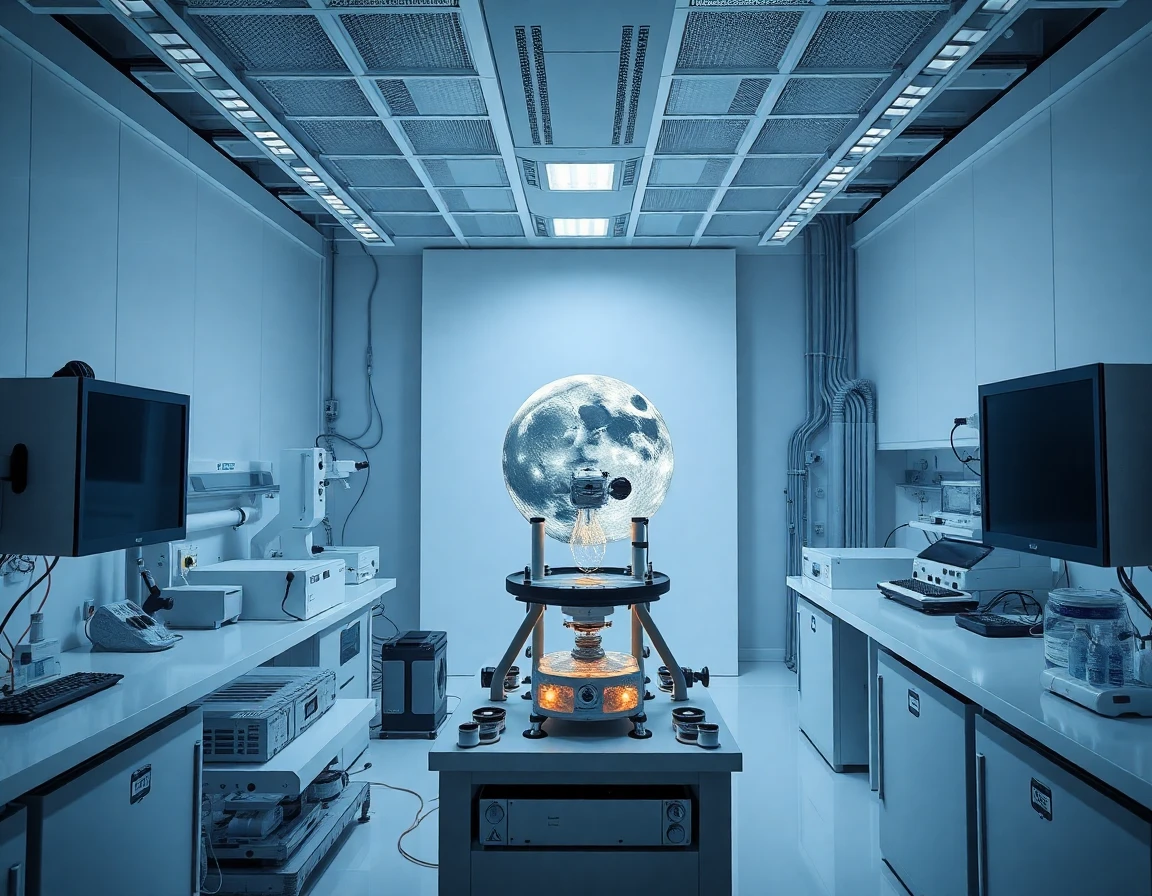
As space agencies and private companies increasingly focus on the Moon, lunar mining has emerged as a promising frontier for resource extraction. With the potential to mine valuable materials such as water ice, helium-3, and rare earth elements, the feasibility of lunar mining is under intense research scrutiny. In this article, we delve into the technical and economic aspects of lunar resource extraction and the technologies that could make it possible.
The Economic Imperative of Lunar Mining
Lunar mining presents a unique economic opportunity. The Moon is believed to hold vast deposits of essential resources that could support long-term human presence in space and even provide materials for construction on Earth. According to a recent report by the National Aeronautics and Space Administration (NASA), the Moon may contain up to 1 million metric tons of water ice in permanently shadowed regions. This resource could be crucial for sustaining lunar bases and supplying hydrogen fuel for deep space missions.
Key Resources and Their Importance
- Water Ice: Essential for life support and can be converted into hydrogen and oxygen for rocket fuel.
- Helium-3: A potential fuel for nuclear fusion, which could provide a cleaner energy source.
- Rare Earth Elements: Critical for modern electronics and technologies, which are increasingly scarce on Earth.
These resources could not only support lunar exploration but also create a new economic model for space activities.
Technical Feasibility: Challenges and Innovations
The technical challenges of lunar mining are significant. The Moon’s harsh environment, including extreme temperatures and low gravity, complicates the design and operation of mining equipment. To tackle these challenges, researchers are exploring various technologies that could enable effective lunar resource extraction.
Advanced Robotics and Automation
Robotic systems will play a crucial role in the extraction processes on the Moon. Automated mining robots equipped with advanced high-precision linear electric actuators will be essential for precise control of drilling and excavation operations. These actuators can adapt to the Moon’s rugged terrain and provide the necessary control for mining equipment, ensuring efficient operation in challenging conditions.
Surveying and Site Preparation
Before mining operations can commence, accurate surveying of potential mining sites is critical. Professional gyroscopic instruments, such as the YWJ01ZB150 series, can provide reliable azimuth determination and precise angle measurement, crucial for mapping the lunar surface and identifying resource-rich areas. These high-precision tools will allow engineers to plan mining operations effectively and minimize risks during extraction.
The Role of International Collaboration
Lunar mining is not solely the domain of one nation; it requires international cooperation. Projects like the Artemis program, which seeks to land astronauts on the Moon by 2024, involve partnerships with several countries and private enterprises. This collaborative approach can accelerate technological advancements and share the financial burdens associated with lunar exploration.
Expert Perspectives
Dr. Emily Chang, an aerospace engineer at the Lunar Exploration Institute, states, “The Moon represents a unique opportunity for resource extraction that could revolutionize our approach to space exploration and energy production on Earth. However, we must address the technological and regulatory challenges that come with it.”
Future Developments and Potential Impact
As research progresses, the timeline for lunar mining is becoming clearer. Companies like Astrobotic and Moon Express are already developing lunar landers and mining technologies aimed at commercial extraction in the coming decade. If successful, these initiatives could set the stage for a new era of space economy.
Environmental Considerations
While the potential benefits of lunar mining are immense, there are also concerns regarding environmental impacts. Ensuring sustainable practices that minimize disruption to the lunar environment will be critical. Future regulations must ensure that lunar mining does not compromise the integrity of this celestial body.
Conclusion
Lunar mining stands at the intersection of technological innovation and economic opportunity. As we push the boundaries of human exploration beyond Earth, the Moon may provide the resources necessary for sustainable living in space. With advancements in robotics, surveying technology, and international collaboration, the dream of lunar mining may soon become a reality. The next decade will be crucial in determining how humanity approaches resource extraction beyond our planet, paving the way for a new era in space exploration.
In summary, as we look to the Moon for its resources, the development of precision equipment and advanced robotics will be vital. The exploration of lunar mining is not just a technological challenge, but an economic and ethical one that will shape our future in space.
References
-
lunar mining Research - defensenews.com (defensenews.com)
-
lunar mining Research - aviationweek.com (aviationweek.com)
-
lunar mining Research - spacenews.com (spacenews.com)