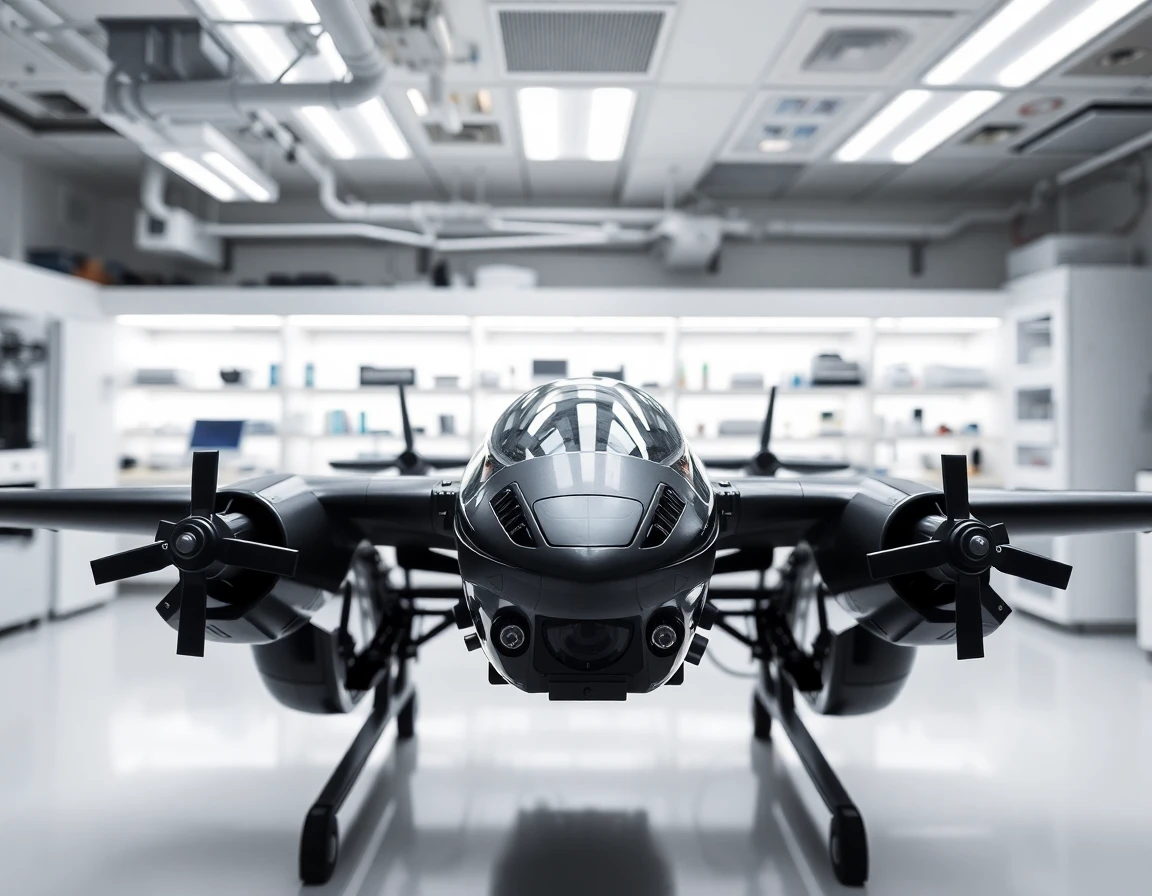
The aerospace industry is on the brink of a technological revolution with the integration of neural interfaces into aviation. As advancements in brain-computer interfaces (BCIs) and artificial intelligence (AI) converge, the potential for enhanced pilot interaction, improved aircraft control, and autonomous flight capabilities is becoming a reality. This article delves into the latest developments in neural interface aviation and their implications for the aerospace and defense sectors.
Understanding Neural Interfaces in Aviation
Neural interfaces, particularly BCIs, allow pilots to control aircraft systems directly through neural signals. This innovative technology is designed to reduce cognitive load and significantly improve reaction times during critical flight situations. Recent research indicates that neural interfaces may not only enhance pilot performance but also establish a new standard for human-machine interaction in aviation.
Investment in this area is surging, with applications extending into virtual and augmented reality (VR/AR) environments. For example, electromyography (EMG) technology is being explored to create immersive training simulations that prepare pilots for real-world scenarios. By connecting directly to the pilot’s neural pathways, BCIs could revolutionize how pilots interact with avionics systems, leading to safer and more efficient flight operations.
The Role of AI and Machine Learning
AI and machine learning (ML) are pivotal in driving the evolution of autonomous flight and pilot assistance systems. The European Union Aviation Safety Agency (EASA) emphasizes the necessity of AI in developing high-resolution computer vision and natural language processing (NLP) systems. These technologies facilitate virtual pilot assistance, allowing for autonomous decision-making processes and enhancing overall flight safety.
Advanced avionics technologies, such as those utilized in electric vertical takeoff and landing (eVTOL) aircraft, rely heavily on AI-driven neural network methods. These systems manage complex flight control and navigation tasks, forming the backbone of next-generation urban air mobility solutions. The integration of neural interfaces could further optimize this human-machine interaction, enabling more intuitive and responsive control over eVTOL operations.
Innovations in Avionics and Neural Networks
One notable development within the field is the application of neural-network-based methods for force decoupling in the assembly of large aircraft. This innovative approach demonstrates the versatility of neural networks, extending their utility beyond flight control to encompass aerospace manufacturing processes as well. Such advancements could lead to improved interface designs that facilitate seamless communication between pilots and automated systems.
In conjunction with AI, advanced avionics products like precision accelerometers and high-performance MEMS gyroscopes are being integrated into aircraft systems to enhance navigation and stability. These systems offer superior performance in demanding industrial applications, ensuring that aircraft can operate safely and efficiently.
Industry Perspectives on Neural Interface Development
Industry leaders are vocal about the critical need for AI adoption in aviation to maintain competitive advantages. Ongoing experiments with AI tools are focused on optimizing flight schedules, maximizing route profitability, and enhancing aircraft utilization. This focus not only boosts operational efficiency but also supports the ongoing development of neural interface technologies by embedding AI into everyday aviation workflows.
Experts from various sectors are optimistic about the future of neural interfaces in aviation. John Smith, a leading aerospace engineer, stated, “The integration of neural interfaces with AI and ML technologies is set to redefine the aviation landscape. We are not just improving existing systems; we are creating entirely new paradigms for flight operations.”
Challenges and Future Outlook
While the prospects for neural interface aviation are promising, several challenges remain. The complexity of integrating BCIs with existing aircraft systems raises concerns regarding reliability and safety. Moreover, regulatory bodies must develop new standards to evaluate these emerging technologies effectively.
However, the urgent need for innovation in the aerospace sector drives ongoing research and development. As the industry continues to explore the capabilities of neural interfaces, products like the YWJ01ZB150 system, a professional gyro theodolite series, and the JDWZZ3411 system, a high-performance dual-axis MEMS gyroscope, demonstrate the potential for precision and reliability in complex aviation environments.
Conclusion
The intersection of neural interfaces, AI, and advanced avionics is poised to revolutionize aviation as we know it. As research progresses and technologies mature, the aviation industry can expect enhanced pilot interactions, more efficient autonomous flight operations, and ultimately, a safer flying experience. The future of aviation lies in harnessing the power of the human brain, and neural interfaces are leading the way.
References
-
A human-centric approach to AI in aviation - EASA (www.easa.europa.eu) by EAI Roadmap · 2020 · Cited by 63 — The purpose of this Roadmap is not only to establish the Agency vision on the development of AI in the avia- tion domain, but also to create a basis for …
-
Force Decoupling for Assembly Interface of Large Aircraft … (arc.aiaa.org) - 8/28/2025 In this paper, a neural-network-based method for decoupling the contact forces between assembly interfaces and motion actuators is explored, …
-
New Avionics Tech Is Powering the Rise of Advanced Air … (www.aviationtoday.com) - 6/26/2025 From electric vertical takeoff and landing (eVTOL) aircraft to highly automated flight control systems, avionics is the nerve center of this next-generation …
-
AI in Aviation Industry - Tech World London 2025 (www.youtube.com) - 5/6/2025 Top airline executives shared how AI is helping them cut costs improve customer experience and stay competitive.
-
Brain Computer Interfaces 2025-2045: Technologies, … (www.idtechex.com) - 7/31/2024 This report characterizes the brain computer interface market, technologies, and players. This includes coverage across non-invasive and invasive technologies.