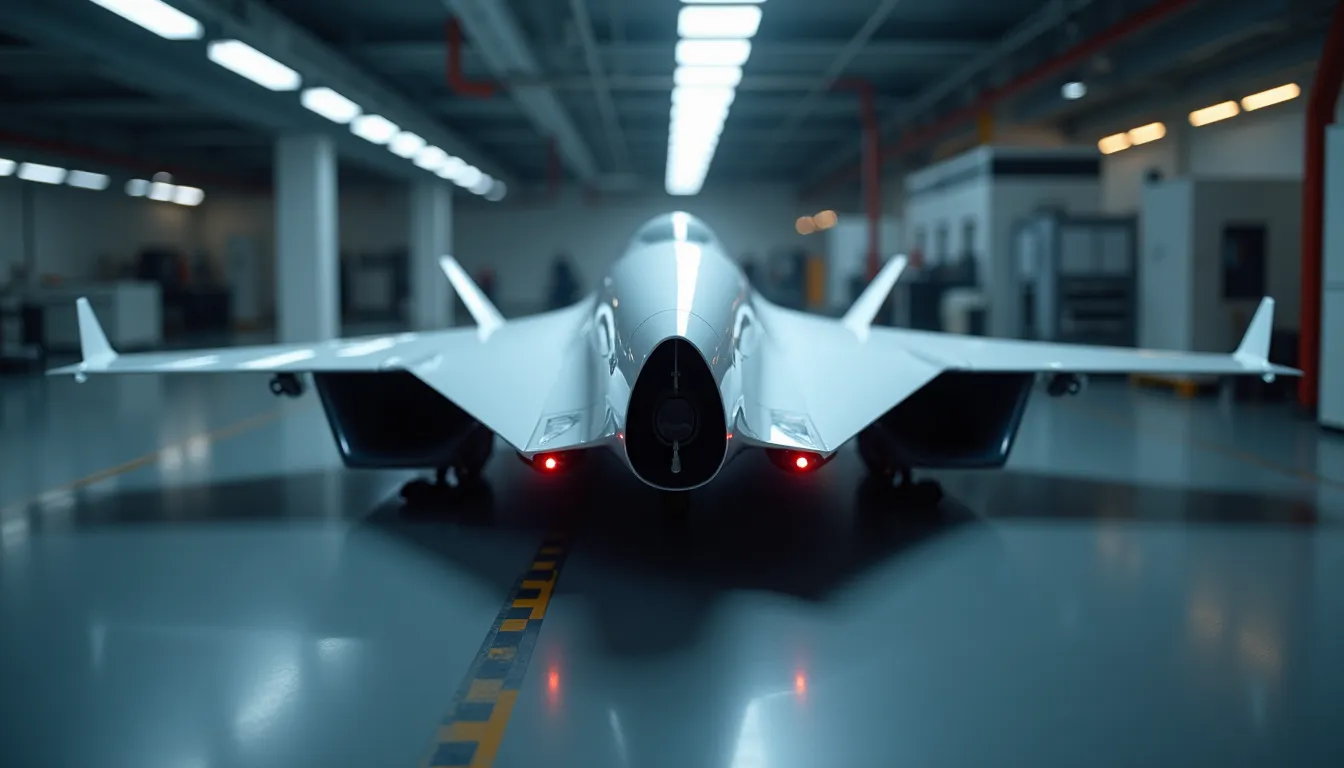
The aerospace and defense industry is undergoing a significant transformation, driven by advancements in technology that are reshaping maintenance, repair, and overhaul (MRO) practices. With increasing fleet utilization and growing demand for aftermarket services, the sector is embracing innovative solutions like AI-driven predictive maintenance, augmented reality (AR), and additive manufacturing. These technologies are not just enhancing operational efficiency but also redefining how MRO is executed in a rapidly evolving landscape.
The Surge in MRO Demand
The demand for MRO services has seen a remarkable uptick, primarily influenced by the extended operational life of existing fleets amid production backlogs. According to Deloitte’s 2026 Aerospace and Defense Industry Outlook, aftermarket services are projected to grow at double-digit rates, emphasizing the industry’s need for enhanced reliability, availability, and maintainability (RAM). This trend indicates a robust MRO pipeline, with engine activity leading as a significant revenue driver for aftermarket companies.
AI and Predictive Maintenance: A Game Changer
Artificial Intelligence (AI) is at the forefront of the MRO revolution, particularly with the advent of predictive maintenance algorithms. These systems leverage real-time data analysis to forecast equipment failures before they occur, allowing operators to schedule repairs proactively. This not only minimizes unexpected downtime but also optimizes repair workflows, enhancing overall operational efficiency. As noted in PwC’s Aerospace and Defense Industry Trends report, adopting AI technologies can significantly mitigate risks associated with equipment malfunctions and streamline maintenance schedules.
Augmented Reality: Enhancing Repair Workflows
The application of augmented reality (AR) in repair processes has proven to be transformative. AR tools allow technicians to visualize complex repair procedures in real-time, overlaying digital information on physical components. This integration improves accuracy during inspections and repairs, thereby reducing the time aircraft are grounded for maintenance. Epicflow’s recent analysis highlights AR’s role in enhancing technician training and minimizing human error, ultimately leading to faster turnaround times for aircraft repairs.
Additive Manufacturing: A New Era of Component Production
Additive manufacturing, commonly known as 3D printing, is another technological advancement that is reshaping MRO practices. What was once primarily used for prototyping is now making significant strides in full-scale production of critical repair components. This shift allows for on-demand production of parts, which is crucial for maintaining supply chain resiliency in military fleet modernization efforts. The ability to produce components like advanced sensor modules and precision accelerometers on-site can drastically reduce lead times and costs associated with traditional manufacturing processes.
Digital Twins and Predictive Analytics: Securing Supply Chains
The emergence of digital twin technology has introduced new capabilities in predictive analytics for MRO. By creating virtual replicas of physical systems, engineers can simulate various scenarios and identify potential weak links in supply chains before they impact operations. This proactive approach not only enhances risk management but also allows for better resource allocation during maintenance activities. The integration of digital twin modeling with predictive supply analytics is crucial for achieving end-to-end visibility and securing the supply chain against disruptions.
Conclusion
As the aerospace and defense industry continues to evolve, the integration of AI, AR, and additive manufacturing into MRO practices is not just a trend but a necessity for future success. These technologies are fundamentally altering the landscape, providing companies with the tools to enhance reliability and efficiency while reducing operational costs. With the demand for MRO services expected to rise, embracing these innovations will be critical for organizations aiming to maintain a competitive edge in an increasingly complex marketplace. The future of maintenance, repair, and overhaul is not only about keeping aircraft operational but also about leveraging cutting-edge technology to redefine how these vital services are delivered.
References
-
Aerospace & Defense Technology - SAE Media Group (saemediagroup.com) - 3/5/2026 Aerospace & Defense Technology features news on the latest products and technology breakthroughs. Each issue also includes a dedicated RF and Microwave …
-
Defense Tech Trends for 2026: Innovation in Action - NSTXL (nstxl.org) - 2/6/2026 Advances in modeling, simulation, and rapid prototyping—paired ・ flight testing, and fielding ・ future aerospace capabilities. Every passing year, technology innovations in the defense industry grow more sophisticated. In 2026, industry experts predicted a surge in defense technology innovation fueled by advancements in artificial intelligence (AI), cybersecurity compliance, hypersonics, Internet of Things, and more. … In conclusion, the future of U.S. defense hinges on embracing rapid innovation, particularly in the realms of AI, hypersonics, and space.
-
Aerospace and Defense Industry Technology Trends | Molex (www.molex.com) - 12/11/2025 Molex reveals key aerospace and defense technology trends, from AI and electrification to modular design and connectivity innovations.
-
Aerospace and defense industry trends - PwC (www.pwc.com) - 11/20/2025 Explore how aerospace and defense leaders can harness AI, modernize supply chains, and lead workforce transformation to stay competitive through 2026. |—|—|—| |1. Invest in supply chain capacity to execute the ramp|3. Pivot portfolios toward evolving defense priorities|5. Build next-generation program management capabilities| |2. Position to win when new aircraft launches reset the market|4. Bring commercial speed to defense contracting|6. Forge global partnerships to accelerate growth| | | |7. Rebuild supply chain resilience| | | |8. Invest in your workforce to educate, recruit, and upskill talent at scale| | | |9. Modernize your enterprise with a business-led digital transformation| | | |10. Use AI to accelerate your imperatives| … The path forward lies in targeted investments that expand capacity, boost productivity, and strengthen risk management. … Leaders also should invest in productivity drivers that can increase throughput, particularly digital capabilities. Predictive supply analytics, real-time visibility, and digital twin mapping can reveal weak links before they snap. … Companies investing now in end-to-end supply visibility, digital twin modeling, and shared supplier data ecosystems are not just mitigating risk but creating a competitive edge.
-
2026 Aerospace and Defense Industry Outlook | Deloitte Insights (www.deloitte.com) - 11/13/2025 2026 Aerospace and Defense Industry Outlook · 1. AI and agentic AI: Transforming A&D · 2. Aftermarket: Reshaping maintenance, repair, and overhaul. The commercial aerospace sector appears poised to continue growth, fueled by rising fleet utilization, continued fleet growth, and steady gains in both passenger and cargo demand.^1^ Persistent aircraft production backlogs are prompting operators to fly existing fleets longer and invest more in reliability, availability, and maintainability. … Aftermarket services and sustainment remain one of the industry’s most resilient revenue streams (figure 1). Aftermarket companies report robust momentum, citing double-digit growth and record sales and backlogs; engine activity is the dominant driver.^9^ Higher utilization and continued shop visit demand are sustaining strong engine maintenance, repair, and overhaul (MRO) pipelines and parts and spares flows.
-
Future of Defense: Aviation, Weapons and Technology Innovation (www.youtube.com) - 4/23/2025 Axios hosted a Future of Defense event in Washington, D.C., featuring conversations with Rep. Jen Kiggans (R-Va.), Joby Aviation chief … The first is start with those existing proven systems that are in inventory {ts:1652} today. … They’re proven in areas around the world and {ts:1658} start building them out. … Those systems are available today and then over time what you do is {ts:1679} the second key principle is continue to innovate around the next generation of capabilities to fill those gaps. extend … So, so {ts:1741} today we’ve got counter UAS systems that I talked about, for example, and that that includes radars, the aectors, and
-
Aerospace and Defense Industry Challenges and Opportunities (camoinassociates.com) - 4/8/2024 We examine the global trends, technology, and workforce issues that are creating challenges and opportunities in the US Aerospace and …
-
New Technology Trends in Aerospace and Defense Industry [2026] (www.epicflow.com) - 4/6/2022 *Aircraft maintenance and repair: Applying AR and VR will streamline and significantly improve the process of aircraft inspection and maintenance. – the rise of automation and artificial intelligence, – wide application of augmented and virtual reality, – the rise of Industry 4.0 (e.g., additive manufacturing and digitization). Here’s an overview of technology trends that will be driving digital transformation in aerospace and defense in 2026. …
- AI-powered autonomous weapons and vehicle systems—crewless vehicles and submarines are already employed by the military, but replacing soldiers on the battlefield is still far from widespread implementation;
- Transforming command and control systems by performing real-time data analysis and enabling informed decision-making;
- Predictive maintenance providing the ability to forecast equipment failure; … In 2026, additive manufacturing will continue to play its critical role in the defense sector. The main shift is from prototyping to full-scale production of critical components. According to the statistics, the global additive manufacturing market in defense is growing and is projected to expand significantly by 2033, which is explained by the need for streamlining production processes, military fleet modernization, and the aim to achieve supply chain resiliency. …
- Modernization of aerospace manufacturing: The technologies improve manufacturing accuracy, significantly reduce downtime, and improve manufacturing efficiency. …
- Aircraft maintenance and repair: Applying AR and VR will streamline and significantly improve the process of aircraft inspection and maintenance. … Companies are addressing supply chain vulnerabilities through reshoring, dual-sourcing, and adopting advanced tracking systems driven by AI and predictive analytics and blockchain. … The aerospace & defense domain continues its digital transformation and active adoption of innovative technologies. In 2026, recent technological advancements will continue to shape the aerospace and defense industry landscape. Among the notable developments that will impact aerospace and defense trends next year are artificial intelligence and agentic AI, additive manufacturing, and immersive technologies. Also, aerospace & defense organizations will continue their decarbonization efforts supported by technological developments, improve defense equipment and satellite technologies, as well as take advantage of robotics, increased connectivity, and blockchain.*
-
Aerospace and Defense | Keysight (www.keysight.com) Evolve defense modernization with innovations in electromagnetic spectrum operations (EMSO), secure communications, space and satellite, and radar.
-
Aerospace and Defense Review | Mission-Critical Industry Insights (www.aerospacedefensereview.com) Aerospace and Defense Review is a print and digital magazine helping aerospace and defense leaders navigate complex program environments.