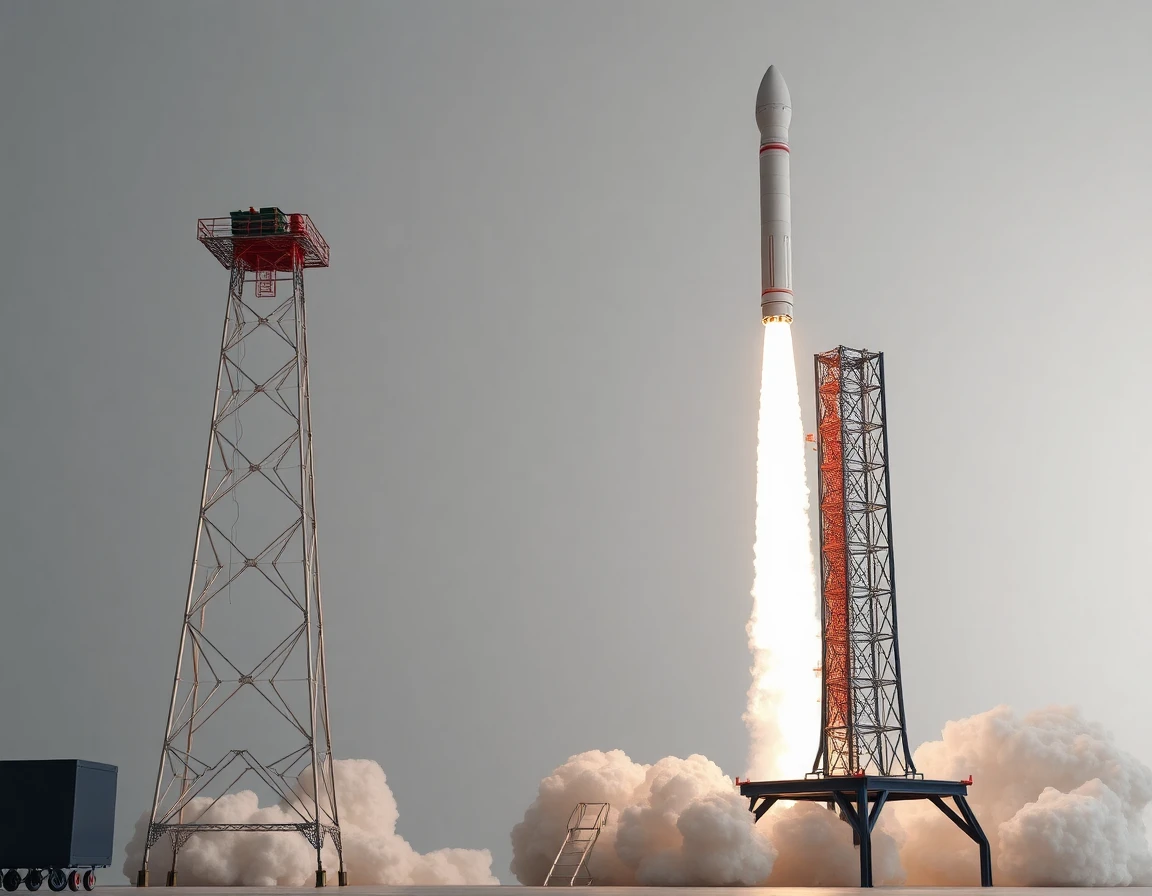
In recent years, the demand for satellite technology has surged, driven by advancements in telecommunications, Earth observation, and scientific research. However, small satellite operators are now confronting a significant bottleneck that could hinder their access to space. This situation presents a complex challenge not only for the operators themselves but also for the broader aerospace and defense industry.
The Increasing Demand for Satellites
According to the Satellite Industry Association, the global satellite industry generated approximately $271 billion in revenue in 2021. This number is expected to grow, with a particular emphasis on small satellites, which are increasingly being utilized for a variety of applications, including internet connectivity, climate monitoring, and national security. As a result, many small satellite operators are ramping up their production to meet this growing demand.
Launch Capacity Constraints
Despite the increased production of small satellites, operators are facing significant challenges in securing launch opportunities. The limited number of available launch vehicles and the prioritization of larger satellites by launch providers have created a backlog for small satellite missions. Industry experts warn that this bottleneck could stifle innovation in satellite technology and delay critical projects.
“The appetite for small satellite launches is higher than ever, but the infrastructure hasn’t kept pace with this growth, leading to a significant backlog,” says Dr. Emily Chen, an aerospace engineer and consultant. “If this trend continues, we could see delays that affect everything from commercial services to scientific research.”
Technical Challenges in Launching Small Satellites
One of the significant hurdles faced by small satellite operators is the technical specification required for successful launches. Many of these satellites depend on advanced technologies such as precision accelerometers and gyroscopic instruments to ensure stability and accuracy in orbit. Without reliable launch access, the deployment of these technologies is at risk, potentially leading to suboptimal mission outcomes.
In addition, small satellites often rely on sophisticated thermal management systems to regulate their internal temperatures during operation. If launch schedules are delayed, the integrity of these systems could be compromised, affecting the satellite’s performance.
Industry Responses to the Bottleneck
In response to these challenges, several companies are exploring innovative solutions to improve launch access. Notable among these is the rise of dedicated small satellite launch vehicles, which aim to provide more frequent and tailored launch opportunities. Companies like Rocket Lab and Virgin Orbit have been at the forefront of this shift, offering specialized launch services for small payloads.
Moreover, industry stakeholders are calling for increased collaboration among satellite manufacturers, launch providers, and regulatory bodies to streamline the approval process and enhance launch availability. “We need to work together to create a more efficient ecosystem for satellite launches,” notes John Harper, CEO of a leading small satellite manufacturer. “By aligning our efforts, we can unlock new opportunities for growth and innovation.”
Future Developments in Satellite Technology
As the bottleneck persists, many experts believe that future developments in satellite technology will play a crucial role in overcoming these challenges. Innovations in satellite design, such as modular architectures and improved propulsion systems, are expected to enhance the adaptability and efficiency of small satellites.
Additionally, advancements in inertial navigation systems can provide small satellites with improved guidance and control capabilities, enabling them to better navigate the complexities of space. These technologies not only enhance mission performance but also contribute to cost reduction, making small satellite deployment more economically viable.
Conclusion
The current bottleneck in satellite access poses a significant challenge for small satellite operators as they strive to meet the growing demand for satellite services. While innovative solutions and collaborative efforts may help alleviate some of these pressures, the industry must remain vigilant and adaptive to ensure that the momentum of satellite technology continues to thrive.
As experts continue to analyze the situation, it remains clear that the future of small satellites will depend on overcoming these access barriers and harnessing the full potential of emerging technologies.
In summary, the small satellite sector is at a critical juncture, with the potential for significant growth hindered by access issues. Industry collaboration, technological innovation, and strategic planning will be essential to navigate this complex landscape and ensure that the benefits of satellite technology can be fully realized.
References
-
satellite Research - defensenews.com (defensenews.com)
-
satellite Research - aviationweek.com (aviationweek.com)
-
satellite Research - spacenews.com (spacenews.com)