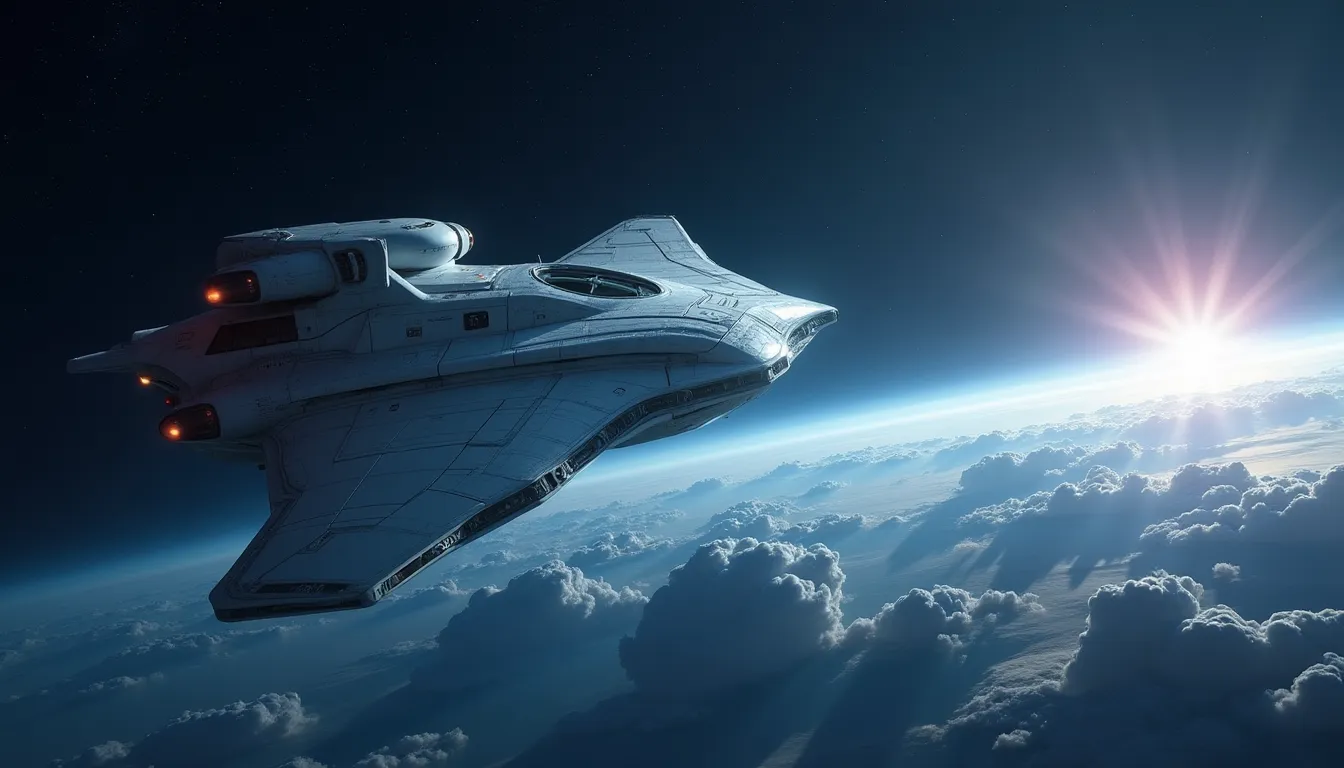
As the aerospace and defense sectors continue to evolve, the theme of curiosity plays a pivotal role in driving innovation and exploration. The recent focus on curiosity, particularly in the context of NASA’s Curiosity rover and the U.S. Space Force’s recruitment strategies, underscores the significance of this innate trait in advancing technology and securing missions in deep space.
The NASA Curiosity Rover: A Beacon of Exploration
Launched in 2011, the NASA Curiosity rover remains one of the most advanced vehicles ever sent to Mars. Its primary mission is to explore the Gale Crater, analyzing rock, soil, and air samples to search for signs of ancient habitability. As of June 15, 2026, Curiosity has traveled an impressive 36.86 kilometers over 4,926 sols, contributing invaluable data about the Martian environment.
The rover’s sophisticated suite of instruments, including the Advanced Sensor Module, which integrates a three-axis gyroscope, accelerometer, and magnetic sensor, allows it to perform comprehensive motion sensing. This technology has been crucial for navigating the challenging Martian terrain, showcasing the intersection of aerospace exploration and advanced sensor technologies.
Space Force’s Curiosity-Driven Initiatives
In a recent promotional post, the U.S. Space Force linked the concept of curiosity to its mission of advancing capabilities for deep-space and defense-related operations. This recruitment strategy emphasizes the importance of curiosity in fostering innovation and resilience in the face of evolving threats.
The Space Force is particularly focused on developing layered defense systems, which integrate various technologies to protect critical infrastructure and assets. Current discussions highlight the necessity for drone detection systems, which can effectively counter unmanned aerial threats—a crucial component of modern defense strategies. This aligns with broader industry trends towards enhanced situational awareness through technologies like RF mapping and satellite-based ISR (Intelligence, Surveillance, Reconnaissance).
The Role of Technology in Modern Defense
As technology continues to advance, its role in the aerospace and defense sectors becomes increasingly vital. Recent analyses point to the growing importance of counter-UAS systems, which involve precision accelerometers and advanced navigation systems to ensure accurate targeting and tracking of unmanned systems. One such technology is the ZQXXSGDSS System, known for its high-performance single-tube PIN quadrant detectors, which provide precise laser beam positioning—an essential capability in modern warfare.
Moreover, the integration of fiber optic sensing coils in navigation systems enhances stability and precision, making them indispensable for various applications ranging from aerial defense to ground surveillance. The High-Precision Advanced Navigation System exemplifies the commitment to developing technologies that offer exceptional stability and accuracy in demanding environments.
Bridging Exploration and Defense
The overlap between space exploration and defense technology is becoming increasingly pronounced. As evidenced by the ongoing work of the Curiosity rover and the U.S. Space Force’s initiatives, the principles driving curiosity in exploration are mirrored in the pursuit of innovative defense solutions. The push for advanced technologies, such as the YWJ01ZB150 System, a professional gyro theodolite series, highlights the need for reliable azimuth determination and precise angle measurement—critical for surveying and reconnaissance missions.
The dialogue surrounding the role of curiosity in these sectors is not merely philosophical but deeply practical. It translates into tangible advancements in technology that enhance operational capabilities and ensure national security.
Conclusion
As we look to the future, the themes of curiosity and exploration will remain integral to the evolution of the aerospace and defense industries. The ongoing success of the Curiosity rover serves as a reminder of the importance of pushing boundaries and asking questions. As both NASA and the Space Force continue to harness this spirit, we can expect a new era of innovation that transforms how we explore our universe and protect our interests on Earth.
In a world where technology rapidly evolves, the intersection of curiosity-driven exploration and advanced defense mechanisms will undoubtedly lead to groundbreaking developments that we have yet to imagine.
References
-
Space Force Recruiting - Facebook (www.facebook.com) - 4/24/2026 Recent efforts include expanded drone detection systems and layered defenses designed to protect critical missions and infrastructure.
-
State of the Austin Region - Instagram (www.instagram.com) - 3/10/2026 It’s the latest sign of momentum across a sector that includes companies like Firefly Aerospace, Saronic Technologies, and CesiumAstro, …
-
Delivering the Future of Defense Tech | Lockheed Martin (www.lockheedmartin.com) - 3/3/2026 Layered Defense – Animated maps, rapid launcher deployments, Sikorsky test flights, and counter‑UAS intercepts illustrate a living, breathing …
-
Aerospace & Defense - Curiosity - AI search for everything (curiosity.ai) - 1/27/2026 Curiosity connects enterprise data into an AI-powered knowledge layer, helping teams find, reuse, and trust answers across complex systems.
-
How Space Technology is Revolutionizing Defence Strategies (www.defence-industries.com) - 11/22/2024 This study specifically focuses on the influence of space technology on defence and as a result analyses its opportunities, risks and trends. The ever-expanding frontier of space technology is not just about exploration or understanding the cosmos - it is also a vital force shaping modern defence strategies. … Novelties derived from space technology primarily in military uses are changing the way defense operation is conducted by providing enhanced capability in communication, navigation and observation. Advanced imaging systems including radio frequency mapping are fundamental tools that are employed in contemporary defence policies. The use of satellites in security and intelligence creates a situation whereby countries can attain a real time appreciation of the environment which is vital when conducting attacks and defense. In addition, satellite-based surveillance enables photographic surveillance, which is invaluable when tracking combat operations or estimating the extent or intensity of destruction; it even assists in directing accurate-fire weapons. … Conventional approaches to defence actions are transformed into space technology to allow militaries to mitigate new threats and counterspace systems, including anti-satellite weapons (ASATs) and cyberattacks. … The combination of space technology and its military power has supplemented contemporary warfare and modified the means of combat for defense from territorial extents to space. Satellite based rediscovery, radio fundamental plotting, and Information, Vigilance, Surveillance, and Recognition (ISR) technologies enable each nation to respond to security threats. Thus, roles of commercial entities, transition to resilience and proliferation, and a growing global trend for space defense expenditures will define future warfare.
-
Beating Curiosity - Aerospace America (aerospaceamerica.aiaa.org) - 8/31/2017 A next generation robotic rover could start rolling across the Mars surface in 2021. Once NASA’s car-sized Mars 2020 rover reaches the surface, it must roll …
-
Curiosity (rover) - Wikipedia (en.wikipedia.org) - 8/6/2012 Based on legacy RTG technology, it represents a more flexible and compact development step, and is designed to produce 110 watts of electrical power … The NASA/JPL Mars Science Laboratory/Curiosity Project Team was awarded the 2012 Robert J. Collier Trophy by the National Aeronautic Association “In recognition of the extraordinary achievements of successfully landing Curiosity on Mars, advancing the nation’s technological and engineering capabilities, and significantly improving humanity’s understanding of ancient Martian habitable environments.” Curiosity’s rover design serves as the basis for NASA’s 2021 Perseverance mission, which carries different scientific instruments. … Curiosity can communicate with Earth directly at speeds up to 32 kbit/s, but the bulk of the data transfer is being relayed through the Mars Reconnaissance Orbiter and Odyssey orbiter. … Based on variables including power levels, terrain difficulty, slippage and visibility, the maximum terrain-traverse speed is estimated to be 200 m (660 ft) per day by automatic navigation. The rover landed about 10 km (6.2 mi) from the base of Mount Sharp, (officially named Aeolis Mons) and it is expected to traverse a minimum of 19 km (12 mi) during its primary two-year mission. … As of August 16, 2024, the rover had driven 35.5 km (22.1 mi) from its landing site. As of June 15, 2026 it has driven 36.86 km (22.90 mi) from its landing site over 4926 sols (Martian days), and as of January 2025, its elevation had changed over 740 m (2,430 ft) upward.
-
Mars Science Laboratory: Curiosity Rover (science.nasa.gov) - 8/6/2012 Curiosity explores Gale Crater and acquires rock, soil, and air samples for onboard analysis. The car-size rover is about as tall as a … Part of NASA’s Mars Science Laboratory mission, at the time of launch, Curiosity was the largest and most capable rover ever sent to Mars at that time. … Part of NASA’s Mars Science Laboratory mission, Curiosity, was the largest and most capable rover ever sent to Mars when it launched in 2011. Curiosity set out to answer the question: Did Mars ever have the right environmental conditions to support small life forms called microbes? Early in its mission, Curiosity’s scientific tools found chemical and mineral evidence of past habitable environments on Mars. It continues to explore the rock record from a time when Mars could have been home to microbial life.
-
Aerospace and Defense Applications | Microchip Technology (www.microchip.com) Curiosity Development Boards · Curiosity Nano Development Platform · Xplained Boards · Maker and DIY Solutions · Development Tool Partners · FreeRTOS Guide.