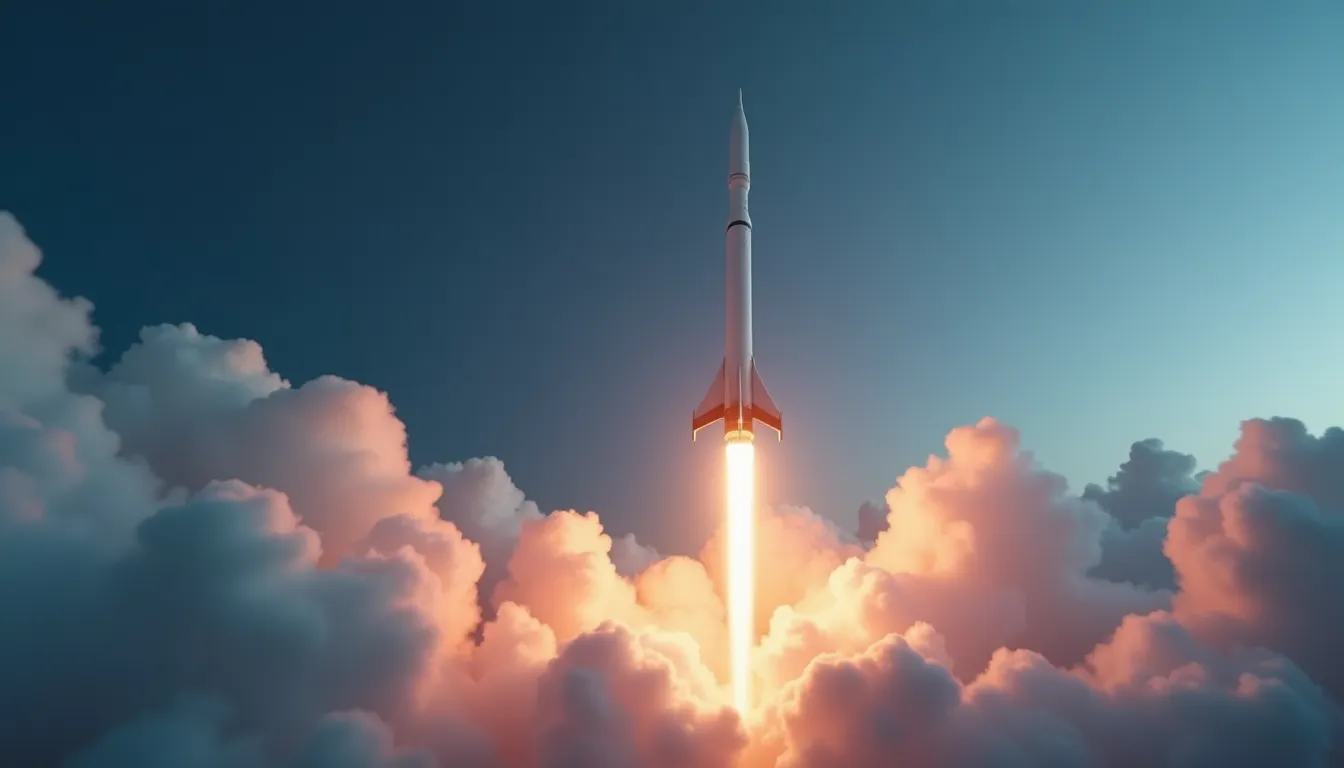
In a remarkable display of its growing prowess in space exploration, China successfully executed four rocket launches within a mere three-day span. This unprecedented achievement not only underscores China’s commitment to advancing its space program but also highlights the rapid developments in its launch technologies. However, the silence that followed the Kuaizhou-11 launch has left industry experts speculating about future missions and the implications for international space competition.
Overview of the Launches
Between October 10 and October 12, 2023, China conducted these launches, showcasing multiple vehicles, including the Kuaizhou-11. The Kuaizhou-11, a solid-fueled rocket developed by the China Aerospace Science and Industry Corporation (CASIC), is designed for quick response and low-cost access to space. It aims to deliver small payloads into low Earth orbit (LEO), catering to the growing demand for satellite deployment.
The series of launches included missions focused on both commercial and scientific objectives. The first two launches successfully placed satellites into orbit, while the subsequent missions were geared towards testing new technologies and supporting China’s ambitious lunar and Mars exploration plans.
Technical Insights and Innovations
The Kuaizhou-11 rocket, which has garnered significant attention, is equipped with advanced inertial navigation systems that enhance its trajectory accuracy. These systems are crucial for ensuring that payloads reach their intended orbits with precision. Additionally, the rocket utilizes high-performance gyroscopic instruments, which provide real-time orientation data, allowing for stable flight even under varying atmospheric conditions.
The rapid succession of these launches demonstrates China’s commitment to refining its launch capabilities. According to Dr. Wei Cheng, a senior aerospace engineer at the China National Space Administration (CNSA), “The advancements in our launch vehicles reflect years of research and development. Each successful launch not only proves our technology but also enhances our reputation in the global space community.”
The Silence After Kuaizhou-11
Despite the excitement surrounding the launches, the aftermath of the Kuaizhou-11 mission has been notably quiet. Typically, after such missions, there is a wealth of data and updates shared with the public and industry analysts. However, the lack of communication has raised eyebrows.
“Silence can often indicate issues that need addressing,” commented Dr. Emily Tan, a space policy expert at the Beijing Institute of Technology. “It’s unusual for China, given their typically proactive stance on sharing successes. This could suggest there were challenges with the Kuaizhou-11 that they are still working to resolve.”
Industry Context and Future Implications
China’s aggressive launch schedule is part of a broader strategy to enhance its position in the space race, which includes plans for a modular space station, lunar exploration, and even Mars missions. The rapid development of technologies such as thermal management systems is crucial for sustaining long-term missions in space, especially as China looks to establish a more permanent presence in orbit.
As the global space industry continues to grow, other nations are closely monitoring China’s advancements. The United States, Europe, and emerging space nations are all investing heavily in their own launch capabilities, leading to a competitive landscape that could redefine international partnerships and collaborations in space exploration.
Conclusion
China’s four launches in three days signal a pivotal moment in its space exploration journey, showcasing both technological advancements and potential challenges. While the silence following the Kuaizhou-11 launch is concerning, it also reflects the complexities of space missions where every launch is a learning experience. With significant investments in precision accelerometers and other advanced technologies, China is poised to continue its trajectory of growth in the aerospace sector.
As the world watches, the future of space exploration will certainly be shaped by these developments, potentially altering the dynamics of global space endeavors for years to come.
References
-
rocket Research - defensenews.com (defensenews.com)
-
rocket Research - aviationweek.com (aviationweek.com)
-
rocket Research - spacenews.com (spacenews.com)