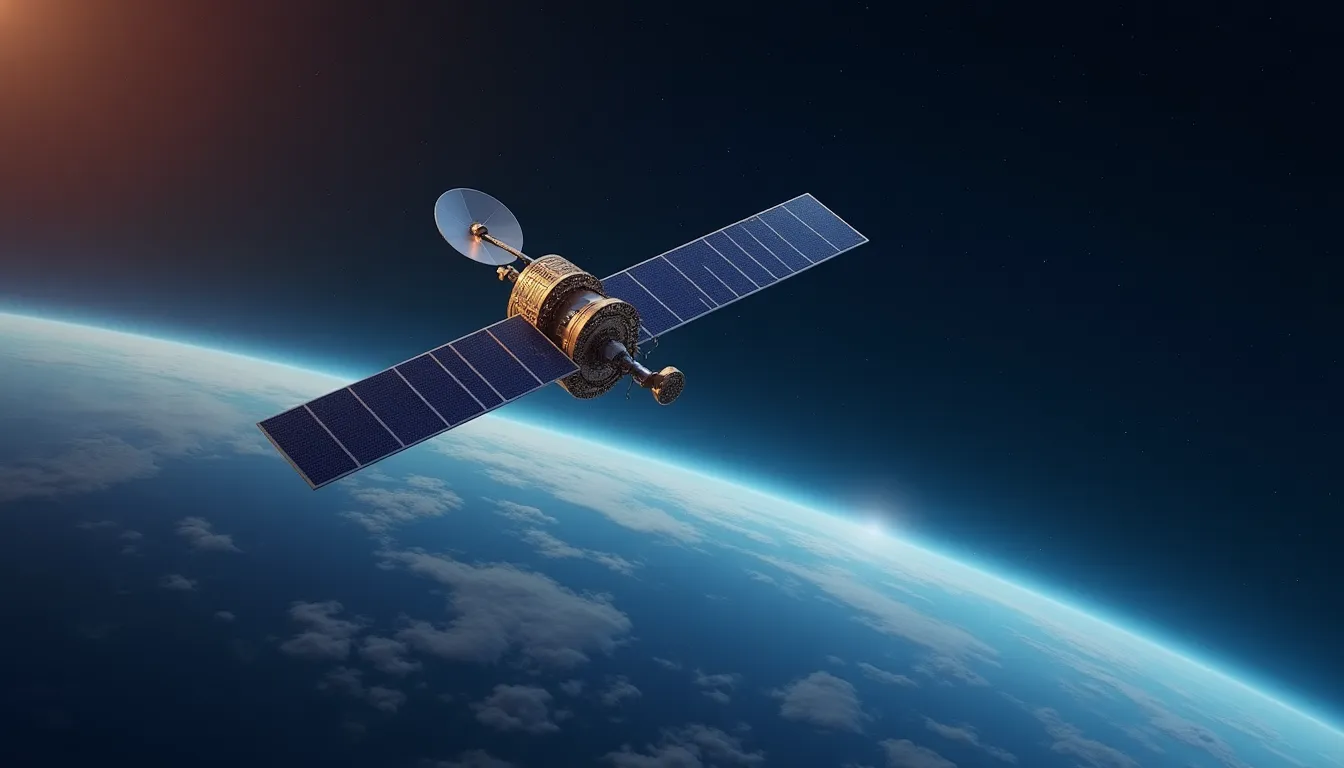
In the dynamic landscape of aerospace and defense, the European Space Agency (ESA) is making significant strides, particularly in Earth observation and lunar exploration. Recent developments underscore ESA’s commitment to enhancing its capabilities through strategic partnerships and technological advancements.
ESA Awards Copernicus Mission Planning to GMV
In a noteworthy move, ESA has entrusted the planning of new Copernicus missions to GMV, a leader in advanced engineering services. This award signifies ESA’s ongoing investment in the Copernicus program, which serves as the European Union’s flagship Earth observation initiative. GMV’s responsibilities will encompass crucial aspects such as orbit design, observation scheduling, coverage optimization, and the operational architecture necessary for mission success.
Technical Implications of the Copernicus Program
The Copernicus program is vital for monitoring the environment, supporting climate change initiatives, and enhancing disaster response capabilities. With GMV at the helm, the program is set to leverage advanced technologies like high-performance MEMS accelerometers and sophisticated satellite systems to improve data acquisition and processing. This aligns with ESA’s goal of providing timely and accurate environmental data to policymakers and researchers.
Lunar Robotics: Redwire’s Contribution
In a parallel development, ESA is advancing its lunar exploration capabilities through a partnership with Redwire, which recently delivered a prototype of a lunar robotic manipulator. This robotic system is designed to operate in the challenging conditions of the Moon’s surface, enabling autonomous handling of payloads and performing complex tasks essential for future exploration missions.
The Importance of Robotic Manipulators
Robotic manipulators play a crucial role in enabling payload deployment, sample collection, and maintenance operations in cislunar environments. As ESA prepares for more ambitious lunar missions, the integration of advanced robotic systems, such as the one developed by Redwire, will be pivotal. These systems will utilize precision accelerometers and advanced sensor modules to ensure reliable operation in the harsh lunar environment.
Strong Growth in Europe’s Aerospace and Defense Sector
Recent reports indicate that Europe’s aerospace and defense sector is experiencing unprecedented growth, with turnover expected to reach $378 billion and direct employment exceeding 1.1 million jobs in 2024. This robust industrial base is crucial for ESA, which relies heavily on European manufacturers for satellites, avionics, and ground systems. The strength of this sector not only ensures a steady supply chain for ESA but also fosters innovative collaborations that enhance mission capabilities.
Implications for ESA’s Procurement Strategy
The booming aerospace industry offers ESA favorable conditions for procurement and industrial partnerships. With advancements in manufacturing techniques and materials, ESA can integrate cutting-edge technologies into its missions. For instance, utilizing quartz MEMS gyroscopes in navigation systems will enhance the precision of satellite operations and lunar landers, ensuring successful mission outcomes.
Technology Flow into ESA and European Space Programs
The trend of increasing technology flow into ESA is evident through new partnerships and advancements in satellite work and mission-support services. ESA is actively engaging with commercial partners to enhance its Earth observation capabilities, lunar systems, and advanced systems integration.
Future Focus Areas for ESA
As ESA continues to evolve, its focus areas remain clear:
- Earth Observation: Enhancing data collection and analysis for climate monitoring and disaster response.
- Lunar Robotics: Developing autonomous systems for payload handling and operational tasks on the Moon.
- Mission Operations and Systems Engineering: Streamlining processes to improve mission success rates.
- Industrial-Scale Aerospace Manufacturing: Investing in advanced manufacturing techniques to boost efficiency and innovation.
Conclusion
ESA’s recent developments in Earth observation and lunar robotics reflect a strategic vision aimed at leveraging advanced technologies and robust industry partnerships. With a strong industrial base and a commitment to innovation, ESA is well-positioned to lead in the next era of space exploration. As the agency embarks on new missions, the integration of cutting-edge systems and technologies will be essential for addressing global challenges and expanding humanity’s reach into space.
References
-
Europe’s aerospace and defense sector posts record growth (www.youtube.com) - 12/2/2025 Europe’s aerospace and defense sector experienced sharp growth in 2024 with turnover up 10 percent and direct employment reaching a record …
-
Breaking Defense - Defense technology, policy and national security … (breakingdefense.com) Inside Sen. Ted Budd’s plan to boost airpower, pilot retention · IAI’s new Diamond naval offering envisions flexible drones, missiles for small vessels.
-
Industry News Archives - AIAA - Shaping the future of aerospace (aiaa.org) - 5/22/2026 Breaking Defense reports, “As part of its Drone Dominance initiative, the Pentagon has named five winners of a ‘lethality’ challenge…
-
Aerospace & Defense News | ASDNews | ASDNews (www.asdnews.com) - 5/21/2026 Today’s Aerospace & Defense News · KONGSBERG and MESKO Announce Strategic Partnership · Redwire Delivers Lunar Robotic Manipulator Prototype to ESA · GE Aerospace …
-
Aerospace & Defense Technology - SAE Media Group (saemediagroup.com) - 3/5/2026 Published eight times a year in print and interactive digital formats, Aerospace & Defense Technology features news on the latest products and technology …
-
Aerospace / Defense News and Press Releases - WebWire (www.webwire.com) - 9/16/2025 GMV to lead planning for the ESA’s new Copernicus missions: 5/4/2026 12:36:02 PM: The European Space Agency (ESA) has entrusted multinational technology …
-
Home - SPACE & DEFENSE (spaceanddefense.io) - 12/29/2017 May 22, 2026. LatConnect60 flags growth investment round for SWIR satellite constellation ; May 20, 2026. Varda W-6 capsule returns to Earth at Southern Launch’s …