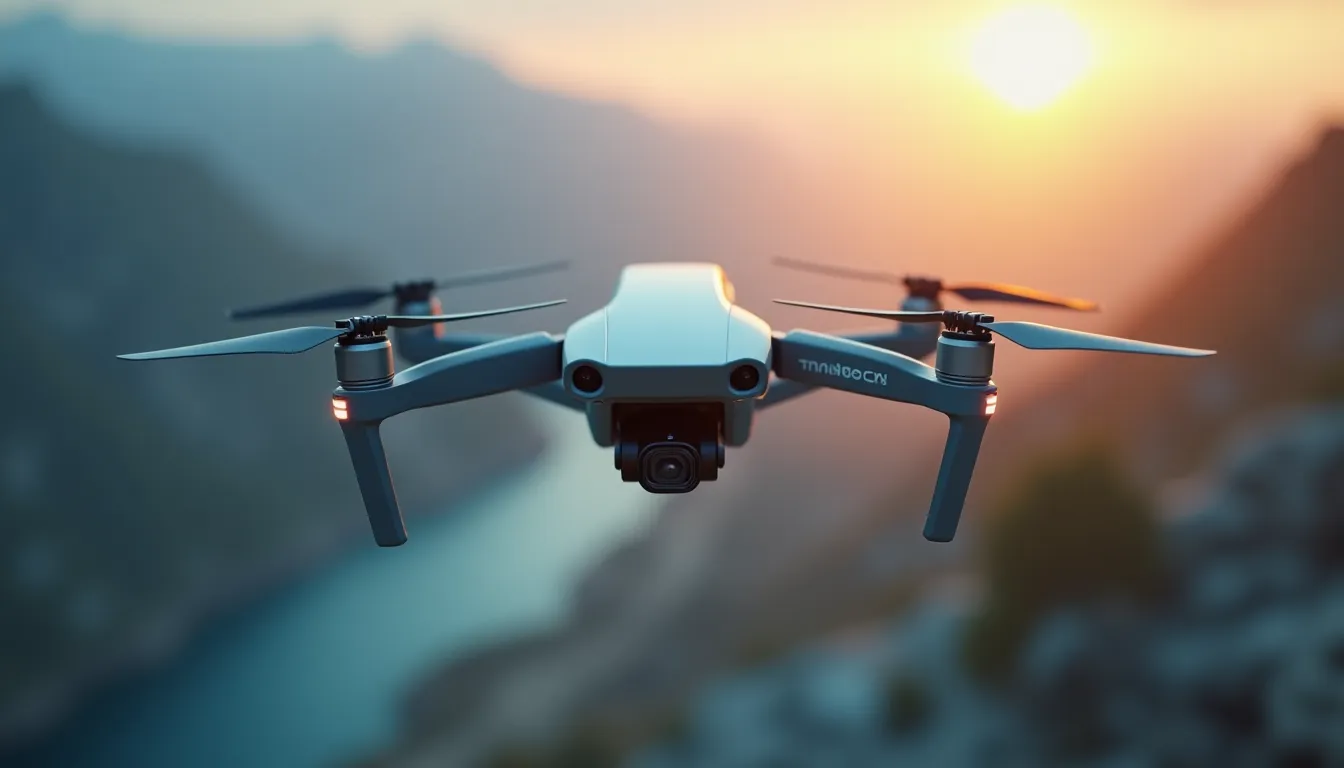
The evolution of imaging technologies has significantly transformed the aerospace and defense sectors, providing enhanced situational awareness and operational effectiveness on the battlefield. From advanced sensor modules to loitering munitions, the integration of cutting-edge imaging systems is redefining defense strategies and capabilities.
The Role of Imaging Technologies in Modern Warfare
Imaging technologies have become indispensable in military operations, enabling forces to conduct reconnaissance, target acquisition, and surveillance with unprecedented precision. With the rise of unmanned aerial systems (UAS) and other advanced platforms, the demand for high-performance imaging solutions has never been greater.
Key Technologies Driving Change
-
Advanced Sensor Module: The use of advanced sensor modules, such as the 9-DOF MEMS IMU, plays a critical role in enhancing motion sensing capabilities. These devices integrate three-axis gyroscopes, accelerometers, and magnetic sensors to deliver exceptional stability and comprehensive motion sensing, facilitating accurate navigation in complex environments.
-
Control Systems: High-performance CMOS imaging series control systems are vital for modern military applications. These systems offer multi-resolution options, automatic exposure control, and external triggering capabilities, ensuring that operators can capture high-quality imagery under varying conditions.
-
Loitering Munitions: The U.S. Army’s selection of Teledyne FLIR Defense’s Rogue 1 loitering munition system for the LASSO program underscores the growing emphasis on modular payload flexibility and battlefield persistence. These systems leverage advanced imaging technology to enhance target identification and strike capabilities, ultimately improving mission success rates.
Counter-Drone Technologies: The New Frontline
With the proliferation of drones in modern warfare, the need for effective counter-drone systems has surged. The integration of imaging technologies into these systems allows for improved detection and engagement of hostile aerial threats.
Innovations in Counter-UAS Solutions
L3Harris’s Wraith Shield is a prime example of innovation in counter-drone technology. This software update transforms handheld radios into effective counter-drone jammers by utilizing existing antennas to scan for drone control signals. By identifying and jamming hostile signals, the Wraith Shield represents a low-size, weight, and power (SWaP) solution that enhances operational readiness without necessitating new hardware procurement.
Future of Imaging Technologies in Defense
As military operations become increasingly complex and dynamic, the evolution of imaging technologies remains a crucial focus area. The introduction of sophisticated imaging systems, such as high-performance single-tube PIN quadrant detectors like the ZQXXSGDSS System, will continue to enhance precision in laser beam positioning and tracking applications.
The Integration of Advanced Navigation Systems
Advanced navigation systems equipped with high-performance MEMS accelerometers are set to redefine standards in stability and precision for demanding industrial and navigation applications. These systems are essential for ensuring that military operations maintain accuracy and effectiveness, especially in environments where traditional navigation methods may falter.
Conclusion
The advancements in imaging technologies within the aerospace and defense sectors are transforming the landscape of modern warfare. As the need for enhanced situational awareness and operational effectiveness grows, the integration of high-performance imaging systems will play a pivotal role in shaping future military strategies. With innovations in counter-drone technologies, loitering munitions, and advanced navigation systems, the defense industry is poised to harness these capabilities to maintain a strategic edge in an increasingly complex battlefield environment. Looking ahead, the focus will undoubtedly remain on further enhancing these technologies to meet the evolving challenges of modern warfare.
References
-
Breaking Defense - Defense technology, policy and national security … (breakingdefense.com) Breaking Defense launches a new video series focused on manned-unmanned teaming and the future of military aviation. By Breaking Defense Video · Sponsored Post, …
-
DVIDS - Defense Visual Information Distribution Service (www.dvidshub.net) - 5/12/2026 Providing news, images, audio, video, and publications from military operations around the world. Browse current as well as archived content.
-
Aerospace & Defense News | ASDNews | ASDNews (www.asdnews.com) - 5/7/2026 Today’s Aerospace & Defense News · Leidos to Accelerate Hypersonic Weapons Production for US Army and Navy · AV Awarded $43M DoW Contract to Integrate PANTHER …
-
Lockheed Martin: Leading Aerospace and Defense (www.lockheedmartin.com) - 4/30/2026 Lockheed Martin is a leading global security, defense and aerospace contractor, ensuring those we serve always stay ahead of ready.
-
Defense Aerospace News Air Force Aviation - Army Recognition (armyrecognition.com) - 11/19/2025 The U.S. Air Force and Boeing have launched a major effort to restore readiness and expand the combat capability of the KC-46 Pegasus tanker fleet,.
-
The War Zone (www.twz.com) - 10/11/2023 As a full-spectrum defense news and analysis website, TWZ covers the air, sea, land, space, and cyber domains of warfare, with an infusion of geopolitical …
-
DefenseScoop | Breaking US Military Tech News, Modern Defense … (defensescoop.com) - 1/19/2023 A major counter-drone exercise taking place in Europe this month has demonstrated U.S. soldiers’ additive manufacturing prowess, according to an officer …
-
The Aerospace Corporation: Home (aerospace.org) - 1/1/2021 Aerospace operates the only federally funded research and development center (FFRDC) committed exclusively to the space enterprise.