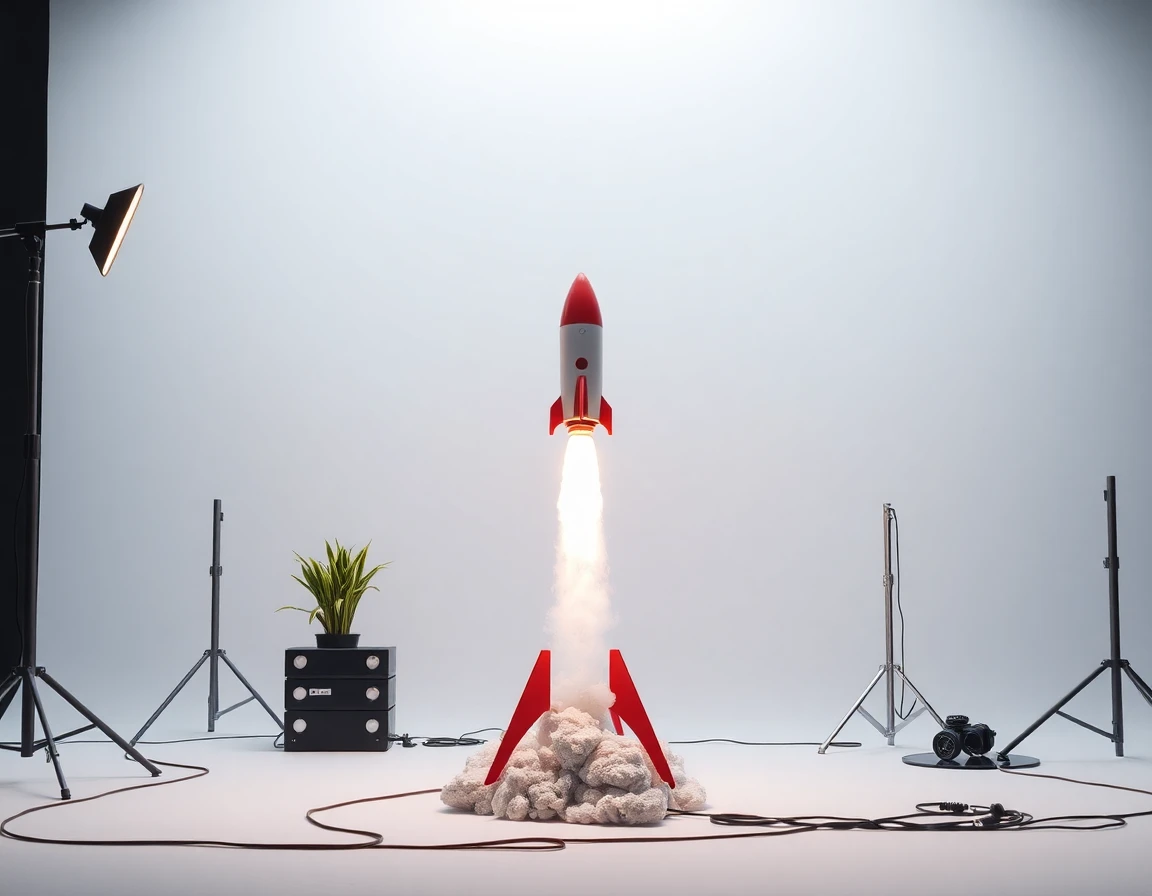
The aerospace industry is witnessing rapid advancements in rocket technology, significantly impacting both national security and commercial space operations. With increasing reliance on space for strategic defense and global communication, companies like SpaceX and Blue Origin are at the forefront of innovation. This article explores recent milestones in rocket launches, engine testing, and the broader implications for military and commercial applications.
SpaceX’s National Security Space Launch Innovations
In a groundbreaking move, the United States Space Force’s Space and Missile Systems Center has partnered with SpaceX to recover the first stage booster during the upcoming Falcon 9 launch of GPS III-4. This historic agreement marks the first instance of previously flown boosters being utilized for a National Security Space Launch (NSSL) mission. By leveraging flight-proven capabilities, SpaceX is not only enhancing the cost-effectiveness of national security space operations but also setting a precedent for future missions.
Elon Musk, CEO of SpaceX, stated, “Our commitment to reusability allows us to provide reliable and affordable launch services to the United States government, ensuring that our national security is backed by the best technology available.”
Blue Origin’s New Glenn Engine Testing
Meanwhile, Blue Origin has made significant strides with its New Glenn rocket, recently completing a critical pre-launch demonstration of its main engines. This test, conducted just hours before the announcement, is a vital step toward operational readiness. The New Glenn rocket is designed to carry both commercial payloads and government missions, showcasing Blue Origin’s ambition to establish a strong presence in the aerospace sector.
The New Glenn rocket features an advanced engine design that utilizes a staged combustion cycle, enhancing its efficiency and performance. This technological edge is expected to position Blue Origin as a formidable competitor in the space launch market.
SpaceX Rideshare Operations: Expanding Launch Cadence
SpaceX continues to dominate the commercial launch market with its recent rideshare mission, where 45 payloads were successfully launched aboard a Falcon 9 rocket from Vandenberg Space Force Base. This high-cadence operation illustrates SpaceX’s commitment to providing flexible and affordable launch solutions for small satellite operators and research institutions.
The Falcon 9 rocket, equipped with precision accelerometers and advanced navigation systems, is designed to cater to diverse payload requirements, making it a preferred choice for rideshare missions. As the demand for satellite deployment grows, SpaceX’s ability to efficiently launch multiple payloads in a single mission is a game-changer in the industry.
Expanding Military and Defense Space Infrastructure
The Space Development Agency (SDA) has recently awarded agreements totaling approximately $3.5 billion to enhance the United States’ military space capabilities. These agreements will fund the construction of 72 Tracking Layer satellites as part of Tranche 3 of the Proliferated Warfighter Space Architecture (PWSA) program. This initiative aims to significantly bolster missile warning, tracking, and defense capabilities, ensuring that the U.S. remains at the forefront of military technology.
These advancements in military space infrastructure highlight the growing importance of reliable space assets in modern defense strategies. With systems like the ZQXXSGDSS, which allows for precise laser beam positioning and tracking applications, the integration of advanced technology into military operations is becoming increasingly sophisticated.
Key Technical Achievements in Spacecraft Technology
SpaceX’s Crew Dragon spacecraft has achieved remarkable milestones, including over 700 tests of its SuperDraco engines, which provide rapid acceleration of more than 400 mph in just 7.5 seconds. Furthermore, the spacecraft has successfully completed 27 tests of its enhanced Mark 3 parachute design, crucial for safe crew return during missions.
These technological advancements are critical as SpaceX prepares for upcoming crewed missions to the International Space Station (ISS) and beyond. The reliability and safety of the Crew Dragon system underscore SpaceX’s commitment to human spaceflight and its role in the future of space exploration.
Conclusion
The aerospace industry is on the brink of a technological revolution, driven by significant advancements in rocket technology and space operations. Companies like SpaceX and Blue Origin are not only enhancing their capabilities but are also redefining the landscape of military and commercial space applications. As we look to the future, the integration of advanced systems—such as precision accelerometers, high-performance MEMS accelerometers, and advanced navigation solutions—will play a pivotal role in ensuring that the aerospace sector continues to innovate and adapt to the ever-evolving demands of national security and commercial endeavors. The coming years promise further milestones in rocket technology, shaping the future of space exploration and defense operations.
References
-
Industry News Archives - AIAA - Shaping the future of aerospace (aiaa.org) - 5/4/2026 Spaceflight Now reports, “Blue Origin’s New Glenn rocket roared to life in a critical pre-launch demonstration of its main engines Thursday, less than an hour …
-
Latest Military Technology News - Interesting Engineering (interestingengineering.com) - 5/2/2026 US advances replenishment of 500 Patriot interceptors to Qatar to combat ballistic risks. The US has approved a $4 billion package to supply Qatar with 500 …
-
News Releases - Space Development Agency (SDA) (www.sda.mil) - 4/7/2026 Date: Dec. 19, 2025 Tracking Layer Tranche 3 expands upon missile warning/missile tracking and missile defense capabilities deployed in Tranches 1 and 2 …
-
Defense Aerospace News Air Force Aviation - Army Recognition (armyrecognition.com) - 11/19/2025 Israel has approved the purchase of two new combat squadrons of U.S.-built F-35 stealth fighters and F-15I strike aircraft, a move that significant.
-
The Defence Blog – Military and Defense News | Independent … (defence-blog.com) - 7/14/2025 China is reportedly developing a new stealth cruise missile sized to fit inside the internal weapons bays of its J-20 and J-35 stealth fighters, …
-
Updates - SpaceX (www.spacex.com) SpaceX has acquired xAI to form the most ambitious, vertically-integrated innovation engine on (and off) Earth, with AI, rockets, space-based internet, …
-
The War Zone (www.twz.com) - 10/11/2023 Active Protection Systems will give Marine ACVs a critical new layer of defense against anti-armor threats that could also help down incoming drones. By Joseph …
-
Breaking Defense - Defense technology, policy and national security … (breakingdefense.com) NRO awards three new contracts for commercial satellite data. The head of the NRO’s commercial programs, Pete Muend, suggested that spysat agency could vet the …