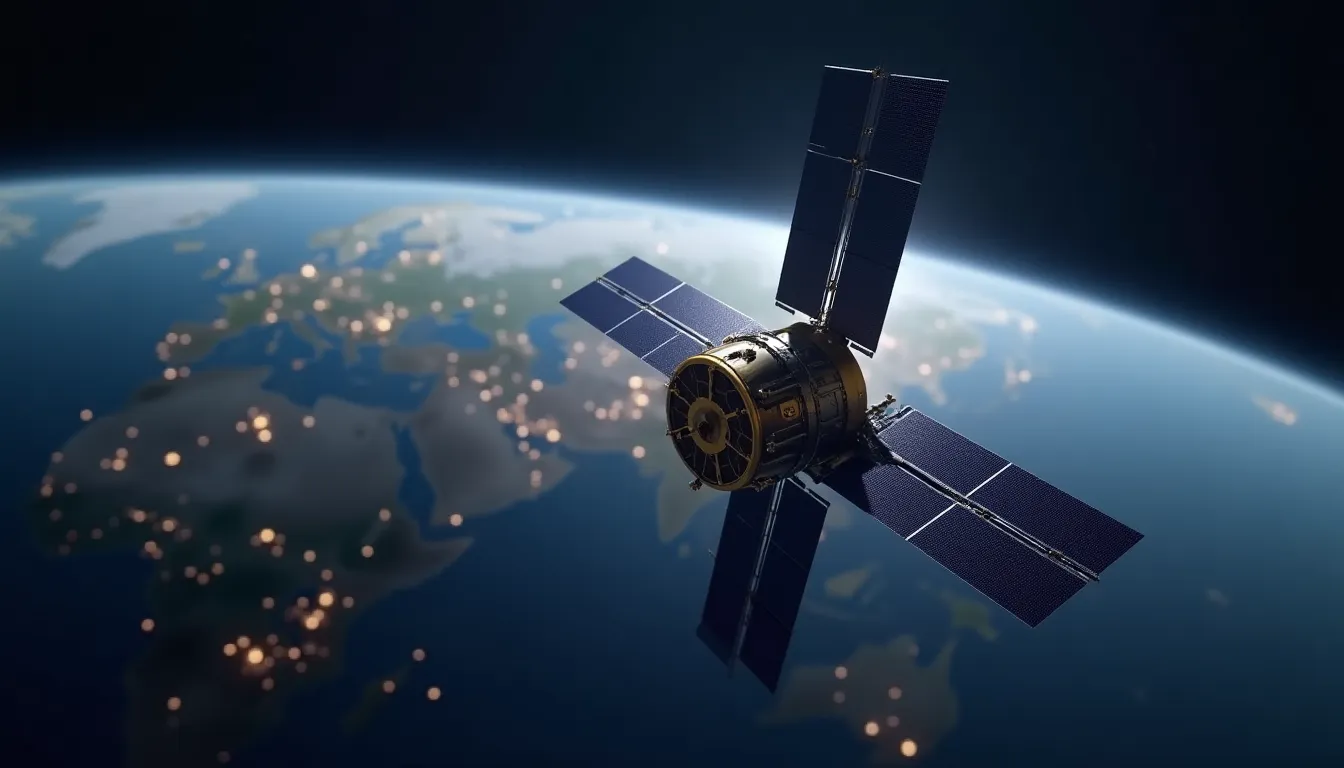
In a remarkable leap forward for global satellite communications, Amazon’s Project Kuiper has successfully launched over 300 satellites into low Earth orbit (LEO) using both Atlas V and Ariane 6 rockets. This milestone not only represents a significant step in Amazon’s ambition to provide affordable broadband services but also highlights the increasing importance of satellite constellations in the telecommunications landscape.
The Significance of 300 Satellites
Amazon’s Project Kuiper aims to deliver high-speed internet to underserved communities worldwide, and with over 300 satellites now in orbit, the project is poised to make a considerable impact. Each satellite is equipped with advanced technology enabling it to operate in a LEO environment, where latency is lower compared to traditional satellite systems.
Dr. Lisa Montgomery, an aerospace analyst at the Space Research Institute, stated, “This achievement by Amazon is a game changer. With over 300 satellites in orbit, they are well on their way to creating a robust network capable of providing reliable internet services globally.”
Technical Insights into Satellite Operations
The satellites launched as part of Project Kuiper utilize sophisticated inertial navigation systems to ensure precise positioning and orientation in space. These systems are crucial for maintaining the satellites’ intended orbits and optimizing their communication capabilities. The integration of high-performance MEMS accelerometers allows these satellites to adapt to dynamic space conditions, ensuring operational stability despite potential disturbances from atmospheric drag or gravitational perturbations.
Launching with Precision: Atlas and Ariane Rockets
The launch of these satellites involved the use of the Atlas V rocket, known for its reliability and advanced capabilities, alongside the Ariane 6, which is designed for cost-effective deployment of small to medium-sized payloads into space. Each launch was meticulously planned, showcasing the collaboration between different aerospace entities to achieve a common goal.
“The synergy between Atlas and Ariane launch systems exemplifies the cooperative spirit in the aerospace industry, where shared expertise can lead to groundbreaking advancements in satellite technology,” commented Tom Reynolds, a senior engineer at Space Dynamics Corp.
Future Implications for Satellite Technology
The successful deployment of over 300 satellites is just the beginning for Project Kuiper. Amazon plans to expand its constellation to over 3,000 satellites, significantly enhancing its capacity to deliver high-speed internet. This expansion is expected to revolutionize communication systems, especially in remote and rural areas where traditional broadband services are limited.
In addition to providing internet services, these satellites could play a crucial role in other applications such as disaster response, weather monitoring, and even IoT connectivity. As more companies invest in satellite technology, the industry is likely to witness rapid innovations and improvements.
Challenges and Opportunities Ahead
Despite these advancements, challenges remain. The increasing number of satellites in LEO raises concerns about space debris and collision risks. Regulatory frameworks and technological solutions must evolve to ensure that these satellites can operate safely.
Dr. Montgomery emphasizes, “As the number of satellites increases, so do the risks associated with space debris. It’s imperative for companies like Amazon to invest in debris mitigation technologies alongside their satellite launches.”
Conclusion
Amazon’s Project Kuiper has made headlines by surpassing the critical milestone of 300 satellites, driven by successful Atlas and Ariane launches. This achievement not only underlines Amazon’s commitment to enhancing global connectivity but also marks a significant evolution in satellite communications. With the potential to transform how internet services are delivered, the future of satellite technology is indeed promising. As the industry continues to grow, the focus on safety, innovation, and accessibility will be paramount.
The journey of satellite technology is only beginning, and with companies like Amazon leading the charge, a connected world may soon be within reach.
References
-
satellite Research - defensenews.com (defensenews.com)
-
satellite Research - aviationweek.com (aviationweek.com)
-
satellite Research - spacenews.com (spacenews.com)