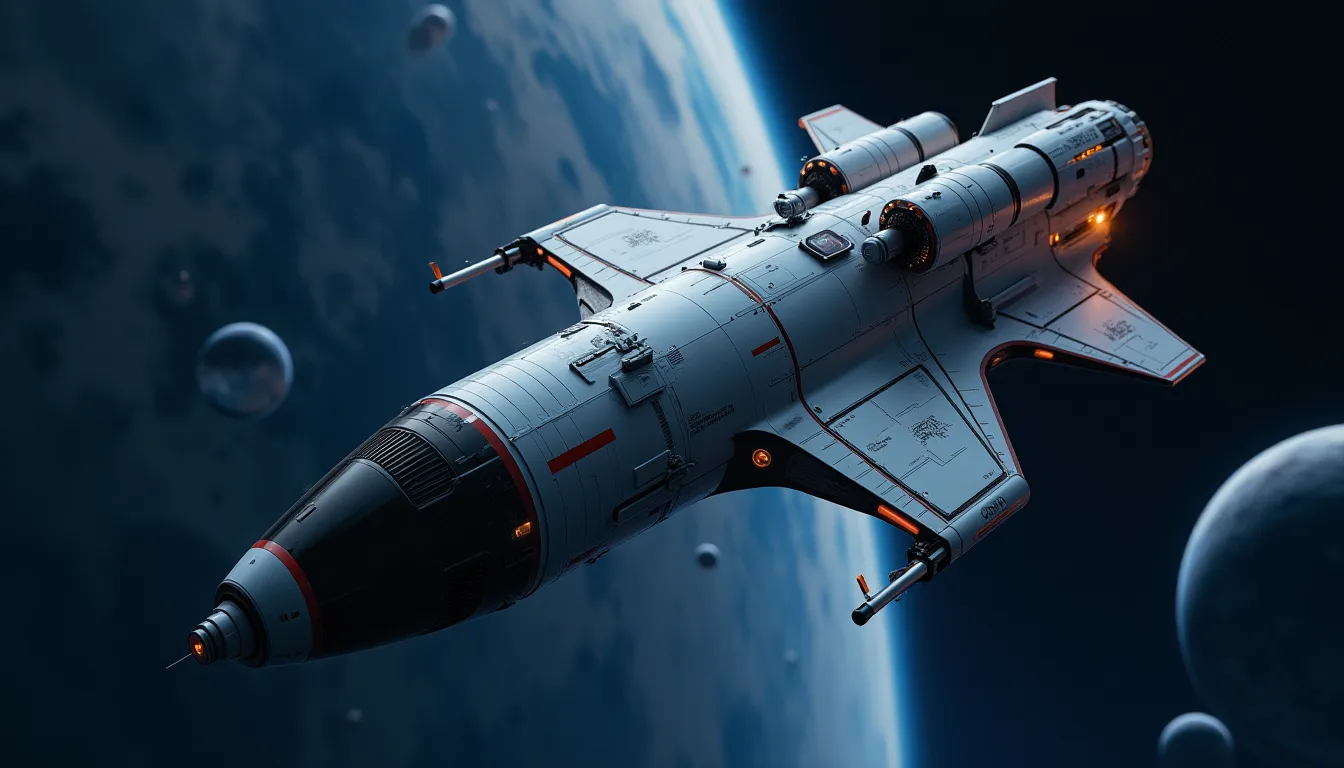
NASA continues to push the boundaries of aerospace technology and exploration with a series of significant developments announced in March 2026. Highlighting advancements in the Artemis program, the introduction of nuclear propulsion systems, and a revamped strategy for commercial space stations, these initiatives are set to redefine humanity’s presence in space. This article delves into the latest updates, technical details, and future implications of these groundbreaking efforts.
Progress of the Artemis Program
The Artemis program remains at the forefront of NASA’s exploration ambitions, with key milestones achieved in recent months. The Artemis II mission, which aims to send astronauts on a lunar flyby, is nearing its launch window. On February 25, 2026, NASA’s Space Launch System (SLS) rocket and the Orion spacecraft were rolled back to the Vehicle Assembly Building at Kennedy Space Center for critical helium flow troubleshooting within the interim cryogenic propulsion stage. Following a successful Flight Readiness Review on March 12, NASA confirmed a potential launch in April 2026.
In a March 24 news conference, NASA unveiled revised plans for lunar infrastructure, including semi-habitable bases and various payload opportunities for exploratory missions. The Artemis III lunar landing has been rescheduled for Artemis IV in 2028, while low-Earth orbit tests are prioritized in the immediate future. The Exploration Upper Stage, crucial for deep-space missions, faces potential cancellation due to shifting project priorities.
Commercial Space Station Strategy
In alignment with the U.S. National Space Policy, NASA is innovating its approach to commercial space stations. The agency recently announced a plan to introduce a NASA-owned core module to the International Space Station (ISS), which will facilitate the attachment of commercial modules. This strategic move enables these modules to become independent free-flying stations post-2031, paving the way for a new era of commercial partnerships in low Earth orbit.
However, this proposal has drawn scrutiny from lawmakers, who are keen on ensuring the sustainability and viability of U.S. presence in space. As commercial entities are poised to take on more operational roles, the integration of advanced systems like the Advanced Navigation System could enhance mission precision and efficiency.
Advancements in Nuclear Propulsion
One of the most exciting developments is the introduction of nuclear electric propulsion with the Space Reactor-1 Freedom mission, set to launch by the end of 2028. This innovative spacecraft will utilize nuclear power to enable efficient interplanetary travel, making it the first of its kind to venture to Mars. By leveraging advanced sensor modules, like high-performance MEMS accelerometers, the mission aims to achieve unprecedented stability and precision during deep-space transport. The inclusion of Ingenuity-class helicopters as part of the Skyfall payload further illustrates NASA’s commitment to pushing technological boundaries.
Ongoing Science Missions and Initiatives
NASA’s ambitious science program is set to explore both the Moon and Mars, with several missions scheduled for the upcoming years. The VIPER rover and LuSEE-Night are among the near-term projects aimed at lunar exploration. A recent Request for Information (RFI) was released on March 24 for 2027-2028 payloads, inviting contributions from industry and academia.
In a parallel effort, twin spacecraft successfully launched on March 14 to investigate Mars’ lost atmosphere using precision accelerometers for enhanced data collection. The cutting-edge Tiny Exoplanet Imager, equipped with advanced CMOS imaging technology, captured its first images in March 2026, marking a significant milestone in exoplanet observation capabilities.
Upcoming telescope launches, such as the Nancy Grace Roman Space Telescope and SMILE mission, will further extend NASA’s capabilities in studying celestial phenomena, providing insights into solar wind and magnetosphere interactions.
Aeronautics Revitalization Efforts
Under the leadership of Administrator Jared Isaacman, NASA is revitalizing its aeronautics program, focusing on experimental X-planes to advance flight technologies that were previously sidelined. The ongoing discussions, including a Q&A session with Associate Administrator Robert Pearce on March 27, emphasize the critical role of innovation in maintaining U.S. leadership in aviation and space exploration.
Conclusion
NASA’s recent developments showcase the agency’s unwavering commitment to exploration and innovation. With the Artemis program set to return humans to the Moon, the introduction of nuclear propulsion for deep space journeys, and a robust strategy for commercial space stations, NASA is positioning itself for a transformative era in space exploration. As these initiatives progress, they promise to enhance our understanding of the cosmos while paving the way for future generations to explore beyond our planet.
For enthusiasts and professionals in the aerospace and defense sectors, these advancements not only reflect technological progress but also highlight the collaborative efforts necessary to achieve ambitious exploration goals. With each mission and initiative, NASA reaffirms its role as a leader in shaping the future of space travel.
References
-
Aviation Week & Space Technology, March 30, 2026 (aviationweek.com) - 3/27/2026 NASA aeronautics, hit by cuts and losses, is being revitalized under Administrator Jared Isaacman with a focus on experimental X-planes. SAFETY.
-
U.S. lawmakers probe NASA’s revamped commercial space station … (aerospaceamerica.aiaa.org) - 3/26/2026 U.S. lawmakers today scrutinized NASA’s newly unveiled approach to maximizing the final years of the International Space Station, …
-
NASA Unveils Initiatives to Achieve America’s National Space Policy (spacecoastdaily.com) - 3/26/2026 NASA announced a series of transformative agencywide initiatives designed to achieve President Donald J. Trump’s National Space Policy.
-
Ignition: NASA News Conference (March 24, 2026) - YouTube (www.youtube.com) - 3/25/2026 Ignition: NASA’s Plan for The Moon. NASA. New ; FULL SPEECH: Karoline Leavitt Holds a Press Briefing - 03/25/26. Right Side Broadcasting Network.
-
Ignition: NASA Press Conference, March 24, 2026 - YouTube (www.youtube.com) - 3/25/2026 On March 24, 2026, NASA held a daylong media event to discuss the agency’s revised plans for Project Artemis. The event was hosted by NASA …
-
March 2026: Major Advancements in Spacecraft and Space Missions (orbysa.com) - 3/22/2026 In March 2026, the aerospace industry witnessed significant advancements in spacecraft technology and missions, notably with NASA’s Artemis …
-
NASA to Share Artemis II Flight Readiness Review Update (www.nasa.gov) - 3/10/2026 NASA will host a news conference at 3 p.m. EDT, Thursday, March 12, to highlight progress toward the Artemis II crewed mission around the Moon.
-
Space Science in 2026: New lunar explorers, Mars missions, and … (www.nasaspaceflight.com) - 1/18/2026 Intuitive Machines plans to attempt its third Nova C mission in 2026, with IM-3 launching on a Falcon 9 in the second half of the year. The …
-
2026 NASA News Releases (www.nasa.gov) - 1/2/2026 With rollback of NASA’s Artemis II SLS (Space Launch System) rocket and Orion spacecraft to the Vehicle Assembly Building complete, the agency will host a news …