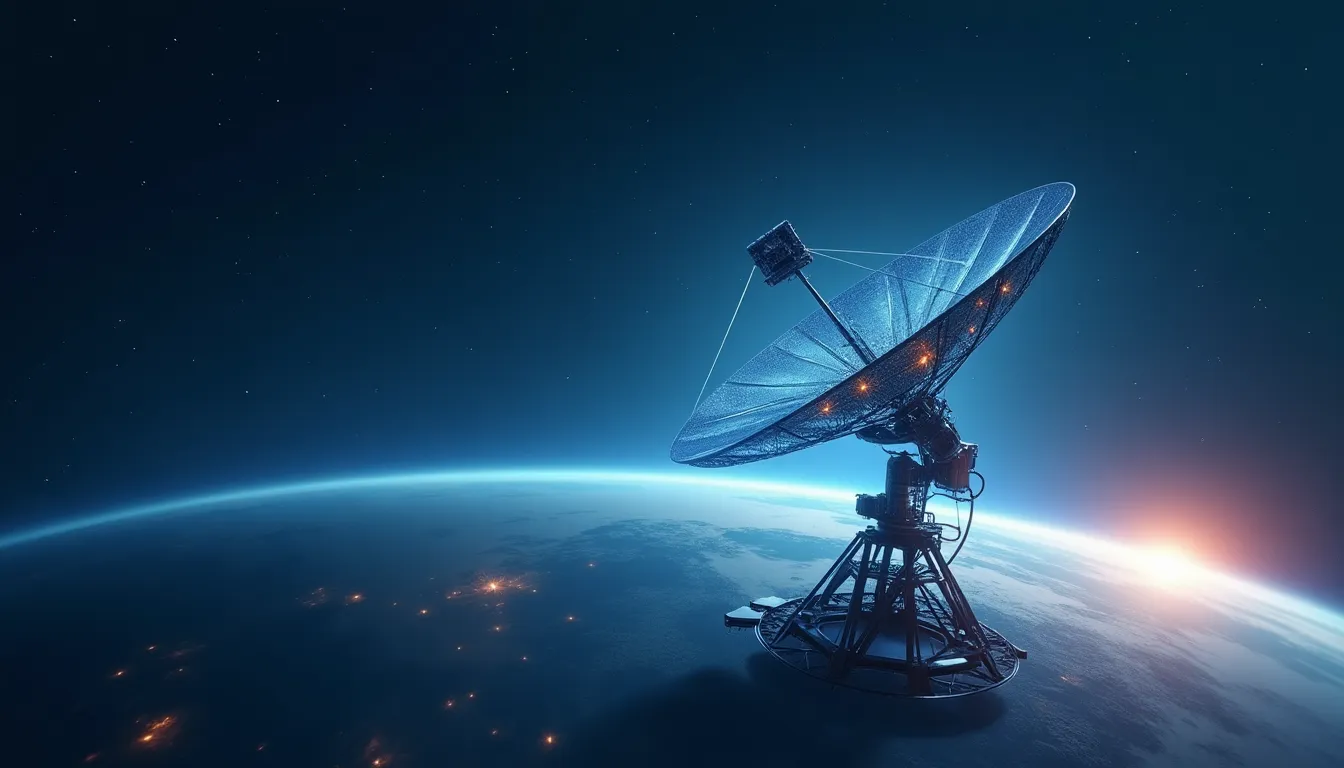
As humanity’s understanding of the universe expands, the limitations of Earth-based astronomy become increasingly apparent. With the advent of advanced satellite technologies, the prospect of taking astronomy off Earth has moved from theoretical discussions to practical initiatives. This article delves into the need for off-Earth observatories, the technological advancements enabling this leap, and the potential impacts on our understanding of the cosmos.
The Limitations of Ground-Based Astronomy
Ground-based telescopes have significantly contributed to our understanding of the universe. However, they face several limitations, including atmospheric interference, light pollution, and geographic constraints. As noted by Dr. Emily Carter, an astrophysicist at the Space Research Institute, “The Earth’s atmosphere distorts the light coming from celestial bodies, making it challenging to obtain clear images and data. Moving our instruments beyond the atmosphere allows us to capture untainted cosmic information.”
The Rise of Satellite Technology in Astronomy
The integration of satellite technology for astronomical purposes represents a paradigm shift in how we observe the universe. Satellites equipped with high-resolution imaging capabilities can operate above the Earth’s atmosphere, providing clearer and more detailed observations. For instance, the upcoming James Webb Space Telescope (JWST) is designed to offer unprecedented views of the universe in infrared wavelengths, free from atmospheric distortion.
Key Technological Innovations
Several innovations make off-Earth observatories viable:
- Precision Accelerometers: These devices enable satellites to maintain stable orbits and precise positioning, essential for accurate astronomical measurements. Modern precision accelerometers can detect minute changes in movement, ensuring that satellites remain correctly oriented towards their observational targets.
- Gyroscopic Instruments: Robust gyroscopic instruments help maintain satellite orientation in the void of space, crucial for long-duration astronomical observations. These instruments are pivotal in stabilizing telescopes to minimize motion blur in captured images.
The Potential of Off-Earth Observatories
The implications of deploying satellites for astronomical research are vast. Off-Earth observatories can significantly enhance our capacity to detect exoplanets, study cosmic phenomena, and track potential threats from asteroids. According to Dr. Michael Zhang, a satellite technology expert, “With the ability to deploy satellites into specific orbits, we can continuously monitor celestial events, providing real-time data that is simply impossible with ground-based systems.”
Future Developments in Satellite Astronomy
As the demand for space-based astronomical research grows, we can expect to see an influx of new satellite missions. Concepts such as the Large Ultraviolet Optical Infrared Surveyor (LUVOIR) and the Habitable Exoplanet Observatory (HabEx) highlight the potential for future space telescopes that will revolutionize our understanding of the universe. These missions will rely on advancements in thermal management systems to regulate onboard equipment, ensuring optimal performance in the harsh environment of space.
Challenges and Considerations
While the benefits are substantial, transitioning to off-Earth astronomy poses several challenges. The financial costs associated with launching and maintaining satellites are significant, and ongoing advancements in satellite manufacturing and launch technology are essential to make these endeavors sustainable.
Moreover, the need for international cooperation in space endeavors cannot be overstated. As Dr. Carter emphasizes, “Collaboration among nations will be key to advancing our off-Earth astronomy goals. By pooling resources and expertise, we can accelerate the development of next-generation satellite technologies.”
Conclusion: The Future of Astronomy Is in Space
As we stand on the brink of a new era in astronomy, the call to take our observations off Earth is compelling. With the aid of advanced satellite technologies, we are poised to unlock the mysteries of the universe like never before. The journey ahead is filled with challenges, but the potential rewards of understanding our cosmos are immeasurable. By investing in off-Earth satellite observatories, we are not just advancing science; we are ensuring the future of humanity’s quest for knowledge among the stars.
References
-
satellite Research - defensenews.com (defensenews.com)
-
satellite Research - aviationweek.com (aviationweek.com)
-
satellite Research - spacenews.com (spacenews.com)