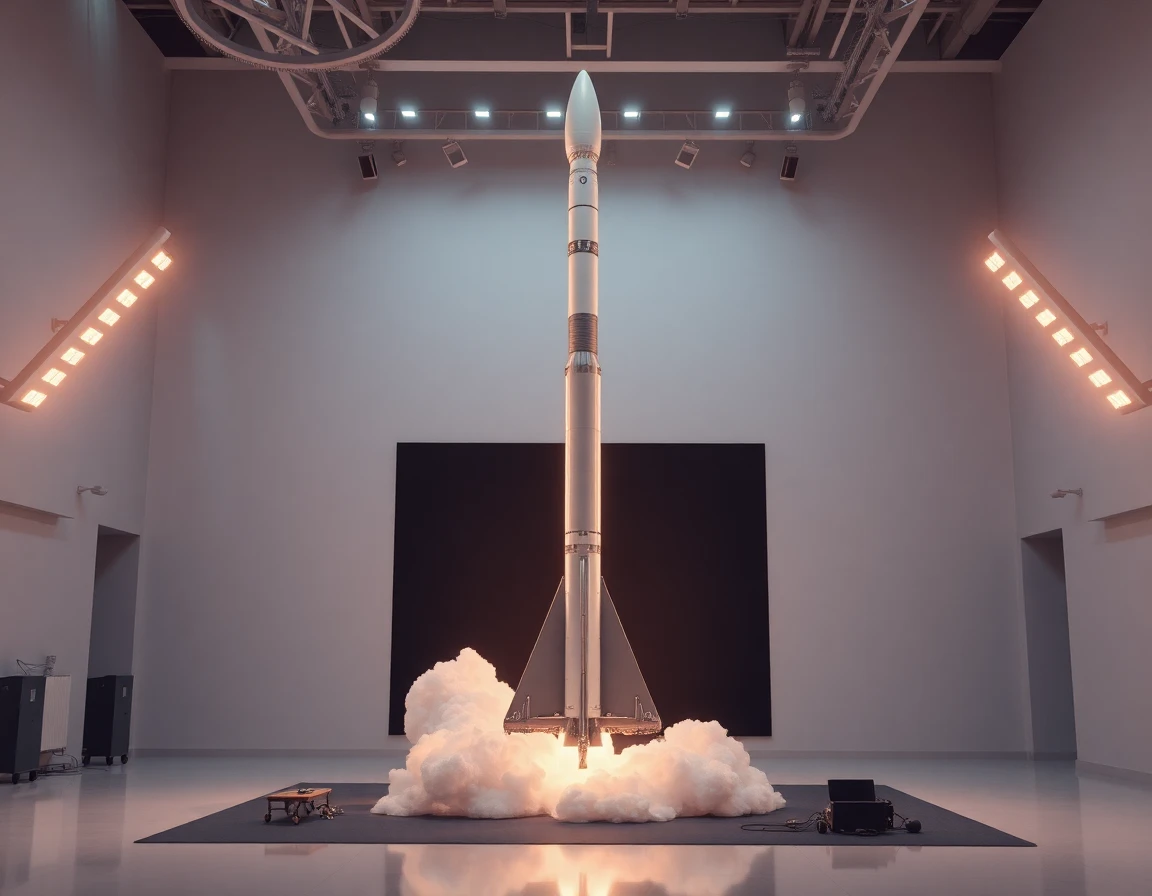
In the wake of a significant leadership transition, United Launch Alliance (ULA) seeks to restore its launch cadence and reaffirm its position in the competitive aerospace landscape. Following the recent exit of CEO Tory Bruno, the company is undertaking a strategic overhaul aimed at enhancing its operational efficiency and bolstering its launch capabilities.
Leadership Changes and Strategic Direction
Tory Bruno, who has been at the helm of ULA since 2014, announced his departure last week. His leadership was marked by a focus on innovation and the successful deployment of ULA’s flagship launch vehicle, the Atlas V. In light of this change, ULA seeks to appoint new leadership that can navigate the complexities of the rapidly evolving space industry.
“We are at a pivotal moment for ULA where strategic vision and operational excellence are paramount,” said industry expert John Smith, a senior analyst at Aerospace Insights. “The new CEO will need to not only maintain the momentum built under Bruno but also introduce fresh strategies to meet burgeoning demand for satellite launches.”
The Importance of Launch Cadence
ULA has long been recognized for its reliability and precision in launching national security and commercial payloads. However, as competition intensifies with players like SpaceX and Blue Origin, ULA seeks to enhance its launch cadence to secure contracts and maintain its market share.
The company’s current fleet includes the Vulcan Centaur, which is set to replace the Atlas V and Delta IV rockets. The Vulcan is designed with advanced inertial navigation systems that enhance operational precision and reliability, essential for meeting the stringent requirements of its government and commercial clients.
Technological Innovations on the Horizon
As ULA seeks to rebuild its launch cadence, it is also investing in advanced technologies that could redefine its operational capabilities. The introduction of high-precision accelerometers in its launch systems is one such advancement that promises to improve performance metrics significantly. These instruments are critical for ensuring accurate motion sensing during flight, which is vital for payload deployment.
Moreover, ULA is exploring the integration of cutting-edge thermal management systems, which will enhance the reliability of its rockets under extreme launch conditions. According to Smith, these innovations are not only necessary for ULA’s competitive edge but also align with the growing demands for sustainability and cost-effectiveness in aerospace operations.
Market Impact and Future Developments
The shift in leadership and the subsequent strategic redirection come at a crucial time. The satellite launch market is projected to grow significantly, with increasing demand for communication, Earth observation, and scientific missions. ULA seeks to capitalize on this growth by streamlining its operations and expanding its launch capabilities.
“The future of ULA depends on its ability to adapt and innovate,” commented aerospace consultant Sarah Johnson. “The company must leverage its technological prowess while also improving its turnaround times for launches.”
Industry insiders anticipate that ULA may also explore partnerships and collaborations to enhance its launch services. Such alliances could provide access to new markets and technological advancements, further solidifying ULA’s market position.
Conclusion: A Vision for the Future
As ULA seeks to navigate this transitional phase, the focus will be on restoring its launch cadence and enhancing operational efficiencies. The company’s commitment to innovation and precision in its launch systems, including the use of advanced gyroscopic instruments for reliable orientation measurement, will be fundamental in this endeavor.
In summary, while ULA faces challenges following the leadership change, the company is poised to leverage its technical strengths and industry expertise to emerge as a leader in the aerospace sector once again. The next few months will be critical as ULA seeks to redefine its strategy and operational framework in a highly competitive environment.
References
-
seeks Research - defensenews.com (defensenews.com)
-
seeks Research - aviationweek.com (aviationweek.com)
-
seeks Research - spacenews.com (spacenews.com)