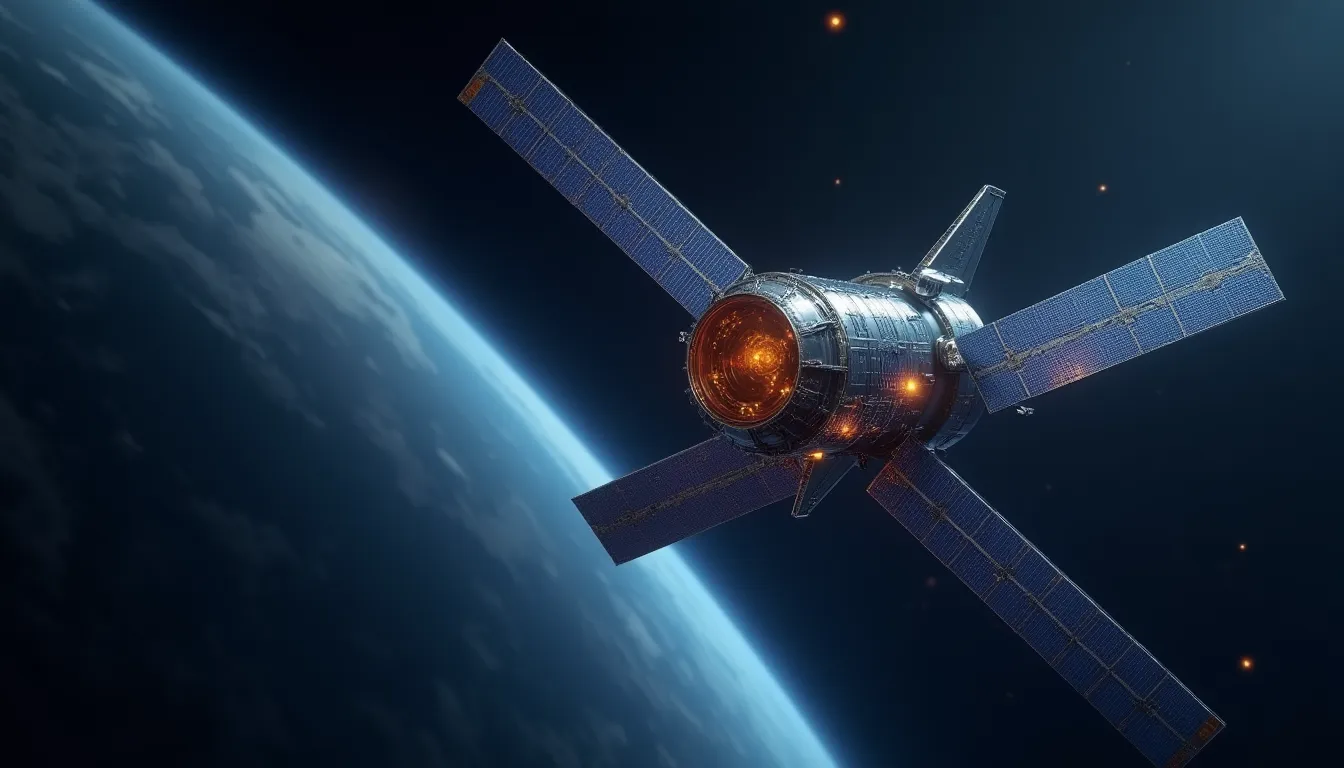
In an era where rapid advancements in technology propel humanity deeper into the cosmos, the role of space telescopes has become increasingly pivotal. Specifically designed to operate at light speed, these remarkable instruments are transforming our understanding of the universe. This article delves into the technical prowess behind contemporary space telescopes, the challenges they face, and the future developments that hold promise for astronomers around the globe.
The Evolution of Space Telescopes
Space telescopes have evolved significantly since the launch of the Hubble Space Telescope in 1990. The recent advancements in optical and infrared technologies have paved the way for groundbreaking missions such as the James Webb Space Telescope (JWST), which launched on December 25, 2021.
The JWST operates in the infrared spectrum, allowing it to observe celestial phenomena that are invisible to the naked eye. Its advanced thermal management systems are vital for maintaining the telescope’s sensitive instruments at optimal temperatures, enabling the detection of faint light from distant galaxies.
Operating at Light Speed
One of the most fascinating aspects of modern space telescopes is their ability to capture data at the speed of light. Utilizing high-performance optical technologies and precision engineering, these telescopes can transmit vast amounts of data back to Earth almost instantaneously. For example, the JWST’s data transmission capabilities are enhanced by cutting-edge fiber optic gyroscope technology, which ensures stability and accuracy in the instrument’s orientation during observations.
Dr. Elena Garcia, an astrophysicist at the Space Telescope Science Institute, notes, “The ability of space telescopes to operate at light speed is not just about speed but precision. It allows us to capture the dynamics of cosmic events as they unfold.”
Technical Innovations Driving Performance
The integration of advanced components is crucial for improving the performance of space telescopes. For instance, the implementation of gyroscopic instruments allows for precise stabilization and orientation, which is essential when capturing high-resolution images of distant celestial objects.
Furthermore, innovations in photodiode modules have significantly improved the sensitivity of telescopes, enabling them to detect lower levels of light and capture more detailed images. The GJE45J216 System, a high-performance photodiode module, is one example of technology making strides in this area, enhancing the capabilities of fiber optic gyroscopes used in space telescopes.
Overcoming Challenges
Despite these advancements, operating space telescopes at such high speeds and sensitivities presents several challenges. The harsh environment of space, including extreme temperatures and radiation exposure, requires robust designs and materials. Engineers are continuously developing new thermal protection systems and radiation shielding to ensure the longevity and effectiveness of these instruments.
Additionally, data management poses a significant challenge. The vast amounts of data generated by telescopes like the JWST necessitate sophisticated algorithms and high-capacity storage solutions to process and analyze the information efficiently.
Future Prospects: The Next Frontier
Looking ahead, the future of space telescopes is bright. Upcoming missions, such as the European Space Agency’s Euclid mission, aim to explore dark energy and dark matter, providing insights into the fundamental nature of the universe. These missions will leverage the latest advancements in precision engineering and data processing to achieve their ambitious goals.
As Dr. Garcia emphasizes, “The future of space exploration is not just about reaching further; it’s about understanding more deeply. With each new telescope, we are given a clearer picture of our universe.”
Conclusion
The advancements in space telescope technology are setting the stage for a new era of astronomical discovery. By operating at light speed and employing cutting-edge technologies, these instruments are not only enhancing our understanding of the cosmos but also inspiring future generations of scientists and engineers. As we look to the stars, we can only anticipate the remarkable findings that await us in the uncharted territories of space.
Related Products
- Thermal Management Systems for space telescopes.
- Gyroscopic Instruments for precise stabilization.
- Photodiode Modules for enhanced sensitivity in space observations.
References
-
Space Research - defensenews.com (defensenews.com)
-
Space Research - aviationweek.com (aviationweek.com)
-
Space Research - spacenews.com (spacenews.com)