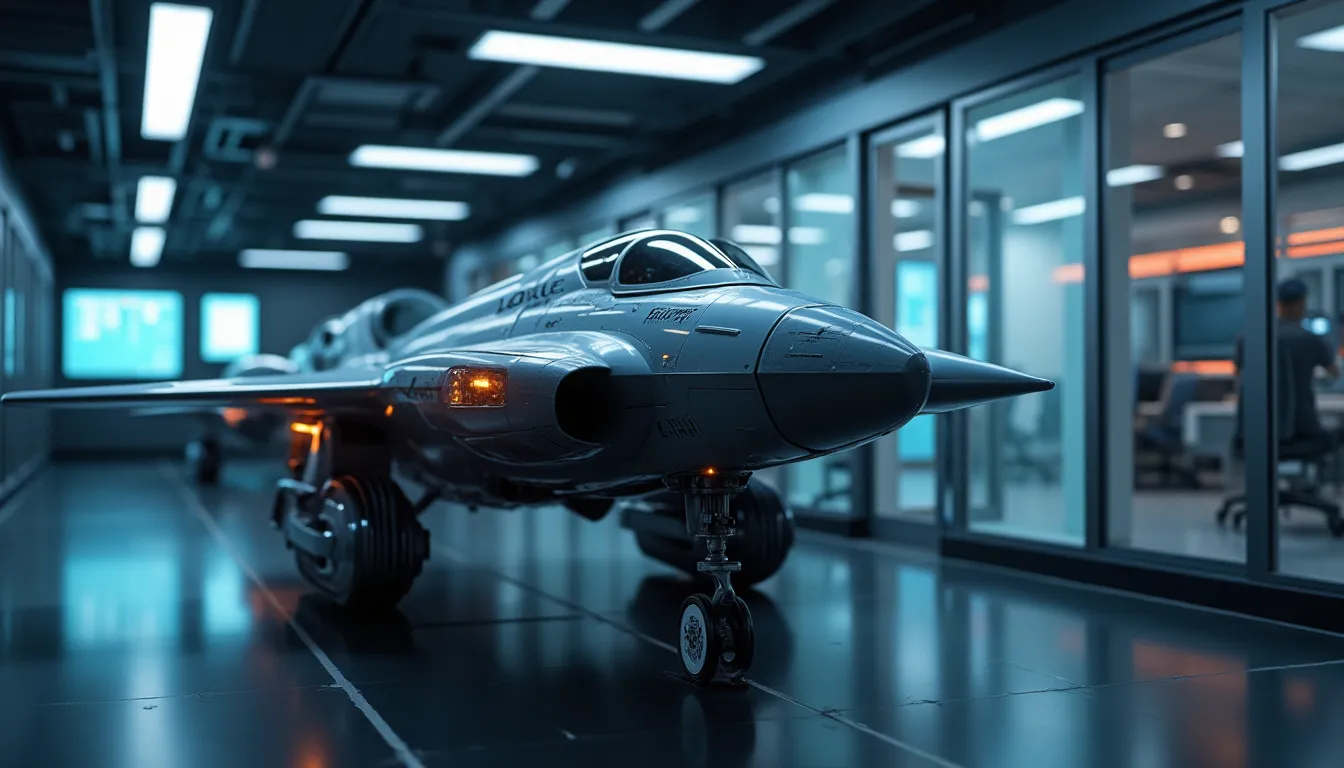
The aerospace and defense sectors are experiencing a transformative phase characterized by rapid advancements in autonomy and artificial intelligence (AI). With a staggering $900.6 billion allocated for the U.S. Pentagon budget, industry players are shifting towards innovative technologies and modernization efforts that promise to redefine operational capabilities. From autonomous systems entering combat operations to significant contract awards, the recent developments from January 8-27, 2026, underscore a dynamic landscape filled with opportunities and challenges.
Accelerating Autonomy and AI Integration
One of the most significant trends in aerospace is the transition of autonomous systems from experimental phases to practical applications in military operations. For instance, the U.S. Navy recently conducted tests with the BQM-177A target drones, which autonomously defended airspace under the virtual command of an F/A-18 fighter jet. This test, conducted on January 12, 2026, represents a pivotal moment in the use of drone technology for air defense, showcasing the capabilities of AI in real-time operational scenarios.
Startups like NODA AI and Firestorm are at the forefront of this revolution, offering solutions that enhance operational efficiency. NODA AI enables real-time task optimization, while Firestorm leverages additive manufacturing techniques for rapid drone production. Additionally, VisionWave’s RF-sensing AI integrates with SaverOne to facilitate concealed threat detection, demonstrating the potential of AI-enhanced mesh networks in addressing vulnerabilities in positioning, navigation, and timing (PNT) systems, particularly in scenarios where GPS may falter.
Fighter Jet Advancements and Strategic Contracts
The aerospace sector is also witnessing significant milestones in aircraft development. The U.S. Army is expediting the delivery of the MV-75 tiltrotor aircraft, with initial units expected by late 2026—five years ahead of schedule. This acceleration highlights the Army’s commitment to enhancing operational versatility through advanced rotorcraft capabilities.
Internationally, the KF-21 Boramae from South Korea has successfully cleared for frontline service following comprehensive flight tests. Meanwhile, nations like Malaysia and Egypt are actively exploring options to modernize their air forces, with Malaysia considering KAI’s KF-21 due to delays with the F/A-18 fleet and Egypt negotiating for Saab’s GlobalEye to replace aging E-2C Hawkeye surveillance aircraft.
Contracts are also flowing in at a steady pace, with the U.S. Navy awarding General Dynamics a substantial $988 million contract for C5ISR upgrades. This investment emphasizes the importance of modernizing command and control systems to enhance intelligence, surveillance, and reconnaissance capabilities.
Investments and Innovations in Aerospace
As the demand for advanced technologies surges, investment in the aerospace sector is witnessing exponential growth. Anduril Industries has announced a $1 billion expansion in Southern California, which will create approximately 7,000 jobs across various domains, including drones, missiles, and autonomous jets. This expansion not only signifies Anduril’s commitment to innovation but also reinforces the region’s status as a burgeoning aerospace hub.
Leading venture capital firms are increasingly directing funds towards autonomy, space ISR, and cybersecurity, with companies like In-Q-Tel and Shield Capital recognizing the strategic importance of these sectors. The recent surge in defense stocks, correlated with the robust Pentagon budget, underscores the optimism surrounding AI technologies and their potential to reshape the future of defense operations.
Supply Chain Innovations and Future Trends
In parallel with technological advancements, supply chain optimization is becoming crucial for sustaining operational capability. American AI Logistics is utilizing artificial intelligence to predict and stockpile high-demand parts, addressing issues associated with outdated Pentagon supply systems. This proactive approach is essential to ensure that military operations remain uninterrupted in an increasingly complex global environment.
Current trends indicate a robust increase in procurement for software and autonomy solutions, operational space architectures, and enhanced cybersecurity measures. Companies like Cloudastructure are integrating autonomous drones into surveillance trailers, further demonstrating the application of AI in enhancing situational awareness and operational readiness.
Conclusion
The aerospace and defense landscape is on the cusp of a significant transformation, driven by advancements in AI, autonomy, and strategic investments in technology. As autonomous systems increasingly move to the forefront of military operations and significant contracts reshape the industry, the future holds immense potential for innovation and efficiency. With the ongoing emphasis on modernization and adaptation to new technologies, stakeholders in the aerospace sector must remain vigilant and proactive to harness these changes effectively. The convergence of AI, enhanced sensor systems like advanced 9-DOF MEMS IMUs, and precision accelerometers will undoubtedly play a pivotal role in the evolution of defense strategies and operational capabilities.
References
-
Defense Stocks Ignite as $900 Billion Pentagon Budget Triggers AI … (www.prnewswire.com) - 1/27/2026 PRNewswire/ — The 2026 defense cycle is officially underway with a massive $900.6 billion Pentagon budget authorization[1].
-
Governor Newsom highlights Anduril Industries’ $1 billion expansion … (www.gov.ca.gov) - 1/27/2026 This expansion reinforces California’s leadership in aerospace & defense – a sector that supports innovation, workforce development and regional …
-
Defense & Aerospace Technology Report [Jan 27, 25] Using AI to … (defaeroreport.com) - 1/27/2026 Defense & Aerospace Technology Report [Jan 27, 25] Using AI to Thoughtfully Fix an Outdated Supply System. 0. By admin on January 27, 2026 Apex, …
-
Defense tech roadmap: Five frontiers for 2026 (www.bvp.com) - 1/23/2026 In 2026, defense technology is advancing and accelerating at historic rates, with startups innovating across five key frontiers.
-
Aerospace Daily & Defense Report, January 23, 2026 - Aviation Week (aviationweek.com) - 1/23/2026 The four members of NASA’s Crew-11 Dragon mission appeared healthy and in good spirits as they gathered for a Jan. 21 news briefing. Funding & …
-
Top 10 Investors in Aerospace, Defense and Dual-Use Tech (2026 … (www.dakota.com) - 1/22/2026 Meet the top 10 investors backing aerospace, defense, and dual-use tech in 2026—from In-Q-Tel and Shield Capital to a16z and Veritas …
-
Defense News Aerospace 2026 - Army Recognition (armyrecognition.com) - 1/14/2026 As reported by DefenseNews on January 26, 2026, India cleared a long-pending requirement to acquire six converted Boeing 767 aerial refuelling airc… Read more.
-
Aerotech News and Review - January 9, 2026 (www.aerotechnews.com) - 1/9/2026 Aerotech News and Review, published every other Friday, serves the aerospace and defense industry of Southern California, Nevada and Arizona.