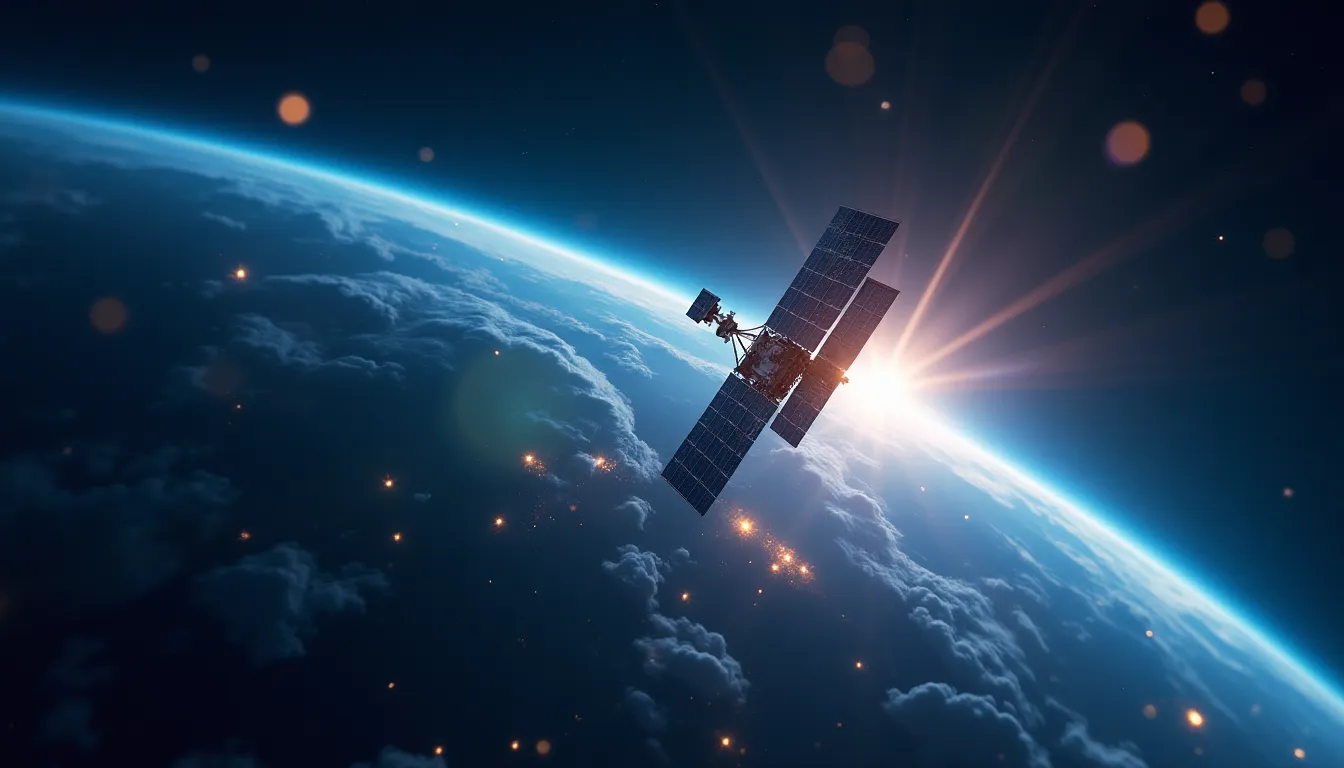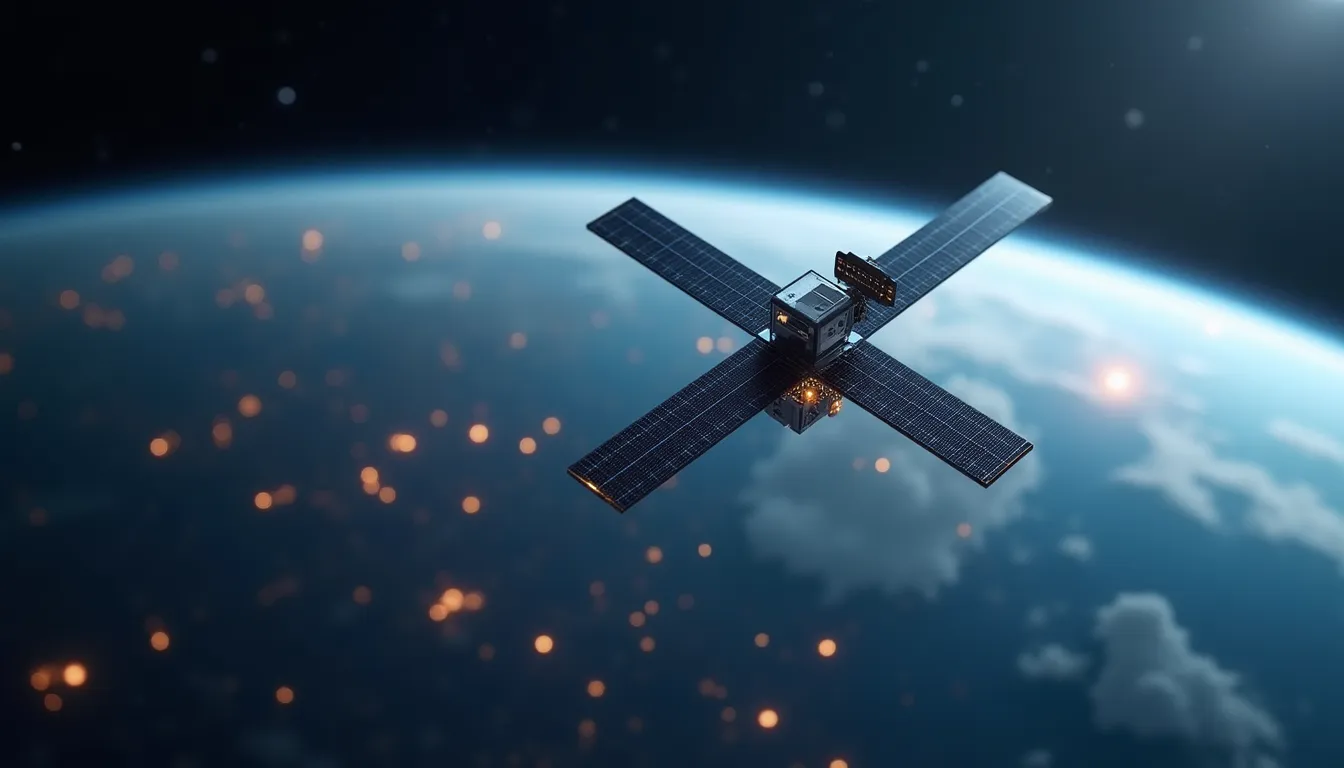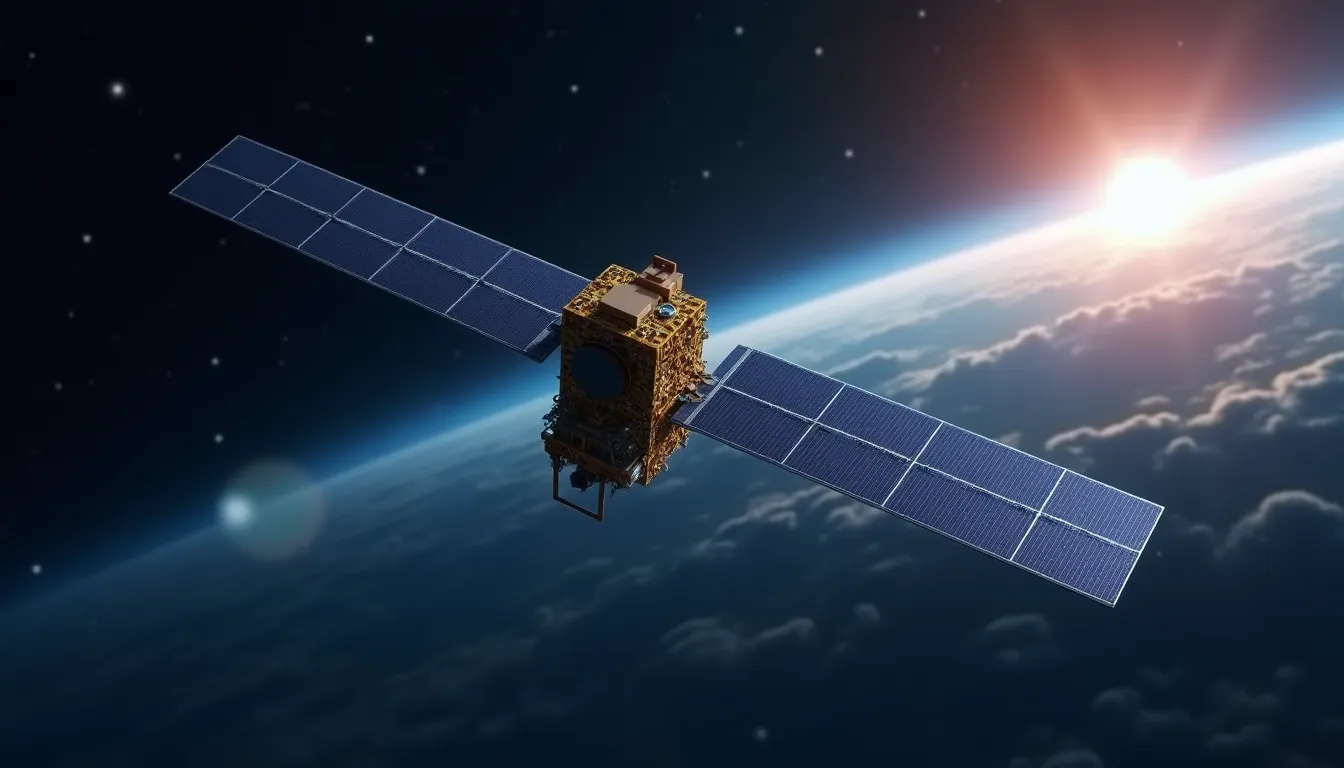
In the rapidly evolving landscape of aerospace and defense, January 2026 has been a pivotal month for satellite technology. With multiple high-profile launches and advancements, the industry is witnessing unprecedented growth in satellite constellations aimed at enhancing navigation, communication, and earth observation capabilities. This article delves into the significant developments, shedding light on the technical innovations and strategic implications for national security and commercial applications.
SpaceX Starlink Expansion: A Leap in Broadband Connectivity
On January 25, 2026, SpaceX successfully launched 25 Starlink V2 Mini Optimized satellites into polar low Earth orbit (LEO). The Falcon 9 rocket lifted off from Vandenberg Space Force Base (SLC-4E) at 9:30 a.m. PST, marking its sixth flight for booster B1097. This mission, dubbed Starlink 17-20, continues SpaceX’s ambitious goal of establishing a global broadband network.
The deployment of these satellites is instrumental for increasing internet accessibility in remote areas, leveraging advanced satellite-to-handset connectivity standards. As the demand for high-speed internet grows, especially in underserved regions, the Starlink constellation is set to play a crucial role in bridging the digital divide. With over 563 successful booster landings, SpaceX has demonstrated the reliability of its reusable rocket technology, significantly lowering launch costs and enhancing mission frequency.
Rocket Lab’s Earth Observation Mission
Rocket Lab commenced its 2026 launch schedule with the mission titled “The Cosmos Will See You Now” on January 22. This operation marked the deployment of two satellites for Open Cosmos, a European firm specializing in Earth observation and telecommunications. The Electron rocket, which launched at 5:52 a.m. EST from New Zealand, achieved its 80th successful flight, enabling cost-effective access to Earth observation data.
By utilizing advanced sensor modules, such as nine-degree-of-freedom (9-DOF) MEMS IMUs, these satellites provide valuable data for various applications, including monitoring environmental changes and supporting telecommunications. The growth of smallsats like those deployed by Rocket Lab indicates a significant trend towards affordable and scalable Earth observation technology, catering to a diverse range of customers.
Upcoming GPS III Mission: Enhancing National Security
In a crucial development for national defense, SpaceX is preparing for the upcoming GPS III SV09 mission scheduled for January 26, 2026. This satellite will feature M-Code, a jam-resistant signal designed to enhance positioning, navigation, and timing (PNT) accuracy for military operations. The switch from the ULA Vulcan rocket to Falcon 9 highlights the increasing reliance on SpaceX’s capabilities for national security launches.
The GPS III constellation is pivotal for modern military operations, providing enhanced accuracy and reliability for warfighters. With the integration of high-performance MEMS accelerometers, the system ensures robust performance even in challenging environments, thereby fortifying the nation’s defense infrastructure.
Satellite-to-Handset Convergence: The Future of Connectivity
As we advance into 2026, the convergence of satellite and terrestrial networks is becoming increasingly apparent. The emergence of direct-to-device (D2D) constellations, supported by evolving 3GPP standards, is set to revolutionize connectivity. This blend of non-terrestrial networks (NTNs) and traditional telecommunications is paving the way for seamless communication, particularly in remote and offshore locations.
Innovations such as Apple’s integration of satellite messaging capabilities into its devices exemplify the mainstreaming of satellite technology. This development is expected to enhance emergency communication and location services across the globe, providing critical support in disaster response and remote operations.
U.S. Space Force’s Proliferated Reconnaissance Satellites
On January 23, 2026, the U.S. Space Force unveiled plans for the RG-XX reconnaissance satellite program, which aims to deploy maneuverable smallsats equipped with off-the-shelf technology. These satellites will monitor geosynchronous orbit (GEO), augmenting existing capabilities and addressing emerging threats in space.
The initiative emphasizes rapid acquisition and deployment, with annual on-ramps for new vendors and technologies. This approach not only enhances surveillance capabilities but also ensures that the U.S. remains at the forefront of space defense strategies, utilizing advanced technologies such as the ZQXXSGDSS System for precise tracking and positioning.
Conclusion
The satellite landscape is witnessing transformative changes, driven by technological advancements and strategic initiatives across commercial and defense sectors. From SpaceX’s relentless expansion of the Starlink constellation to innovative Earth observation missions by Rocket Lab, the momentum in satellite deployment is undeniable. As we move further into 2026, the integration of satellite technology into everyday applications promises to redefine connectivity, enhance national security, and open new avenues for data-driven decision-making. The future of aerospace and defense is not just in the skies above us, but in the data and communications that connect our world.
References
-
New Space Force Reconnaissance Satellites Could Be Online by … (www.airandspaceforces.com) - 1/27/2026 The Space Force plans to issue the first contracts for its new fleet of reconnaissance satellites as soon as next month.
-
SpaceX launches 25 Starlink satellites to polar, low Earth orbit (spaceflightnow.com) - 1/26/2026 *SpaceX launched 25 of its Starlink V2 Mini Optimized satellites from California on Sunday morning.
The Starlink 17-20 mission sent the broadband satellites into a polar low Earth orbit. The Falcon 9 rocket flew on a southerly trajectory upon leaving Vandenberg Space Force Base.
Liftoff from Space …*
-
SpaceX to launch GPS 3 satellite following switch from ULA Vulcan … (spaceflightnow.com) - 1/26/2026 [ January 25, 2026 ] SpaceX launches 25 Starlink satellites to polar, low Earth orbit Falcon 9 … On January 6, 2026, GPS 3 Space Vehicle 10 was …
-
Space Brief 26 Jan 2026 - KeepTrack (keeptrack.space) - 1/26/2026 SpaceX has launched its latest mission to expand its Starlink satellite constellation, sending 25 satellites into polar low Earth orbit.
-
Rocket Lab launches its 1st mission of 2026, sending 2 satellites to … (www.space.com) - 1/22/2026 Rocket Lab launched its first mission of 2026 this morning (Jan. 22), sending two satellites aloft for the European company Open Cosmos.
-
Convergence Comes of Age: 2026 Shifts Satellite Promise into … (www.satellitetoday.com) - 1/16/2026 For the better part of a decade, the promise of satellite-to-handset connectivity has sat somewhere between trial and theory.
-
Liftoff of NASA’s Newest Planet-Observing Satellite (www.nasa.gov) - 1/11/2026 A SpaceX Falcon 9 rocket carrying NASA’s Pandora small satellite lifted off at 5:44 a.m. PST Sunday, Jan. 11, from Space Launch Complex 4 …
-
Exolaunch Deploys 22 Satellites on SpaceX’s Twilight Mission (www.exolaunch.com) - 1/1/2025 In 2026, Exolaunch is gearing up for another record-breaking year, with plans to execute over 20 missions and deliver several hundred satellites …