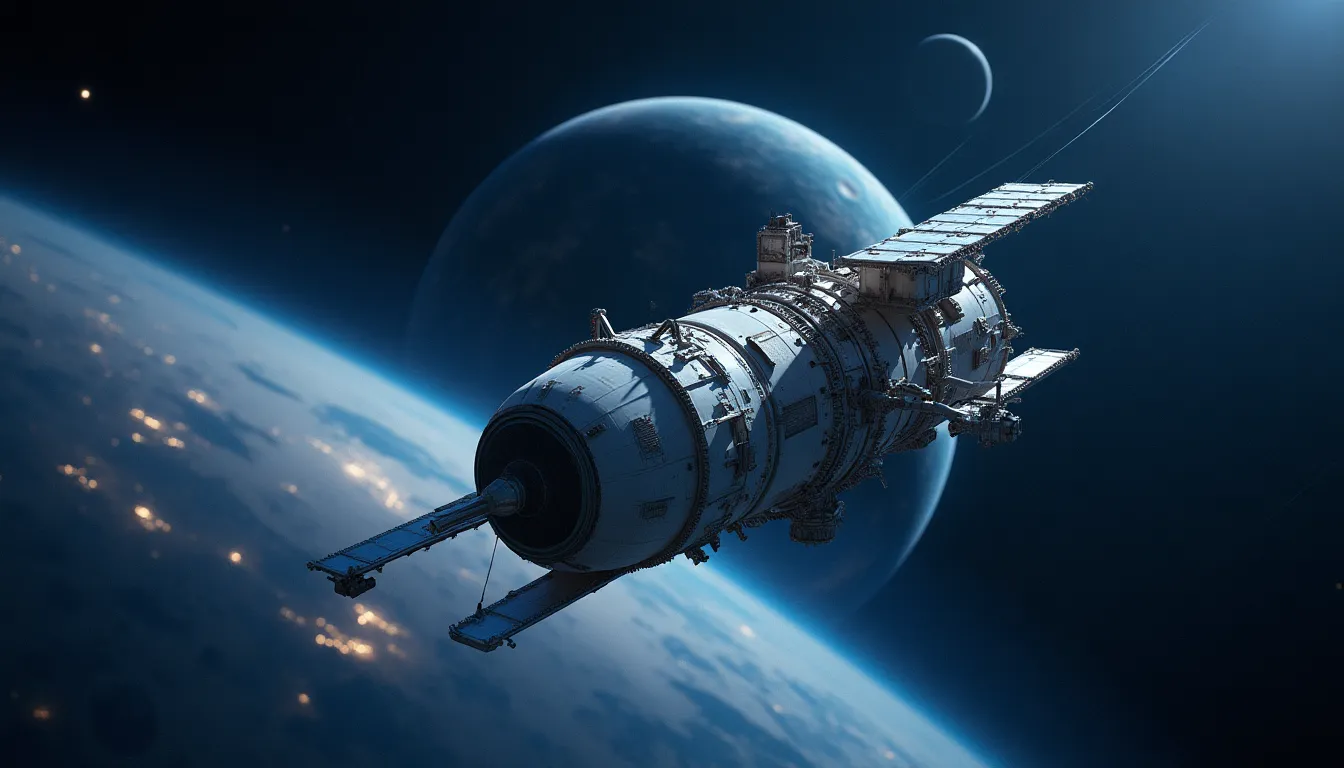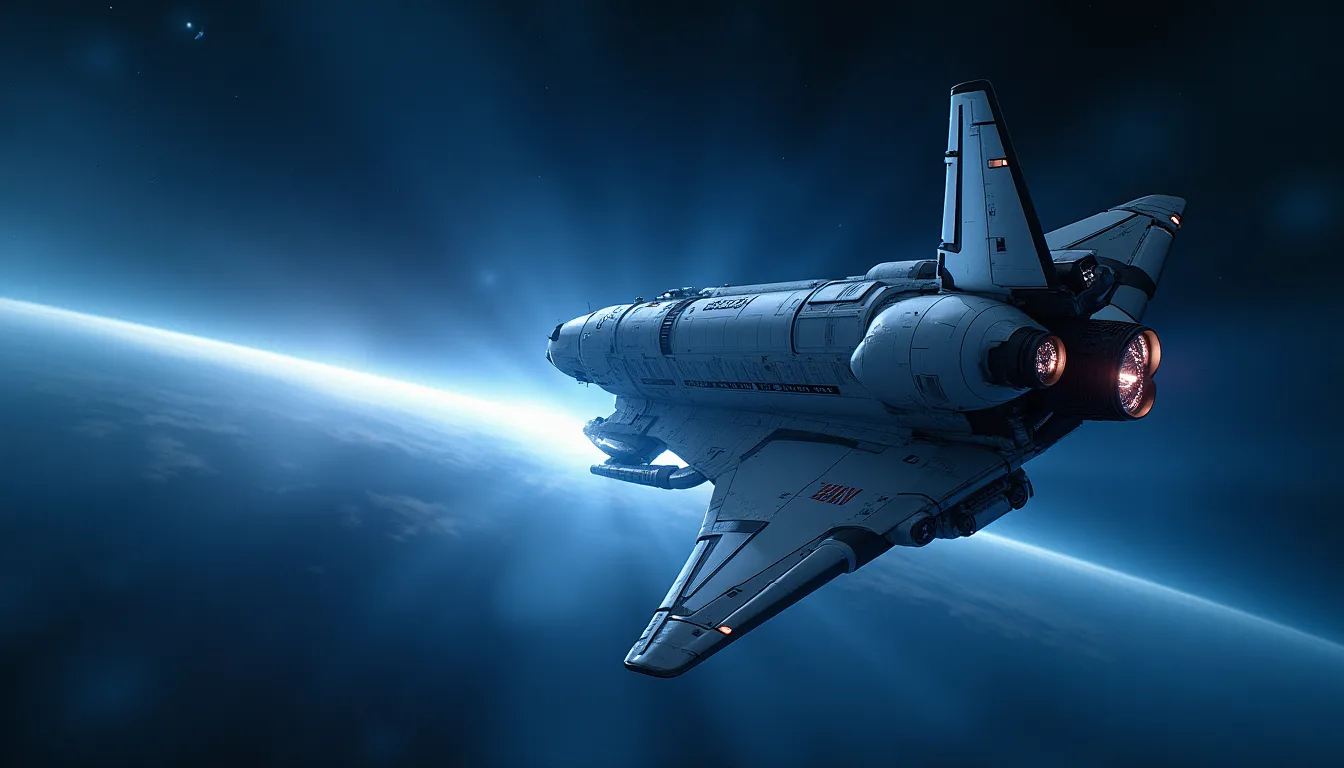
NASA has recently made significant strides in various aerospace and technology sectors, focusing on operations aboard the International Space Station (ISS), preparations for lunar missions, and advancements in exoplanet observation technologies. From upcoming spacewalks for ISS upgrades to the ambitious Artemis 2 mission, these developments highlight the agency’s commitment to pushing the boundaries of human spaceflight and scientific discovery.
Upcoming ISS Spacewalks: Enhancing Infrastructure
On January 8, 2026, NASA astronauts Mike Fincke and Zena Cardman are set to conduct U.S. Spacewalk 94. This extravehicular activity (EVA) will begin at 8 a.m. EST, with coverage starting at 6:30 a.m. on platforms such as NASA+, YouTube, and Amazon Prime. The spacewalk is expected to last approximately 6.5 hours and will focus on several critical tasks, including:
- Installing a modification kit on the ISS port side truss.
- Routing cables to prepare for the installation of new roll-out solar arrays (IROSAs) from an upcoming cargo mission.
- Conducting hardware photography and microbial swabbing as part of ongoing research.
Following this, U.S. Spacewalk 95 is scheduled for January 15, 2026, where astronauts will replace a high-definition camera, install a planar reflector navigation aid on the Harmony module, and relocate ammonia servicer jumpers on S6/S4 trusses. These spacewalks are pivotal for maintaining and upgrading the ISS’s capabilities to support future missions and scientific research.
Artemis 2 Lunar Mission: A Historic Journey
The highly anticipated Artemis 2 mission, marking NASA’s first crewed lunar flight in over 50 years, is targeting a launch as early as February 6, 2026, from the iconic Launch Complex 39A. This mission will carry a team of NASA astronauts, including Reid Wiseman, Victor Glover, Christina Koch, and Jeremy Hansen from the Canadian Space Agency, on a lunar orbit test of the Orion spacecraft.
In preparation for this historic mission, the spacecraft is undergoing final testing, with fixes implemented to address previous vibration issues. According to NASA Administrator Jared Isaacman, progress is steady as the agency approaches this crucial milestone. The Artemis 2 mission not only aims to explore the lunar environment but also sets the stage for future lunar habitation and exploration initiatives. High-resolution imagery of the crewed Orion spacecraft in preparation for its lunar trajectory testing is available through NASA’s communications channels.
Habitable Worlds Observatory: Searching for Life Beyond Earth
On January 5, 2026, NASA announced the selection of industry proposals to develop technologies for the Habitable Worlds Observatory, a flagship telescope designed to image Earth-like exoplanets and analyze their atmospheres for potential biosignatures. This ambitious project builds on previous successes from the Hubble Space Telescope and the James Webb Space Telescope (JWST), and aims to answer one of humanity’s most profound questions: “Are we alone in the universe?”
Astrophysics Director Shawn Domagal-Goldman emphasized the importance of this mission in charting new frontiers in astrophysics. The observatory will play a critical role in supporting Mars and universe studies, utilizing advanced imaging technologies to explore distant worlds.
Additional Developments: Crew Missions and Funding
In addition to the Artemis 2 mission, NASA is preparing for the Crew-12 Mission, set to launch no earlier than February 15, 2026. This mission will involve a team of astronauts, including Jessica Meir and Jack Hathaway, who will conduct scientific research aboard the ISS.
Furthermore, NASA’s budget has seen significant support, with the House-Senate FY2026 appropriations providing $1.240 billion for the ISS, which includes $250 million from the Office of Budget and Management. ARES Technical Services has been awarded a $339.8 million contract to provide launch support for Wallops, ensuring the agency’s operational capabilities are robust for upcoming missions.
Enhancing Public Engagement: Skywatching in January 2026
NASA continues to engage the public with exciting skywatching opportunities throughout January 2026. Highlights include:
- Jupiter at opposition on January 10, appearing as the brightest and largest planet in the night sky.
- A Saturn-Moon conjunction on January 23, providing a spectacular view of these celestial bodies.
- The Beehive Cluster, observable throughout the month, offering an excellent opportunity for amateur astronomers.
These events not only encourage public interest in space science but also enhance community engagement with NASA’s ongoing missions.
Conclusion
As NASA propels forward into 2026, its recent advancements in space exploration, from ISS operations to the Artemis 2 lunar mission and the ambitious Habitable Worlds Observatory, underscore a new era of scientific discovery and human spaceflight. With strategic funding, collaborative missions, and public engagement initiatives, NASA is poised to lead the way in understanding our universe and humanity’s place within it. The next few months will be pivotal as these projects come to fruition, bringing us closer to the stars and potentially discovering new worlds beyond our own.
References
- What’s Up: January 2026 Skywatching Tips from NASA (science.nasa.gov) - 1/6/2026 *Jupiter beams bright, Saturn and the Moon cozy up, and the Beehive Cluster appears
Jupiter beams bright, Saturn and the Moon cozy up, and the Beehive Cluster appears
Jupiter is at its biggest and brightest all year, the Moon and Saturn pair up, and the Beehive Cluster buzzes into view.*
- NASA to Cover US Spacewalks 94, 95 at International Space Station (www.nasa.gov) - 1/6/2026 *NASA astronauts will conduct two spacewalks Thursday, Jan. 8, and Thursday, Jan. 15, outside the International Space Station, and the agency will provide comprehensive coverage.
The first spacewalk is scheduled to begin at 8 a.m. EST on Jan. 8 and last about six hours and 30 minutes. NASA will prov…*
-
U.S. Spacewalk Preview News Conference (Jan. 6, 2026) - YouTube (www.youtube.com) - 1/6/2026 NASA experts are discussing two upcoming spacewalks which will make upgrades to the International Space Station. Tune in and learn more!
-
NASA advances ambitious mission to search for life beyond Earth (www.openaccessgovernment.org) - 1/6/2026 On January 5, 2026, the agency announced the selection of several industry proposals to advance key technologies for the Habitable Worlds …
-
NASA may be 1 month away from historic Artemis 2 astronaut … (www.space.com) - 1/6/2026 Artemis 2, NASA’s next astronaut mission to the moon, is gearing up for a launch that could occur as soon as Feb. 6.
-
NASA Selects Tech Proposals to Advance Search-for-Life Mission (www.nasa.gov) - 1/6/2026 NASA announced Monday the selection of industry proposals to advance technologies for the agency’s Habitable Worlds Observatory concept …
-
Expedition 74 Gears Up for First Spacewalk of 2026 - NASA (www.nasa.gov) - 1/6/2026 The Expedition 74 crew is gearing up for the first spacewalk of 2026 this week that will see two astronauts prepare the International Space …
-
Great News for NASA in the House-Senate FY2026 Appropriations … (spacepolicyonline.com) - 1/6/2026 The conference report provides $1.240 billion for the ISS in FY2026 with the $250 million from the OBBBA raising the total available in FY2026 …
-
2026 NASA News Releases (www.nasa.gov) - 1/2/2026 NASA astronauts will conduct two spacewalks Thursday, Jan. 8, and Thursday, Jan. 15, outside the International Space Station, and the agency …