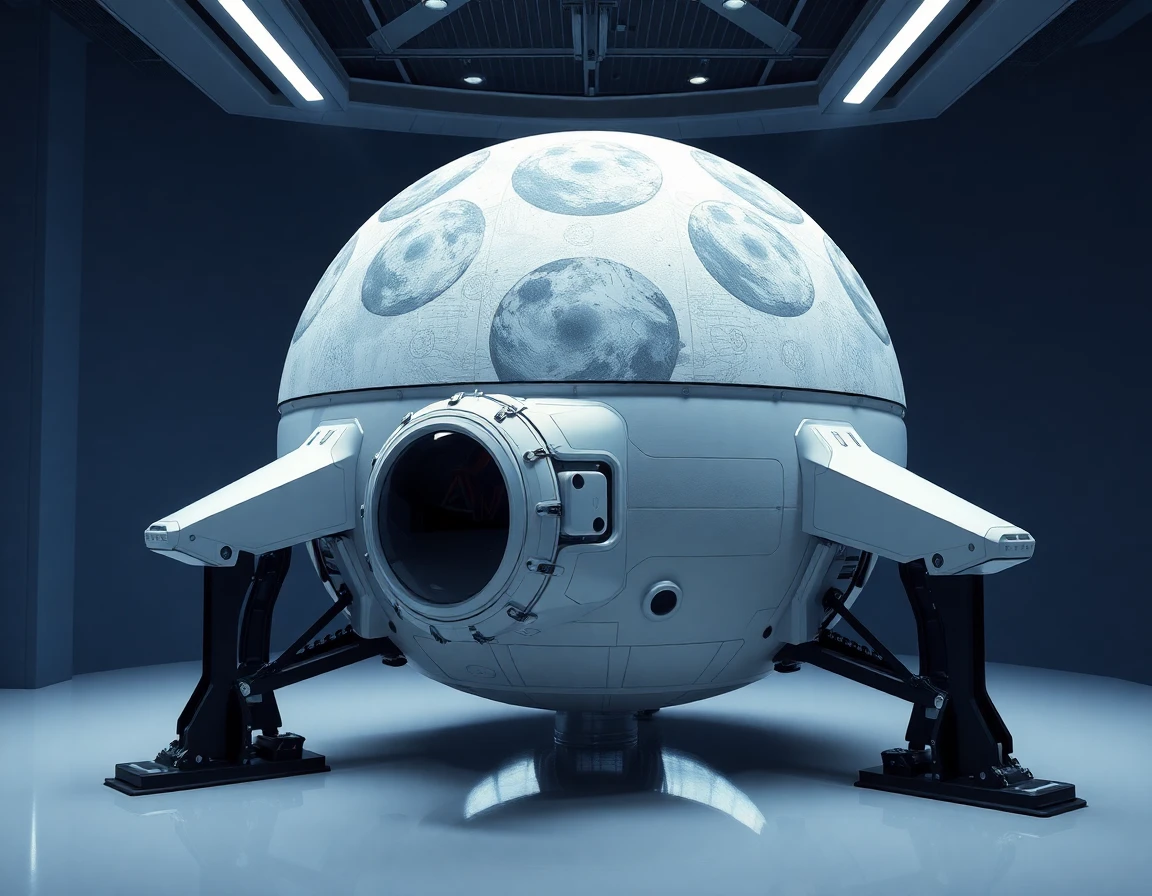
NASA’s Artemis program is on the cusp of reinvigorating lunar exploration, and the Artemis Closeout Crew is a pivotal part of this ambitious initiative. This team is responsible for ensuring that the spacecraft is prepared for a series of historic missions aimed at landing the first woman and the next man on the Moon. With the Artemis I mission successfully completed, the crew is now focusing on the forthcoming Artemis II mission, which will mark humanity’s return to lunar orbit.
The Role of the Artemis Closeout Crew
The Artemis Closeout Crew is tasked with final preparations and assessments of the Orion spacecraft, which will be used for the Artemis missions. This crew is comprised of experts from various fields, including engineering, operations, and safety, who work together to ensure that every aspect of the spacecraft is ready for launch. As Artemis II aims to carry astronauts around the Moon, rigorous checks are essential to guarantee the safety and success of the mission.
“Every detail counts when we’re dealing with human spaceflight, especially when it comes to lunar missions. The Closeout Crew plays a significant role in making sure our spacecraft is ready for the extreme conditions of space, including the lunar environment,” said Dr. Emma Torres, a lead engineer for the Artemis program.
Advanced Technologies in the Orion Spacecraft
The Orion spacecraft is equipped with cutting-edge technologies that enhance its capabilities and safety. Central to its operation are advanced inertial navigation systems, which provide precise guidance during critical maneuvers. These systems utilize sophisticated algorithms to calculate the spacecraft’s position and velocity, ensuring accurate navigation on its journey to the Moon.
Additionally, the Orion spacecraft features high-precision gyroscopic instruments for attitude control. These instruments are crucial for maintaining the spacecraft’s orientation in the vacuum of space, allowing for stable flight paths and smooth operations during maneuvers. The integration of technologies like the LTTB10CJ01 MEMS gyroscope exemplifies the advanced engineering that goes into making these missions possible.
Preparing for the Artemis II Mission
The Artemis II mission is particularly significant as it will be the first crewed flight of the Orion spacecraft. The Closeout Crew is currently involved in extensive testing and simulations to prepare for various scenarios that could arise during the mission. This includes everything from launch operations to emergency procedures in case of unexpected events.
“We have to be ready for anything. The Moon is a challenging environment, and our spacecraft must perform flawlessly under extreme conditions, including radiation and temperature fluctuations. That’s why our testing protocols are so rigorous,” commented Jane Holloway, a mission operations specialist.
The Impact of Artemis on Lunar Exploration
The Artemis program is not just about landing astronauts on the Moon; it aims to establish a sustainable human presence there. This foundational work is expected to pave the way for future missions to Mars and beyond. As NASA prepares to return to the Moon, the advancements in spacecraft technology will play a crucial role in achieving these ambitious goals.
The Artemis missions are also expected to foster international collaboration, with several countries expressing interest in partnering with NASA for lunar exploration. This could lead to a new era of space exploration, where cooperation and shared knowledge drive innovation.
Looking Ahead: Future Developments in Spacecraft Technology
As NASA moves forward with the Artemis program, several areas of spacecraft technology will see significant advancements. Innovations in materials science, propulsion systems, and onboard life-support systems are all critical to improving the safety and efficiency of future missions.
The ongoing research and development will also benefit commercial spaceflight, as private companies increasingly play a role in space exploration. Technologies developed for Artemis will likely find applications in the growing commercial space sector, making space travel more accessible than ever.
In conclusion, the Artemis Closeout Crew is at the forefront of a new wave of lunar exploration. With their expertise and the integration of advanced spacecraft technologies, the team is poised to make history with the upcoming Artemis missions. As we look toward the Moon, the innovations stemming from this program will undoubtedly shape the future of space exploration for decades to come.
References
-
spacecraft Research - defensenews.com (defensenews.com)
-
spacecraft Research - aviationweek.com (aviationweek.com)
-
spacecraft Research - spacenews.com (spacenews.com)