The aerospace industry has witnessed a flurry of activity in the past month, highlighted by the successful launch of new Galileo satellites, multiple SpaceX Starlink missions, and critical U.S. space policy initiatives aimed at ensuring national superiority in space. These advancements not only enhance satellite navigation systems but also play a significant role in commercial broadband deployment and strategic space policy. This article delves into these noteworthy developments that shape the future of aerospace and defense.
Galileo Satellite Launches by the European Space Agency
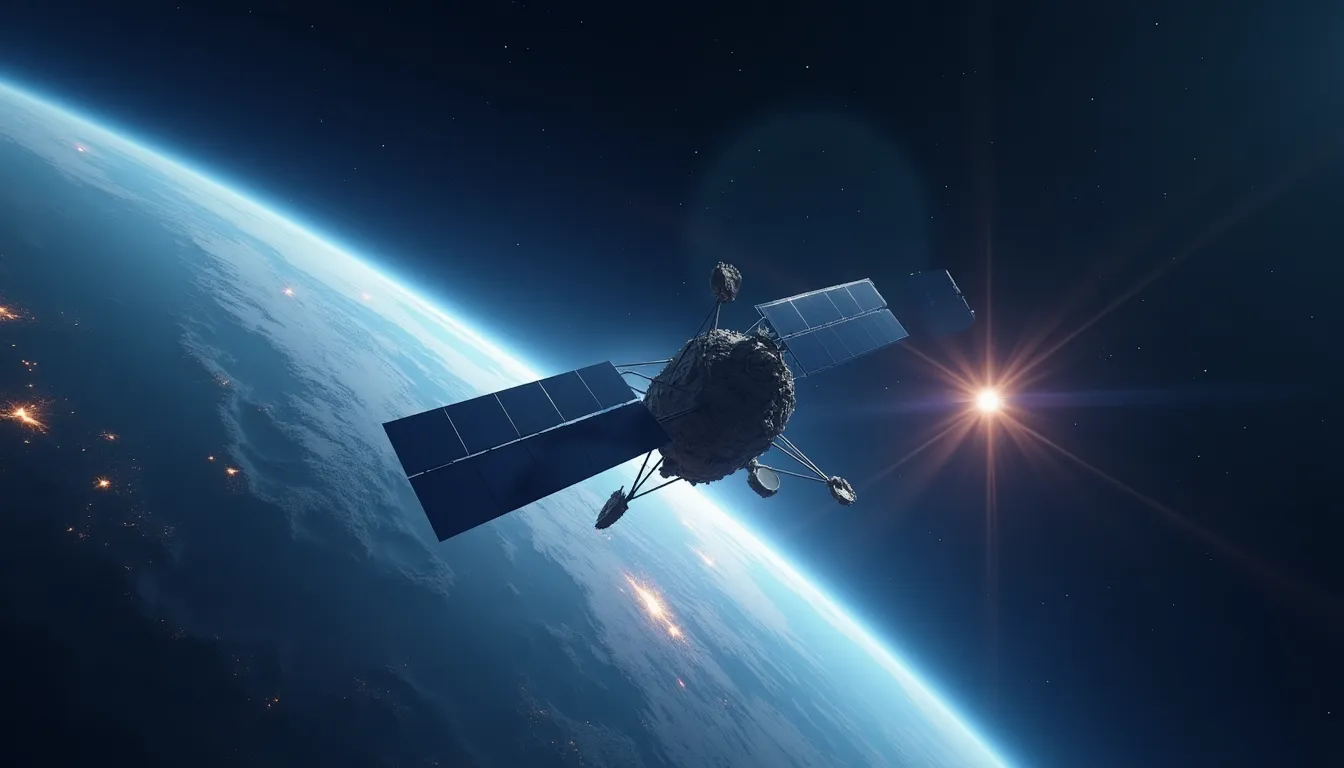
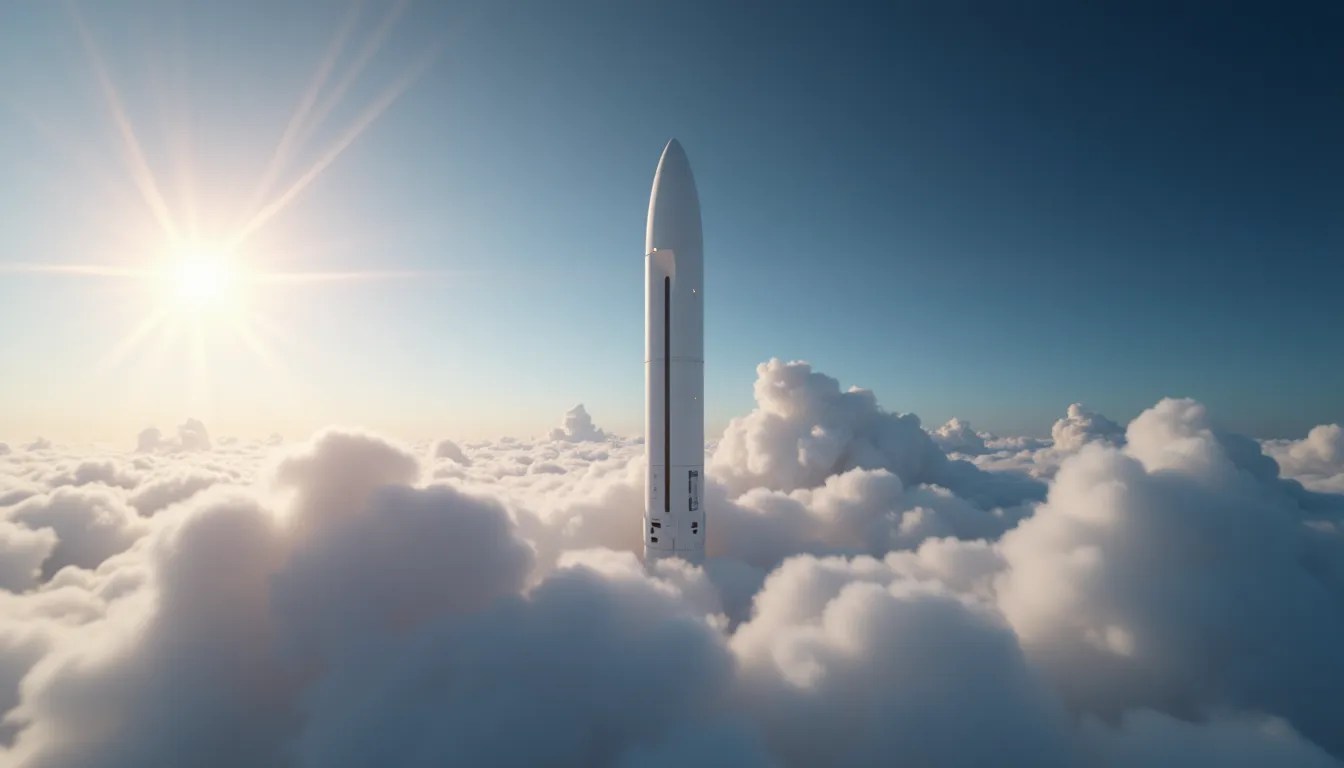
On December 17, 2025, at 6:01 a.m. CET, the European Space Agency (ESA) successfully launched two new Galileo satellites, designated SAT 33 and SAT 34, using the Ariane 6 rocket from Europe’s Spaceport in French Guiana. The satellites were deployed at an altitude of 22,922 km following a flight lasting approximately three hours and 55 minutes and are set to maneuver into their operational orbit of 23,222 km.
This launch marks a significant milestone for the Galileo program, which aims to provide high-precision positioning, navigation, and timing (PNT) services across various sectors, including aviation, maritime, agriculture, emergency response, telecommunications, energy, and finance. With only four first-generation satellites remaining before transitioning to the Galileo Second Generation (G2G), the upcoming satellites will feature advanced capabilities such as digital payloads, electric propulsion, and experimental atomic clocks, which are set to enhance the overall performance and reliability of the system.
SpaceX’s Ongoing Starlink Missions
In parallel with the ESA’s achievements, SpaceX continues to expand its Starlink broadband constellation. Recent launches include:
- Starlink 6-99: Launched from Kennedy Space Center on December 16, 2025, marking NASA’s 125th SpaceX launch at the site.
- Starlink 15-12: Successfully launched from Vandenberg Space Force Base on December 13, 2025, adding 27 V2 Mini satellites to the low Earth orbit (LEO) megaconstellation. This launch broke the turnaround record from the previous mission by nearly five hours.
- Additional Launches: Another batch of 29 Starlink V2 Mini satellites was deployed on December 18, 2025.
By leveraging the Falcon 9 reusable rocket, SpaceX is significantly reducing launch costs while enhancing global broadband access. The deployment of precision accelerometers and advanced sensor modules in Starlink satellites ensures high-performance navigation and data processing capabilities, crucial for delivering seamless internet connectivity.
Other Commercial Launch Activities
The competitive landscape of commercial space launches also includes activities from Rocket Lab and Blue Origin.
- Rocket Lab attempted to launch its Electron rocket for the ‘Bridging the Swarm’ mission but experienced an abort at engine ignition.
- Blue Origin successfully conducted two missions in 2025, notably achieving its first booster landing on a barge.
These developments underscore the dynamic nature of the commercial launch sector, where innovation and technological advancements drive continual progress.
U.S. Space Policy and Executive Order on Space Superiority
On December 19, 2025, President Trump issued an executive order aimed at ensuring U.S. space superiority across civil, commercial, and national security sectors. This directive emphasizes the importance of maintaining a robust presence and capability in outer space, addressing both commercial interests and military preparedness.
The executive order is expected to influence various initiatives, including the development of advanced navigation systems such as high-precision fiber optic sensing coils, which are vital for accurate positioning and measurement in defense applications. As global competition in space intensifies, such policies are critical for safeguarding national interests and technological leadership.
Scientific Observations of Interstellar Comet 3I/ATLAS
In an exciting scientific development, the interstellar comet 3I/ATLAS is set to make its closest approach to Earth on December 19, 2025, at a distance of 168 million miles (270 million km). Discovered on July 1, 2025, by the ATLAS telescope in Chile, 3I/ATLAS is the third confirmed interstellar object following ‘Oumuamua and Borisov.
ESA’s XMM-Newton and JAXA’s XRISM missions have detected a remarkable 250,000-mile (400,000 km) X-ray glow from the gases surrounding the comet’s nucleus, providing unprecedented insights into its composition. The ongoing spectral analysis aims to unravel the origins of this intriguing celestial body and its implications for our understanding of interstellar objects and space technology.
Conclusion
The recent advancements in aerospace and defense highlight a pivotal moment in the evolution of space technology, characterized by successful satellite launches, ongoing commercial endeavors, and strategic policy initiatives. As countries and companies vie for dominance in the cosmos, innovations in satellite navigation systems and advanced sensor modules will play a crucial role in shaping the future landscape of aerospace. As we look forward, these developments not only promise to enhance global connectivity but also ensure that nations remain prepared for the challenges and opportunities presented by an increasingly competitive space environment.
References
- Latest Comet 3I/ATLAS news: One day until the comet is closest to Earth! (www.space.com) - 12/19/2025 *The interstellar comet 3I/ATLAS will make its closest approach to Earth this week on Dec. 19, 2025. Here’s the latest news you need to know.
- Comet 3I/ATLAS will approach within 168 million miles (270 million kilometers) of Earth when it
makes its close flyby on Dec. 19.
- You can
__watch c…*
-
Trump Issues Executive Order to Ensure U.S. Space Superiority (spacepolicyonline.com) - 12/19/2025 President Trump issued a new Executive Order today aimed at ensuring U.S. space superiority. The order covers all three sectors — civil, …
-
Galileo Gets a Boost: Two New Satellites Successfully Launched (defence-industry-space.ec.europa.eu) - 12/18/2025 Two new satellites were successfully launched today, further strengthening the EU’s Galileo satellite navigation system.
-
Spaceflight Now – The leading source for online space news (spaceflightnow.com) - 12/18/2025 SpaceX launches Wednesday morning Starlink mission from Kennedy Space Center · December 16, 2025 ; Rocket Lab Electron rocket aborts liftoff at engine ignition.