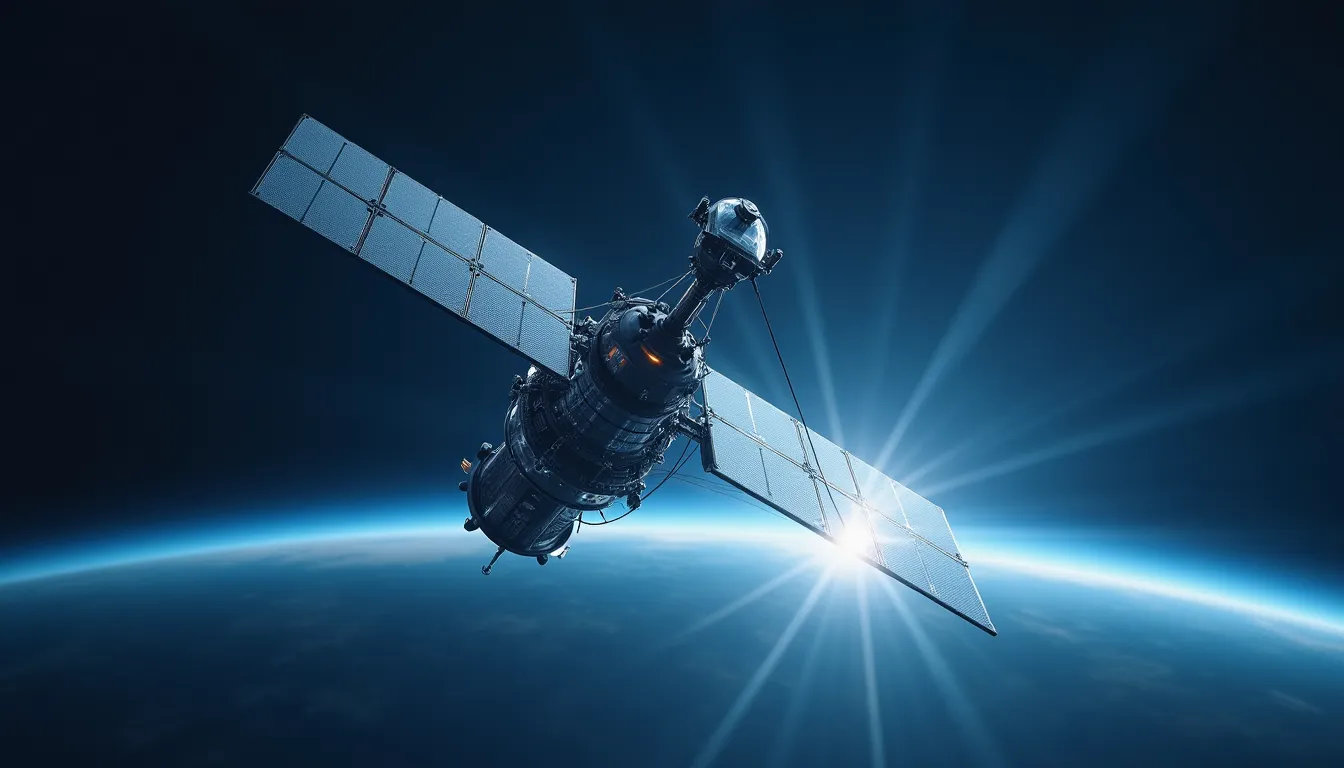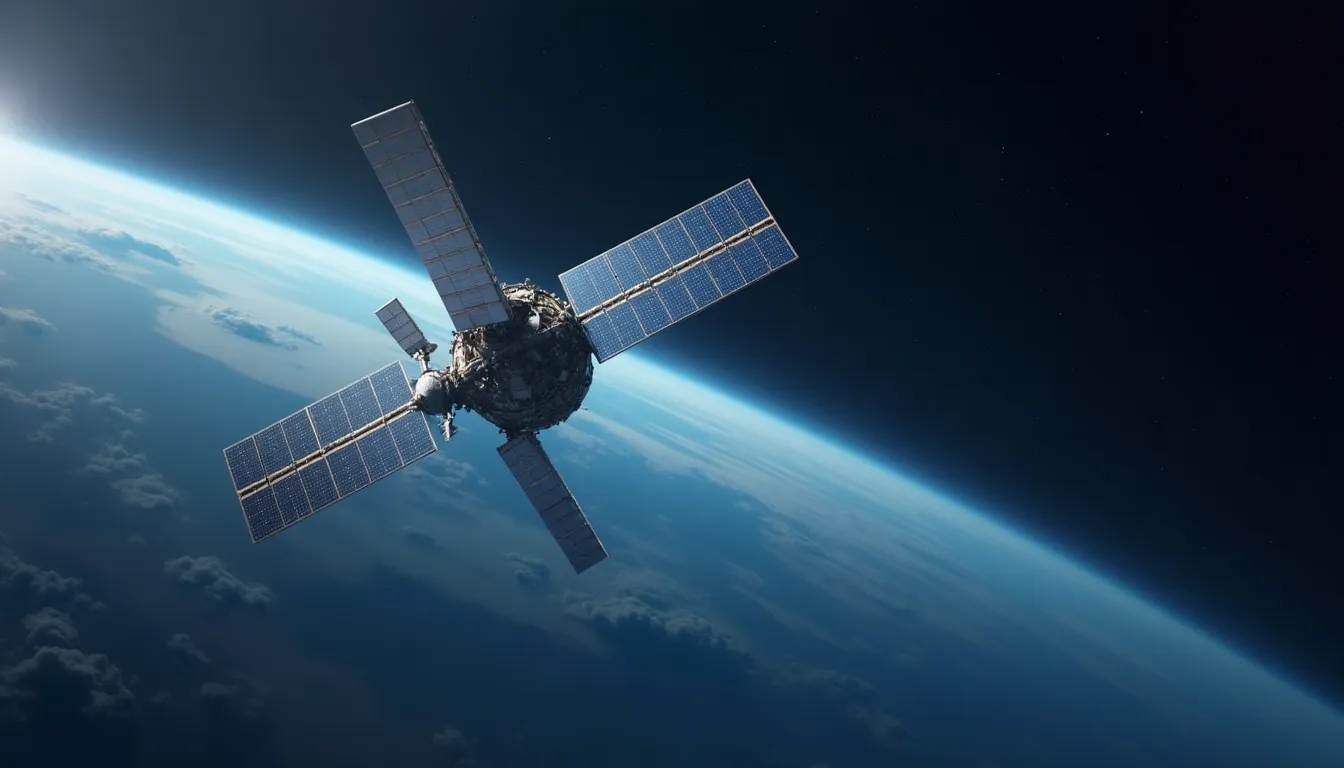
The satellite industry is witnessing a transformative period marked by significant advancements in launch capabilities, technological innovation, and a focus on sustainability. As space becomes increasingly congested, the need for innovative solutions has never been more pressing. This article delves into recent developments that highlight the intersection of aerospace, defense, and technology within the satellite sector.
Launch and Deployment Advances
On December 12, 2025, Rocket Lab is poised to make history with the launch of the Japanese technology-demonstrating satellite RAISE-4 from New Zealand. This mission, which is Rocket Lab’s 18th in 2025, will showcase eight cutting-edge technologies developed by a coalition of Japanese private companies, universities, and research institutions. The RAISE-4 satellite will be deployed into a circular orbit at an altitude of approximately 540 km, reflecting Rocket Lab’s impressive growth in small satellite deployment capabilities.
This launch underscores a broader trend within the aerospace sector: the increasing frequency of missions aimed at harnessing innovative technologies for both commercial and governmental applications. As demand for satellite services rises, companies are optimizing their launch systems to accommodate a diverse array of payloads, further propelling the industry’s expansion.
Satellite Technology and Sustainability
Amidst the rapid growth in satellite launches, a pressing concern emerges: orbital congestion and space debris. Researchers at Penn State University are taking proactive measures to address these issues by establishing a Center for Research in Emerging Sustainable Space Technologies. Supported by a National Science Foundation (NSF) grant, the center aims to develop groundbreaking technologies that will not only help mitigate space debris but also extend the operational life of satellites through in-space servicing and repair technologies.
Traditional end-of-life disposal methods—such as moving satellites to graveyard orbits or facilitating atmospheric reentry—are becoming increasingly inadequate. By focusing on innovative solutions, such as in-orbit repairs, the center seeks to revolutionize how satellite operators manage their fleets, thereby enhancing sustainability within the space domain.
Operational Challenges in Space Missions
Despite these advancements, the satellite sector is not without its challenges. NASA’s MAVEN (Mars Atmosphere and Volatile EvolutioN) Mars orbiter recently experienced a critical anomaly, losing situational awareness and entering safe mode. This incident has disrupted MAVEN’s critical role in the Mars Relay Network, which is essential for relaying data from surface rovers back to Earth.
The loss of orientation is suspected to be linked to a potential software or hardware failure affecting the star tracker navigation system. Recovery efforts are underway, emphasizing the operational complexities and vulnerabilities that satellites face in harsh deep-space environments.
Artificial Intelligence in Space Services
As the satellite industry evolves, the integration of artificial intelligence (AI) presents a significant frontier for innovation. The European Union Agency for the Space Programme (EUSPA) is set to spotlight this trend during its upcoming AI Week, scheduled for January 19–23, 2026. The event will showcase how AI is revolutionizing downstream space markets, particularly in enhancing Global Navigation Satellite System (GNSS) accuracy, detecting signal interference, and improving environmental monitoring from space.
AI applications are transforming satellite data utilization, enabling operators to process vast amounts of information more efficiently and respond to potential issues with greater agility. This is particularly relevant in applications where precision accelerometers and advanced sensor modules, such as the Advanced Sensor Module, are used to deliver high-quality data for various industries, including aerospace and defense.
Industry Trends and Future Outlook
Looking ahead, the December 2025 edition of Via Satellite outlines ten key technological trends poised to impact the satellite industry in 2026. Key among these trends are breakthroughs in Very Low Earth Orbit (VLEO) propulsion systems, the increasing adoption of open standards for ground systems, and further developments in AI applications. This shift is essential as companies strive to compete with proprietary networks like SpaceX’s Starlink and Amazon’s Project Kuiper.
Moreover, KBR’s recent win of a $350 million recompete contract to support the U.S. Geological Survey’s centralized imagery sharing hub signals continued investment in satellite data infrastructure, which is critical for earth observation and defense applications. As the demand for high-quality satellite imagery increases, so does the necessity for advanced technologies like the YWJ01ZB150 System for reliable azimuth determination and precise angle measurement in surveying applications.
Conclusion
The satellite industry’s landscape is rapidly evolving, driven by advancements in launch capabilities, technological innovation, and a concerted effort toward sustainability. As companies navigate the complexities of orbital congestion and operational challenges, the integration of AI and new technologies will play a crucial role in shaping the future of space services. The next few years will undoubtedly bring exciting developments, ensuring that the satellite sector remains at the forefront of aerospace and defense advancements.
References
-
NSF grant to support planning of sustainable space technology center (www.psu.edu) - 12/9/2025 The proposed Center for Research in Emerging Sustainable Space Technologies will be a hub for advancing space technology through collaboration …
-
NASA Loses Contact with MAVEN Mars Orbiter - SatNews (news.satnews.com) - 12/9/2025 December 9, 2025 … Access daily or weekly satellite news updates covering all aspects of the commercial and military satellite industry.
-
AI the next frontier in space technology and services (www.euspa.europa.eu) - 12/9/2025 Taking place 19-23 January, EUSPA AI Week is set to showcase how Artificial Intelligence is revolutionising the space downstream market.
-
NASA Demonstrates Safer Skies for Future Urban Air Travel (www.nasa.gov) - 12/9/2025 NASA is helping shape the future of urban air travel with a new simulation that will manage how electric air taxis and drones can …
-
10 Tech Trends That Will Impact the Space and Satellite Industry in … (www.worldteleport.org) - 12/8/2025 To mark the end of 2025, Via Satellite asked industry leaders to weigh in on the 10 tech trends set to impact the space and satellite industry …
-
Watch Rocket Lab launch Japanese technology … - Space (www.space.com) - 12/6/2025 Rocket Lab will launch a Japanese technology-demonstrating satellite on Thursday night (Dec. 12), and you can watch the action live.
-
Marking the End of 2025 | December 2025 - Via Satellite (interactive.satellitetoday.com) - 12/2/2025 This year I tackled “10 Tech Trends to Impact the Space and Satellite Industry,” talking to experts like retired Lt. Gen. John Shaw, former …
-
KBR wins $350M USGS satellite support recompete (washingtontechnology.com) | December 9, 2025 04:18 PM ET. The U.S. Geological Survey uses this contract to acquire resources for its centralized imagery sharing hub …
-
Webb identifies earliest supernova to date - ESA (www.esa.int) - 12/1/2025 The NASA/ESA/CSA James Webb Space Telescope has confirmed the source of a super-bright flash of light known as a gamma-ray burst, …