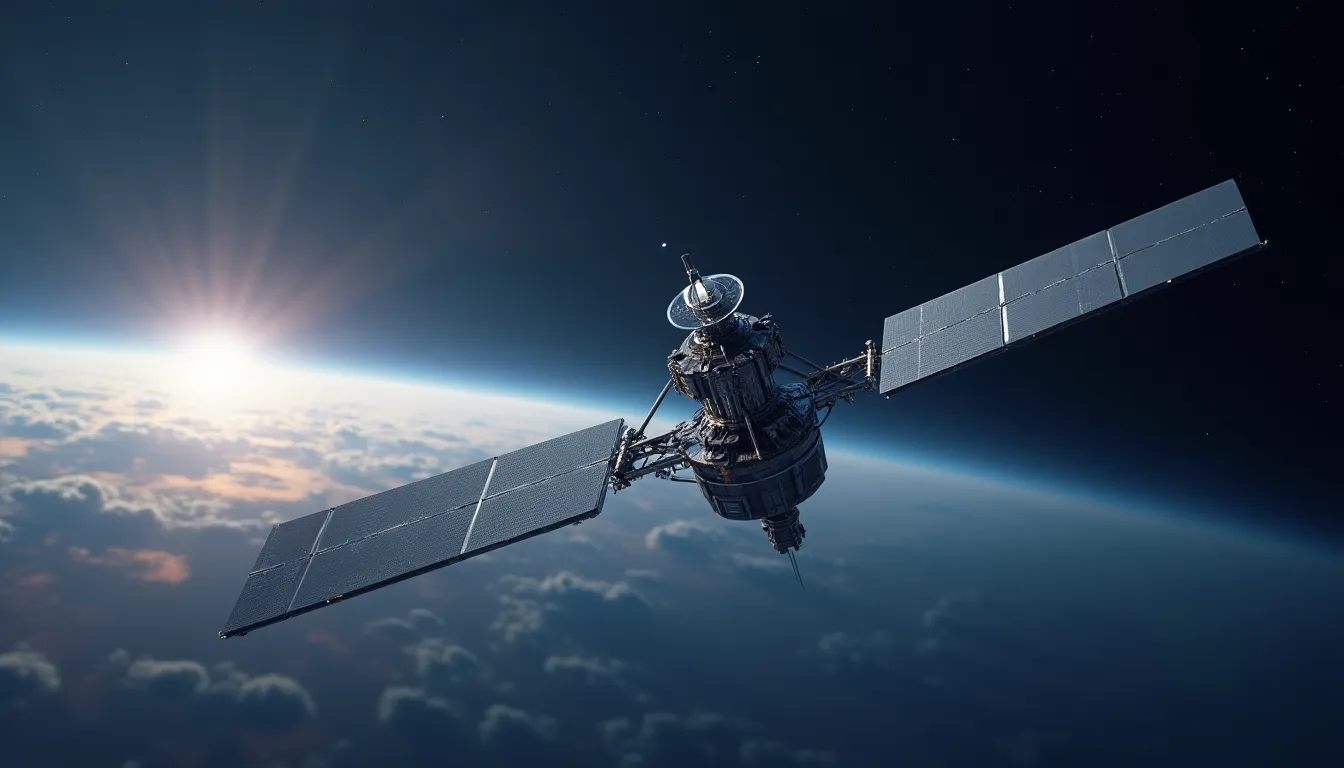
Vantor Satellites: A New Era in Space Object Tracking
In an era where space is becoming increasingly congested, the need for effective tracking of space objects has never been greater. Vantor satellites are stepping into this crucial role, leveraging advanced technologies to monitor areas in space that military ground sensors cannot access. This innovative capability not only enhances national security but also aids in the overall management of space traffic.
Addressing Blind Spots with Advanced Technology
Traditional ground-based sensors have long struggled to track objects in certain areas of space, often referred to as ‘blind spots.’ Vantor satellites are designed to fill this gap by utilizing state-of-the-art tracking systems. With a combination of high-precision accelerometers and advanced gyroscopic instruments, Vantor satellites can maintain accurate positioning and orientation while monitoring space debris and other objects.
“The ability to track objects in these blind spots is revolutionary for both military and civilian applications,” says Dr. Sarah Thompson, a space technology analyst at the Aerospace Institute. “With Vantor’s capabilities, we can not only enhance our defense systems but also protect valuable assets in orbit.”
Technical Specifications and Capabilities
Vantor satellites are equipped with next-generation sensors that enable them to operate effectively in the harsh environment of space. Key specifications include:
- Orbit Type: Low Earth Orbit (LEO)
- Tracking Range: Up to 1,500 kilometers
- Sensor Type: High-resolution imaging sensors paired with precision motion detection capabilities
- Communication Systems: Enhanced data relay systems for real-time information transmission
The integration of advanced sensor modules allows these satellites to achieve exceptional stability and comprehensive motion sensing capabilities, further bolstering their tracking efficiency.
Industry Context and Analysis
As space becomes an increasingly contested domain, the implications of Vantor satellites extend beyond mere tracking; they represent a significant advancement in space situational awareness. The U.S. Space Force, along with other military organizations, is already looking to integrate these satellites into their operational frameworks.
“The introduction of Vantor satellites into our arsenal is a game-changer. It allows us to predict potential collisions and manage space traffic more effectively,” explains General Mark Reynolds, a senior advisor at the Space Operations Command. “We need to be proactive in our approach to space traffic management, and Vantor provides that capability.”
Future Developments and Impacts
Looking ahead, the deployment of Vantor satellites is expected to pave the way for further innovations in satellite technology. As more units are launched, industry experts anticipate a significant reduction in the risks posed by space debris. Additionally, the data collected by these satellites could be invaluable in informing future space policies and regulations.
The increased capability to track objects in previously inaccessible areas will also promote collaboration between governmental and private entities, fostering a more coordinated approach to space exploration and utilization. As Dr. Thompson notes, “A collaborative effort across sectors is essential for the sustainable use of outer space. Vantor satellites could be the cornerstone of that initiative.”
Conclusion
Vantor satellites are at the forefront of an essential shift in how space objects are tracked and managed. By overcoming the limitations of ground-based sensors, these satellites not only enhance our understanding of space but also ensure the safety of both military and civilian assets in orbit. As this technology continues to evolve, the potential for improved space traffic management and safety becomes increasingly tangible, heralding a new age for the aerospace industry.
In conclusion, as the industry pushes forward with innovations like the Vantor satellites, we can expect profound changes in our approach to space monitoring and management, marking a significant leap in our capabilities to safeguard the final frontier.
References
-
satellite Research - defensenews.com (defensenews.com)
-
satellite Research - aviationweek.com (aviationweek.com)
-
satellite Research - spacenews.com (spacenews.com)