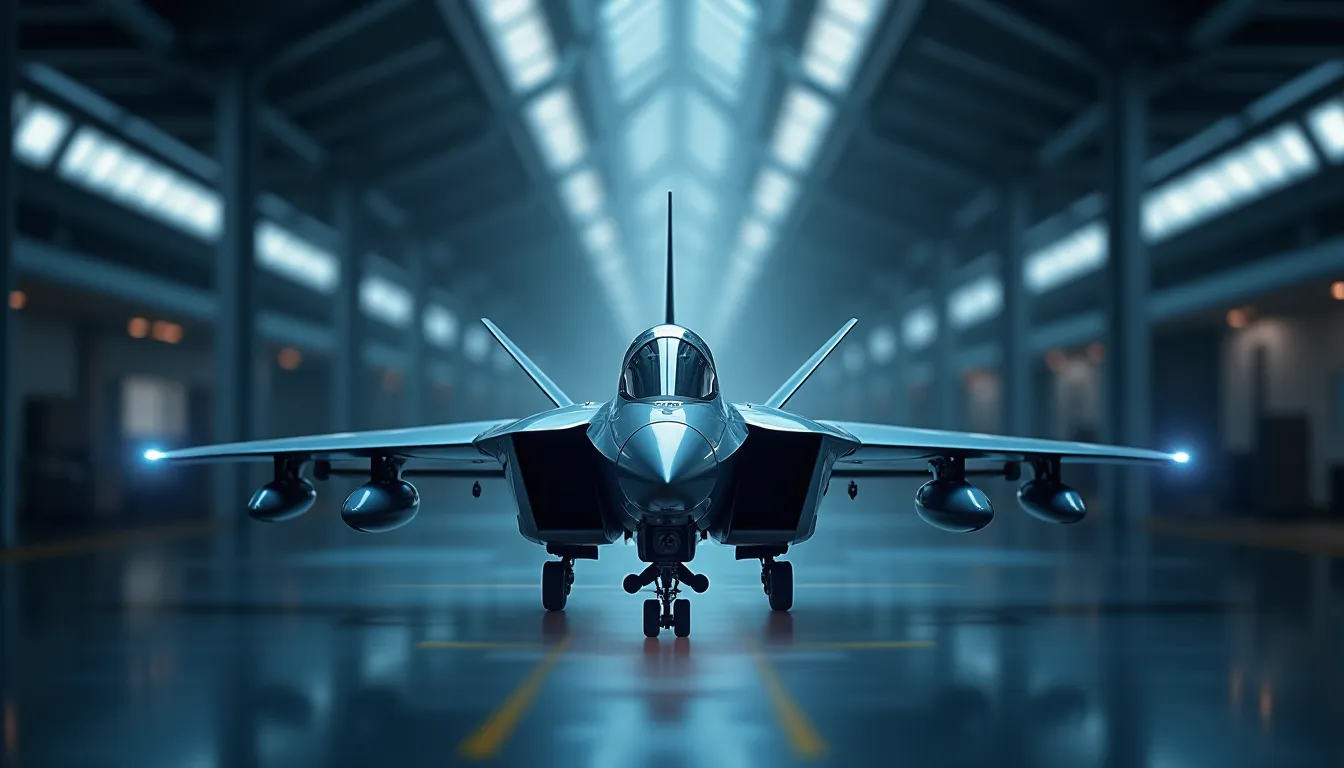
Recent developments in America’s aerospace, defense, and technology sectors underscore a transformative shift towards advanced capabilities. This article delves into the latest innovations, including Lockheed Martin’s stealth targeting systems, the U.S. Army’s loyal wingman drones, AI-enabled battle management, counter-drone technologies, and radar production expansions.
Lockheed Martin’s IRST21 Block II Stealth Targeting System
Lockheed Martin has secured a substantial $233 million contract for the full-rate production of the IRST21 Block II infrared search and track system. This system is a game changer for the U.S. Navy and Air National Guard, enhancing aircraft such as the F/A-18 Super Hornet, F-15, and F-16 with long-range passive targeting capabilities. The IRST21 Block II significantly improves detection and targeting in contested electronic environments, transitioning from limited production to broader fleet deployment while ensuring stable logistics and pricing. The integration of this system showcases Lockheed Martin’s commitment to maintaining a tactical edge in aerial warfare.
U.S. Army’s Collaborative Combat Aircraft (CCA)
The U.S. Army is advancing its capabilities by developing loyal wingman drones specifically designed for rotary-wing aircraft operations. Unlike the fixed-wing unmanned fighters utilized by other branches, these drones will support helicopters like the Apache and Chinook. Boeing recently unveiled a tiltrotor drone concept, the CxR, aimed at enhancing offensive, sensing, and logistics roles. In parallel, Sikorsky has introduced the NOMAD family of vertical takeoff and landing (VTOL) drones, alongside an autonomous variant of the Black Hawk, dubbed U-Hawk, designed for reconnaissance, attack, and logistics missions. These innovations reflect a strategic shift towards integrating unmanned systems alongside traditional manned aircraft.
Artificial Intelligence in Battle Management and Autonomy
The integration of artificial intelligence (AI) into military operations is rapidly progressing, as demonstrated at the Association of the United States Army (AUSA) 2025 conference. Leidos showcased its AlphaMosaic, an AI-driven battle management system tested on the F-15EX under the Defense Advanced Research Projects Agency’s (DARPA) Air Combat Evolution program. This initiative highlights the growing importance of AI in enhancing combat decision-making processes. Additionally, companies like Northrop Grumman, Shield AI, and Anduril Technologies presented innovations in autonomy software, further emphasizing the military’s push towards more intelligent, responsive systems on the battlefield.
Pentagon’s Push for Affordable Counter-Drone Technologies
As the threat landscape evolves, the Pentagon is accelerating the development of affordable counter-drone technologies to neutralize inexpensive tactical drones effectively. This includes the deployment of electronic warfare systems, signal jammers, and innovative drone-catching nets designed for safe neutralization. The focus on protecting civilian populations during major events—such as the upcoming 2026 World Cup and 2028 Olympics—illustrates the Pentagon’s commitment to ensuring public safety while maintaining operational readiness.
Raytheon’s PhantomStrike Radar Delivery and Facility Expansion
Raytheon has made significant strides in radar technology, recently delivering the first PhantomStrike radar to Korea Aerospace Industries for the FA-50 fleet. This advanced radar system is designed for both air-to-air and air-to-ground capabilities, enhancing operational effectiveness. Furthermore, Raytheon is expanding its radar production campus in Andover, MA, with a $53 million investment aimed at increasing the manufacturing capacity for next-generation radar systems. This expansion highlights the strategic importance of advanced radar technologies in modern warfare.
Market Growth and Industry Investments
The U.S. military drone market is projected to experience substantial growth, reaching $10.71 billion by 2030. This surge is driven by ongoing research and development investments from key players such as Sikorsky and Boeing. Notably, Boeing’s recent $2.7 billion contract for PAC-3 seeker production underscores a robust industrial growth trajectory within the defense technologies sector. As companies continue to innovate and expand their capabilities, the potential for enhanced military operations remains significant.
Conclusion
America’s aerospace and defense sectors are at the forefront of technological advancements, with significant investments in stealth systems, autonomous drones, AI integration, and counter-drone technologies. As the industry continues to evolve, these innovations will play a crucial role in maintaining strategic superiority on the global stage. The ongoing commitment to enhancing operational capabilities through advanced technologies not only fortifies national security but also sets the stage for a new era of military engagement.
References
-
Lockheed Secures $233M for IRST Block II Giving US Jets Stealthy … (armyrecognition.com) - 10/20/2025 On Monday, 20 October 2025, the U.S. infrared search and track (IRST) roadmap took a decisive step as reported by Lockheed Martin, with a firm- …
-
The Army wants its own fleet of loyal wingman drones - DefenseScoop (defensescoop.com) - 10/20/2025 The Army may soon open competition for its own version of a Collaborative Combat Aircraft (CCA) loyal wingman drone that could be delivered …
-
AUSA 2025 and AI Piloting: An Old Idea with New Technology (dsm.forecastinternational.com) - 10/20/2025 Of particular interest was Leidos’ AlphaMosaic AI-powered Battle Management software, which has been demonstrated on the F-15EX. Developed …
-
RTX’s Raytheon delivers first PhantomStrike® radar for Korea … (www.rtx.com) - 10/20/2025 RTX’s Raytheon delivers first PhantomStrike® radar for Korea Aerospace Industries’ FA-50 fleet. October 20, 2025.
-
The INSIDER daily digest — October 20, 2025 | InsideDefense.com (insidedefense.com) - 10/20/2025 Raytheon has broken ground on a $53 million expansion of its Andover, MA radar production campus, a move company executives say will allow it to …
-
Last Week in Defense Technology - October 13 - 17, 2025 - YouTube (www.youtube.com) - 10/20/2025 Alvin Holsey as commander of U.S. Southern Command. https://defensescoop.com/ #defense #technology #news #defensenews #defensetechnology …
-
Pentagon races to develop affordable counter-drone technology … (www.washingtontimes.com) - 10/13/2025 The Pentagon and defense industry are racing to develop affordable counter-drone technologies to combat the growing threat of cheap, lethal …
-
Aerospace & Defense Technology: October 2025 - SAE International (www.sae.org) - 10/1/2025 Aerospace & Defense Technology: October 2025 · Nadcap at 35: Still Defining Excellence in Aerospace and Defense Manufacturing · High Performance …
-
In-sight from October 2025 - Defense and Munitions (www.defenseandmunitions.com) - 9/29/2025 HII announced former Chairman, CEO, and President of Hexcel Corp. Nick Stanage was elected to the company’s board of directors.