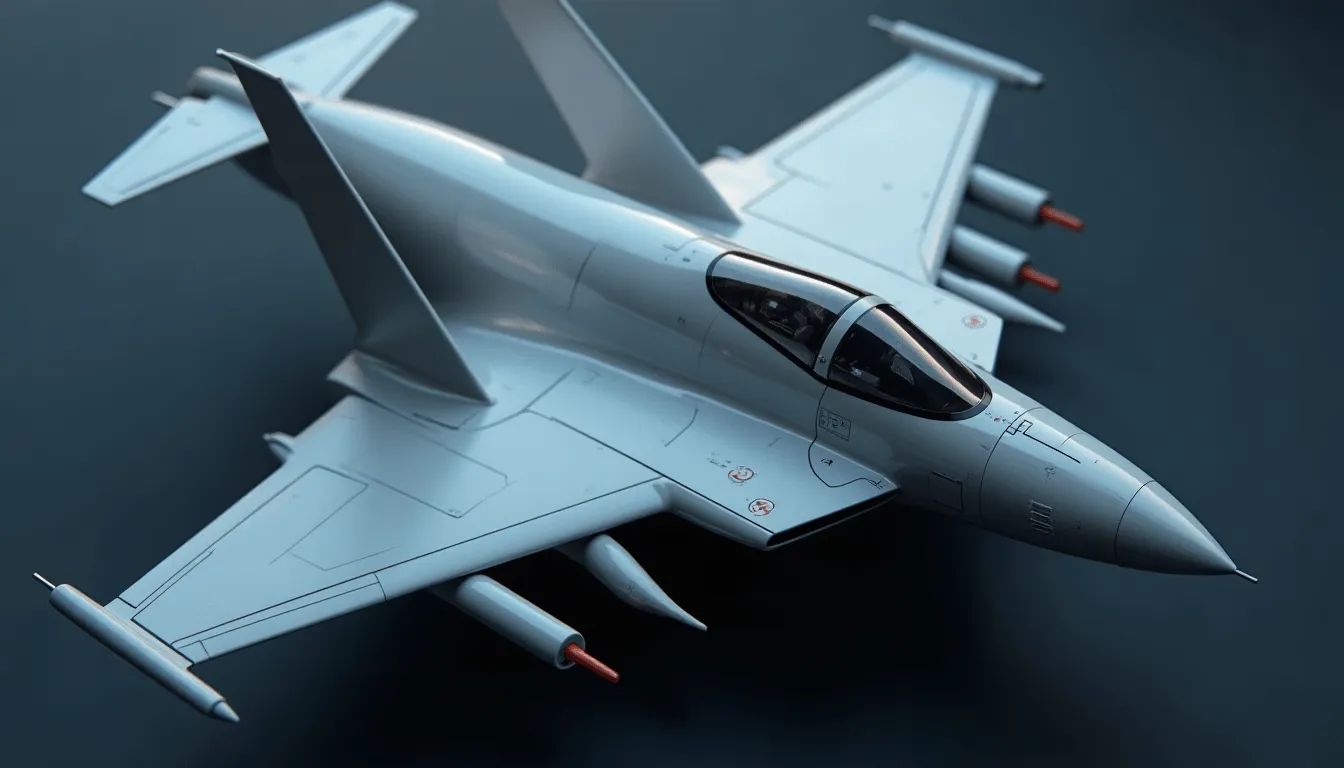
The aerospace and defense sectors are witnessing a transformative wave of innovations that promise to redefine military and civilian operations. Key players such as GE Aerospace and Raytheon (RTX) are at the forefront, developing advanced propulsion systems, unmanned technologies, and smart weaponry. This article delves into the recent breakthroughs that are shaping the future of the industry.
GE Aerospace Innovations in Hypersonic Propulsion
At a recent industry event held on September 26, 2025, GE Aerospace showcased its groundbreaking advancements in hypersonic propulsion and unmanned systems. The highlight of their presentation was the successful flight tests of the solid-fueled ramjet (SFRJ) system known as ATLAS, which took place on an F-104 Starfighter at the Kennedy Space Center. This innovative ramjet technology significantly enhances the range and speed of missiles and high-speed platforms, marking a pivotal step in hypersonic flight.
The development of the ATLAS system has been backed by funding from the U.S. Department of War’s Defense Production Act Title III, illustrating the government’s commitment to advancing military capabilities. Furthermore, GE Aerospace has rapidly progressed in the development of a 3X scale demonstrator featuring a rotating detonation combustor (RDC). This cutting-edge technology promises to improve propulsion efficiency and provide greater evasive capabilities for both missiles and aircraft.
Additionally, GE Aerospace is collaborating with Merlin Labs to create an AI-powered autonomy platform designed for military and civilian aircraft. This partnership aims to integrate artificial intelligence into flight operations, enhancing both operational safety and efficiency. The utilization of advanced navigation systems and precision accelerometers will be critical in achieving these enhancements, ensuring the reliability and accuracy of AI-driven flight missions.
Raytheon’s Smart Weapon Development
Raytheon has made significant strides in smart weapon technology with the successful completion of a test for a ground-launched variant of the StormBreaker smart weapon in under two months. This rapid prototyping reflects Raytheon’s agility in adapting to the evolving demands of modern warfare.
The StormBreaker is a network-enabled precision strike weapon designed to engage both moving and stationary targets in GPS-denied environments. Its versatility allows for deployment on various platforms, including the F-15E, F/A-18E/F, and F-35 variants. During the ground-launched test, the StormBreaker reached an altitude of approximately 20,000 feet, demonstrating its operational flexibility and effectiveness in diverse combat scenarios.
As warfare becomes more dynamic, the integration of advanced sensor modules and high-performance CMOS imaging systems within smart weapons like the StormBreaker will be crucial. These technologies enhance target acquisition and tracking capabilities, ensuring that precision strikes are executed with unprecedented accuracy.
Counter-Unmanned Aerial Systems (C-UAS) Efforts
The emergence of unmanned aerial systems (UAS) poses new challenges for military and homeland defense operations. The Falcon Peak exercise, conducted at Eglin Air Force Base from September 17-18, 2025, underscored the urgent need for advanced counter-UAS technologies. During this exercise, the U.S. Northern Command showcased a new fly-away kit developed by Anduril, which includes advanced sensors and effectors to detect, track, and intercept hostile UAS threats.
The evolving threat landscape necessitates rapid-response mitigation technologies to protect military installations and ensure homeland security. Drones like the Anvil have been instrumental in demonstrating effective counter-UAS strategies during such exercises, highlighting the importance of integrating advanced technologies to safeguard airspace.
Additional Aerospace and Defense Developments
The aerospace landscape is also witnessing significant developments beyond propulsion and weaponry. Firefly Aerospace is set to resume its Alpha rocket launches with two flights anticipated before the end of 2025, reinforcing the commercial spaceflight sector’s growth.
Meanwhile, NASA’s X-59 quiet supersonic research aircraft is approaching its flight-test phase, aiming to revolutionize supersonic travel by minimizing sonic booms. This initiative could pave the way for a new era in commercial aviation.
Leadership shifts in aerospace innovation are also noteworthy, as former NASA shuttle commander Pam Melroy has joined the board of Venus Aerospace following a groundbreaking RDRE flight, signifying a commitment to advancing groundbreaking technologies in space travel.
Furthermore, GA-ASI and AeroVironment have validated large UAS as motherships by successfully launching a Switchblade 600 drone, further advancing unmanned swarm and launch capabilities.
Conclusion
The aerospace and defense sectors are rapidly evolving, driven by innovations in hypersonic propulsion, AI integration, and advanced weapon systems. As industry leaders like GE Aerospace and Raytheon continue to push the boundaries of technology, the future of military and commercial aviation looks increasingly advanced and interconnected. The advancements in precision sensing applications and thermal battery systems will play a vital role in enhancing operational capabilities and ensuring mission success in the increasingly complex landscape of aerospace and defense. As we look ahead, the focus will remain on harnessing these technologies to address emerging threats and capitalize on new opportunities in the field.
References
-
Sonic Boom: GE Aerospace Steals the Show at Key Industry Event … (www.geaerospace.com) - 9/26/2025 Sonic Boom: GE Aerospace Steals the Show at Key Industry Event With Hypersonic, AI, and Unmanned Breakthroughs. September 26, 2025 | by Chris …
-
Falcon Peak highlights need to counter UAS threat (www.afmc.af.mil) - 9/26/2025 Falcon Peak. Lt. Col. Benjamin Oster, U.S. Northern Command, speaks with Falcon Peak attendees Sept. 18, 2025, at Eglin Air Force Base, Florida.
-
Industry News Archives - AIAA - Shaping the future of aerospace (aiaa.org) - 9/26/2025 Space News reports, “Firefly Aerospace expects to resume Alpha launches in the ‘coming weeks,’ with two flights planned before the end of the year.
-
RTX’s Raytheon completes Ground-Launched StormBreaker® test (www.rtx.com) - 9/24/2025 September 23, 2025. RTX unveils new APG-82(V)X radar enhanced with gallium nitride · RTX · Raytheon · RTX’s Lower Tier Air and Missile Defense …
-
September 2025 - National Defense Magazine (www.nationaldefensemagazine.org) September 2025 ; Air Force News. Doubts, Confusion Surround Air Force Next-Gen Tanker Plans ; Air Power. Ideal Bomber Mix Debated as B-21 Moves Closer to Service …
-
GE Aerospace, Merlin Labs Team Up on AI-Enabled Flight Technology (thedefensepost.com) - 9/26/2025 GE Aerospace and Merlin Labs have announced a collaboration to build an AI–powered autonomy platform for military and civilian aircraft.
-
The INSIDER daily digest — September 26, 2025 | InsideDefense.com (insidedefense.com) - 9/26/2025 This Friday INSIDER Daily Digest has news on the Space Force’s next set of “neighborhood watch” satellites, the Air Force’s Collaborative …
-
Aerospace Daily & Defense Report, September 26, 2025 (aviationweek.com) - 9/26/2025 Taiwan’s collaboration with American defense contractors took an important step forward at this year’s Taipei Aerospace & Defense Technology …