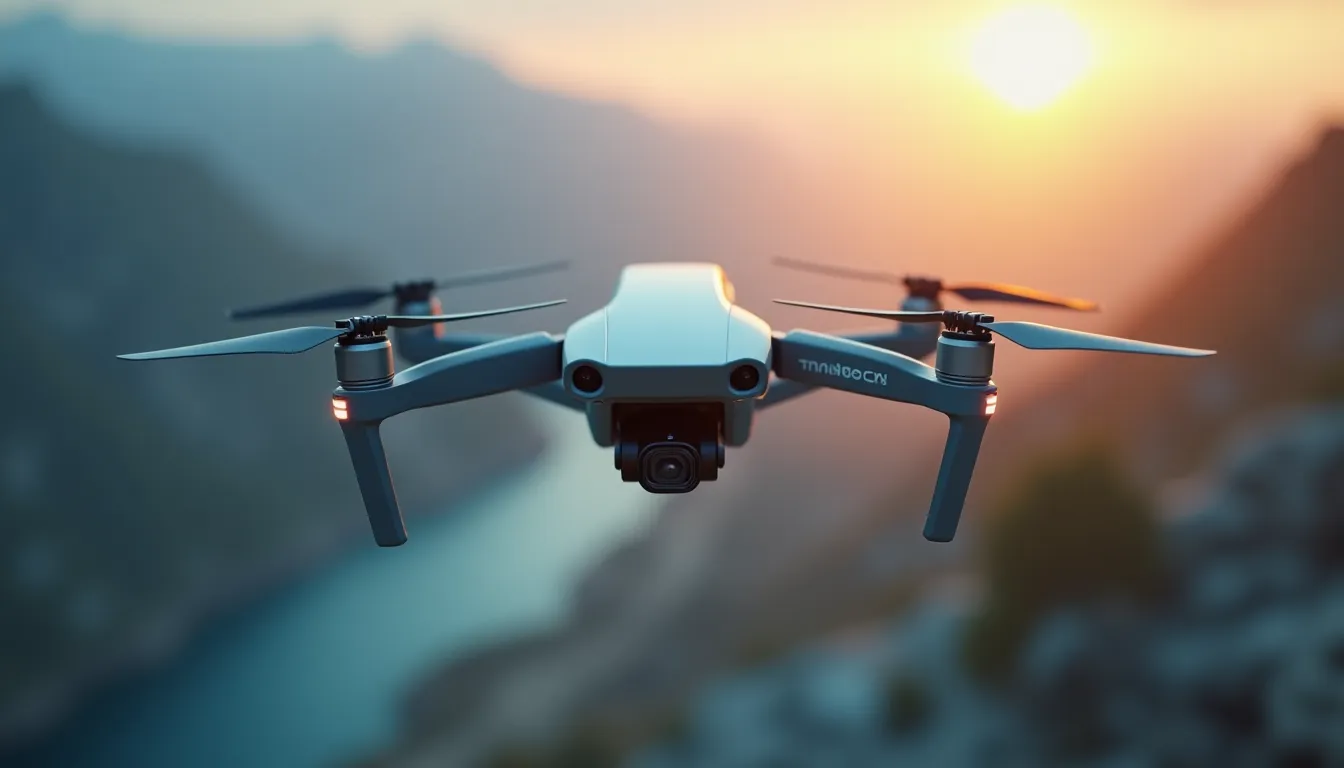
The aerospace and defense sectors are at a pivotal moment, driven by significant regulatory approvals and advancements in technology. Recent developments highlight the Federal Aviation Administration (FAA) and Transportation Security Administration’s (TSA) proposed rule for unmanned aircraft systems (UAS), which aims to reshape operational landscapes across multiple industries.
FAA Approval for Expanded Drone Operations
On August 7, 2025, the FAA and TSA issued a Notice of Proposed Rulemaking (NPRM) that could transform UAS operations by allowing them to fly beyond visual line of sight (BVLOS) at low altitudes. This proposed Part 108 rule is a critical evolution from the previous Part 107 regulations, which limited BVLOS operations primarily to those who obtained special waivers.
The implications of this rule are vast, enabling safe, routine, and scalable drone operations in sectors such as package delivery, agriculture, and aerial surveying. As drone technology continues to evolve, the integration of high-precision advanced navigation systems and advanced sensor modules will be paramount. These systems offer superior stability and precision, essential for the complex task of BVLOS operations, where real-time data and reliability are critical.
Growth and Investment in Unmanned Aerial Systems
The U.S. Department of Defense (DoD) has recognized the importance of unmanned aircraft systems in its fiscal 2025 budget, allocating a significant portion of its $61.2 billion air power budget towards platforms like the MQ-4 Triton and MQ-25 Stingray. The military’s investment underscores the growing recognition of UAS capabilities in surveillance, reconnaissance, and logistics.
On the commercial side, the FAA’s recent approval of simultaneous BVLOS flights for multiple operators in the Dallas area marks a significant step towards broader acceptance of UAS applications. Industries such as construction, agriculture, and logistics are poised to benefit from these advancements, especially as the advanced air mobility (AAM) sector, focusing on electric vertical takeoff and landing (eVTOL) aircraft, continues to gain traction. Recent surveys indicate that 93% of asset managers are keenly interested in investing in the eVTOL market, reflecting a robust belief in the future of air mobility solutions.
Aircraft Production and Deliveries
In August 2025, both Boeing and Airbus reported strong production and delivery figures, reinforcing the stability of the commercial aerospace manufacturing sector. Boeing delivered 57 aircraft, including 36 737 MAX 8s and 9 787 widebodies, while Airbus delivered 58, primarily from the A320neo family, along with several widebody aircraft like the A350 and A330neo. These figures suggest not only a recovery in demand post-pandemic but also a sustained growth trajectory in commercial aviation—a sector that increasingly relies on advanced navigation systems and control systems for enhanced operational capabilities.
Technology Trends Driving Aerospace and Defense
The aerospace and defense industries are increasingly integrating emerging technologies such as artificial intelligence, automation, and additive manufacturing. These innovations are pivotal in driving digital transformation, improving project management, and optimizing resource utilization. For instance, precision accelerometers and quartz MEMS gyroscopes are becoming standard in navigation and stabilization systems, ensuring that new aircraft designs remain competitive and efficient.
Moreover, the industry’s focus on decarbonization and sustainable development is pushing the boundaries of traditional aerospace manufacturing. Companies are exploring advanced materials and manufacturing processes, such as 3D printing, to create lighter, more efficient aircraft components that can withstand the rigors of flight.
Upcoming Industry Events
The momentum within the aerospace sector will be further highlighted at the upcoming 2025 Global Aerospace Summit, scheduled for September 9-11 in Washington, D.C. This crucial event will address key trends, challenges, and opportunities within aviation, space, and defense sectors. Discussions will encompass defense system modernization, air traffic control improvements, and the latest in manufacturing technologies, featuring participation from industry leaders and government officials. This summit represents an essential platform for networking and knowledge sharing, vital for driving future advancements in the sector.
Conclusion
As the aerospace and defense industries navigate through this transformative period, the recent regulatory approvals and technological advancements signify a promising future. With the FAA’s proposed BVLOS rule set to revolutionize drone operations and substantial investment in unmanned systems, the landscape of aerospace is rapidly evolving. Looking ahead, the integration of advanced technologies will not only enhance operational capabilities but also ensure that the sector meets the growing demands of efficiency and sustainability. The coming years will be critical for stakeholders to adapt and innovate as they leverage these opportunities in an increasingly competitive global market.
References
-
Aerospace Update | August 2025 (www.knobbe.com) - 9/4/2025 On July 27, 2025, the U.S. and EU reached a trade agreement. As part of the agreement, the U.S. will impose a 15 percent tariff “on the vast majority of EU …
-
Airbus and Boeing August 2025 Production Rates … - Flight Plan (flightplan.forecastinternational.com) - 9/2/2025 Forecast International expects Boeing to have delivered an estimated 57 aircraft in the month of August 2025. The 42 narrowbodies expected to …
-
New Technology Trends in Aerospace and Defense … (www.epicflow.com) - 8/21/2025 In 2025, the aerospace and defense industry is projected to grow and progress: the air travel demand has already returned to the pre-pandemic level, …
-
Global Aerospace Summit 2025 Launches This Fall (www.uschamber.com) - 8/5/2025 The Summit, taking place Sept. 9, 10 and 11, will highlight trends, challenges, and opportunities in aviation, space, and defense.
-
2025 Aerospace and Defense Industry Outlook (www.deloitte.com) - 10/23/2024 The aerospace and defense industry is likely to see broad-based operationalization of an array of technologies.