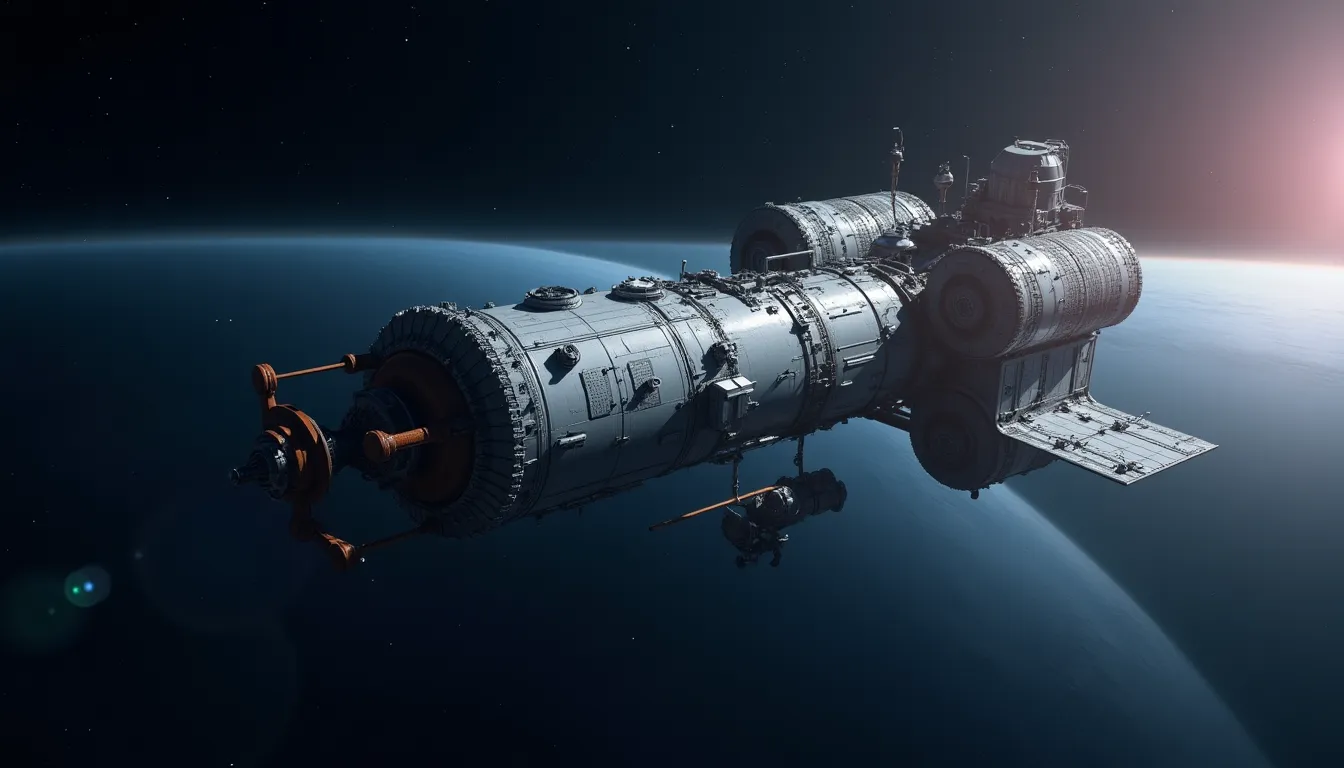
In the rapidly evolving field of aerospace and defense, NASA continues to play a pivotal role in advancing our understanding of space weather and supporting ongoing research aboard the International Space Station (ISS). Recent announcements reveal a series of significant missions slated for launch in September 2025, designed to enhance our knowledge of the heliosphere, improve space weather monitoring, and deliver essential supplies to the ISS.
Upcoming Heliophysics Missions
NASA, in collaboration with the National Oceanic and Atmospheric Administration (NOAA), is gearing up for the launch of three groundbreaking heliophysics missions no earlier than September 23, 2025. These missions, which will be launched aboard a SpaceX Falcon 9 rocket from Kennedy Space Center in Florida, include:
- Interstellar Mapping and Acceleration Probe (IMAP): This ambitious mission aims to explore the heliosphere, the protective magnetic bubble created by the Sun that encompasses the solar system. IMAP will collect and map particles streaming from interstellar space, providing invaluable insights into solar wind and cosmic rays. This mission is expected to greatly enhance our understanding of space weather, which has critical implications for technology and human activities in space.
- Carruthers Geocorona Observatory: This NASA spacecraft will focus on studying the Earth’s geocorona, examining how it interacts with solar radiation. Understanding this interaction is vital for predicting space weather events that can disrupt satellite operations and telecommunications on Earth.
- NOAA’s Space Weather Follow On-Lagrange 1 (SWFO-L1): Positioned at the Earth-Sun L1 Lagrange point, this solar observatory will bolster space weather monitoring capabilities as the Sun approaches its solar maximum phase, enhancing our ability to forecast events that could impact astronauts and technology on Earth.
All three spacecraft have completed fueling and final checks at Astrotech in Florida, underscoring the meticulous preparations involved in these high-stakes missions.
ISS Resupply Mission: A Lifeline for Research
In addition to heliophysics missions, NASA, along with Northrop Grumman and SpaceX, is targeting a launch for a Cygnus XL spacecraft no earlier than September 14, 2025. This mission will deliver over 10,000 pounds of critical supplies, scientific experiments, and research materials to the ISS, highlighting NASA’s commitment to maintaining a continuous human presence in space for nearly 25 years.
Noteworthy payloads for this resupply mission include:
- Materials for Semiconductor Crystal Production: These materials will be vital for experiments aimed at producing high-quality semiconductor crystals in microgravity, a process that can lead to advancements in electronics and materials science.
- Equipment for Cryogenic Fuel Tanks: Enhancements in cryogenic technologies are crucial for future space missions, particularly those involving deep space exploration.
- Ultraviolet Light System: This innovative technology aims to prevent biofilm growth on the ISS, which can interfere with various systems and experiments.
- Pharmaceutical Crystal Growth Supplies: The research aimed at growing pharmaceutical crystals in space is critical for developing new treatments for diseases, including cancer.
The Cygnus XL is expected to be installed on the ISS by September 17, 2025, marking another milestone in international space collaboration and research.
Navigating Budgetary Challenges
Despite these promising advancements, NASA faces significant budgetary and operational challenges as it approaches September 2025. Political uncertainties and funding constraints could result in potential mission delays and increased stress on the workforce. This situation highlights the delicate balance NASA must strike between ambitious exploration goals and the practical realities of funding.
Experts underscore the importance of continued investment in space exploration, particularly as the agency navigates these fiscal hurdles. “Maintaining a robust budget is crucial for ensuring that NASA can continue to lead in interstellar space missions and respond effectively to the challenges of space weather,” said Dr. Emily Carter, a leading astrophysicist at NASA.
Looking Ahead: The Future of Space Research
As NASA prepares to launch these critical missions, the agency remains at the forefront of aerospace innovation. The insights gained from the IMAP, Carruthers Geocorona Observatory, and SWFO-L1 missions will not only improve our understanding of the Sun’s influence on the solar system but will also enhance our ability to forecast space weather events that could affect modern technology.
Moreover, the ongoing support for the ISS underscores NASA’s commitment to fostering international collaboration in space research. The continuous presence of humans aboard the ISS facilitates groundbreaking scientific discoveries that could pave the way for future explorations beyond low Earth orbit.
In conclusion, despite the looming budgetary challenges, NASA’s bold plans for 2025 reflect its unwavering dedication to advancing our understanding of space and ensuring the safety of astronauts and technology in an increasingly complex space environment. As the agency continues to innovate and adapt, the future of space exploration remains bright.
References
-
NASA, Partners Adjust Next Cygnus Resupply Launch (www.nasa.gov) - 9/5/2025 NASA now is targeting no earlier than 6:11 p.m. EDT, Sunday, Sept. 14, for the launch of a Northrop Grumman Cygnus XL on a SpaceX Falcon 9 …
-
Upcoming Launch to Boost NASA’s Study of Sun’s … (science.nasa.gov) - 9/4/2025 Expected to launch no earlier than Tuesday, Sept. 23, the missions include NASA’s IMAP (Interstellar Mapping and Acceleration Probe), NASA’s …
-
Top Satellite & Space Developments (Sept. 2–3, 2025) (ts2.tech) - 9/3/2025 Global Mission Updates: NASA and NOAA are preparing a trio of heliophysics spacecraft – the IMAP probe, Carruthers Geocorona Observatory, and …
-
NASA Forecast For September 2025 (nasawatch.com) - 9/2/2025 The House and Senate have come up with their increases for NASA – but not for everything; and there will likely be a Continuing Resolution (CR) …
-
NASA’s IMAP Mission Poised for September 2025 Launch (www.jhuapl.edu) - 12/20/2024 NASA and SpaceX are now targeting as soon as September 2025 for the launch of the agency’s Interstellar Mapping and Acceleration Probe (IMAP) spacecraft.