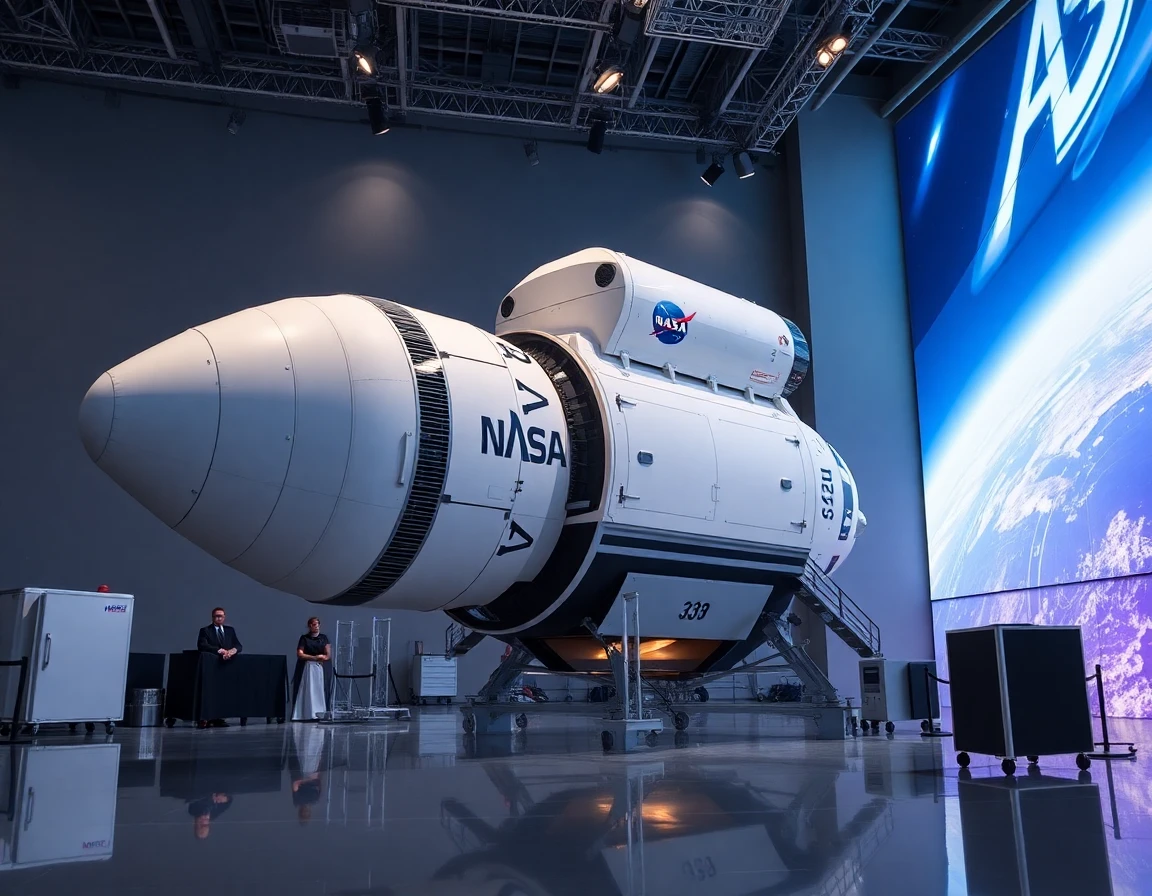
In a significant stride for the logistics of low Earth orbit (LEO) operations, SpaceX’s Cargo Dragon spacecraft is scheduled to conduct a reboost maneuver for the International Space Station (ISS) in the coming weeks. This mission will not only enhance the ISS’s altitude but also demonstrate the innovative technologies that underpin modern space logistics.
The Importance of Reboosting the ISS
The ISS orbits Earth at an altitude of approximately 400 kilometers, but due to atmospheric drag, it requires periodic adjustments to maintain its orbit. These reboost operations are crucial for ensuring the station’s longevity and operational efficiency. Traditionally, reboosting has been performed using the ISS’s onboard thrusters, but with the advent of commercial spacecraft like Cargo Dragon, new methods are being explored.
According to Dr. Amanda Richards, an aerospace engineer at NASA, “Utilizing the Cargo Dragon for reboost operations not only optimizes resources but also showcases the potential of commercial partnerships in maintaining critical space assets.”
Cargo Dragon’s Technological Edge
The upcoming reboost mission is a part of SpaceX’s ongoing commitment to support the ISS under NASA’s Commercial Resupply Services (CRS) program. The Cargo Dragon spacecraft is equipped with advanced precision accelerometers and inertial navigation systems that provide precise control during the reboost maneuver, ensuring minimal disruption to the station’s operations.
Specifications of Cargo Dragon
- Launch Vehicle: Falcon 9
- Payload Capacity: Up to 6,000 kg to the ISS
- Propulsion System: SuperDraco engines for launch escape, Draco thrusters for orbital maneuvers
- Navigation: High-precision inertial navigation systems coupled with gyroscopic instruments for reliable orientation measurement
These specifications highlight the Cargo Dragon’s capabilities, which extend beyond cargo transport to include critical operational support for the ISS.
Future Implications for Spacecraft Operations
The successful execution of the reboost maneuver will pave the way for future missions that rely on commercial spacecraft for a variety of operations in LEO. As the space industry shifts towards privatization and commercial partnerships, the role of spacecraft like Cargo Dragon will become increasingly central to maintaining and operating space infrastructure.
Dr. Michael Thompson, a leading expert in space logistics, commented, “This mission illustrates the growing importance of commercial spacecraft in not only transporting cargo but also in sustaining long-term human presence in space. The implications for future missions are profound, particularly as we look to Mars and beyond.”
Conclusion: A New Era of Spacecraft Operations
The upcoming reboost mission by SpaceX’s Cargo Dragon is more than just a routine operation; it signifies a transformative shift in how spacecraft are utilized in maintaining critical space infrastructure. As the aerospace industry continues to evolve, the integration of advanced technologies such as precision accelerometers and thermal management systems will be essential to ensure the success of future missions.
With the continued support of NASA and advancements in commercial spaceflight, the future looks bright for spacecraft operations. The successful implementation of this reboost will not only enhance the ISS’s longevity but also set a benchmark for future deep space missions.
As we look forward to this mission, the aerospace community is eager to see how these developments will shape the future of space exploration, potentially leading to new innovations that will benefit both scientific research and commercial endeavors in space.