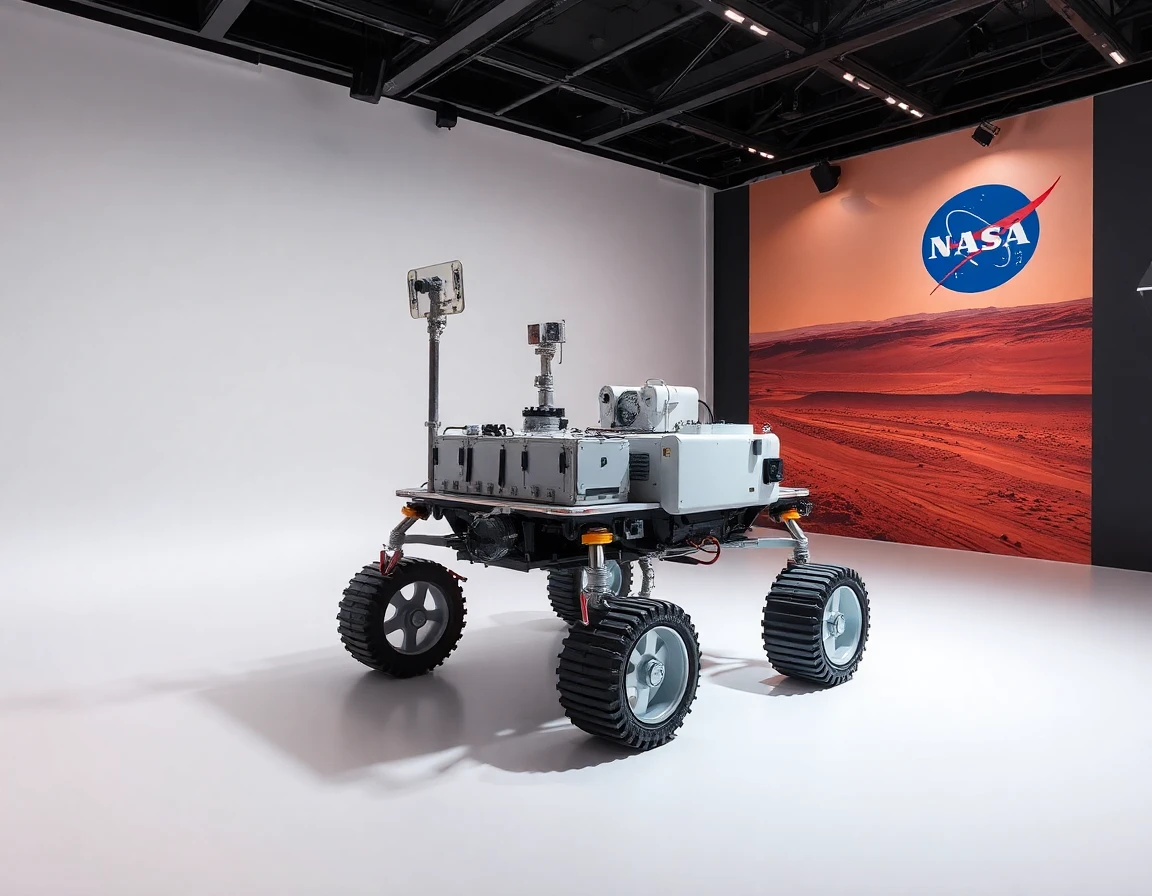
In a bold move that underscores its ambitions in space exploration, Blue Origin has announced a concept for a communications orbiter intended for Mars. This initiative aims to enhance communication capabilities for future missions to the Red Planet, a critical step in supporting exploration and potential colonization efforts.
Vision for Mars Exploration
Founded by Jeff Bezos, Blue Origin has predominantly focused on suborbital spaceflight through its New Shepard system. However, this new concept signals a shift toward more ambitious interplanetary objectives. The proposed Mars communications orbiter would act as a relay station, facilitating data transmission between Earth and Martian surface missions. This capability is essential considering the vast distances involved and the challenges presented by Mars’ atmosphere.
“Communication is the backbone of successful space missions,” said Dr. Sarah Thompson, an aerospace engineer specializing in interplanetary systems. “A dedicated orbiter would significantly improve the reliability and speed of data transmission, which is crucial for scientific research and operational coordination.”
Technical Specifications and Innovations
The Mars communications orbiter concept emphasizes advanced technologies tailored for the unique environment of Mars. Key features of the orbiter include:
- High-bandwidth communication systems: These systems will ensure efficient data transfer, allowing for real-time communication between Earth and Martian rovers or habitats.
- Thermal management systems: Given the extreme temperature fluctuations on Mars, robust thermal management will be necessary to protect sensitive equipment from the harsh conditions.
- Precision accelerometers: Utilizing high-performance MEMS accelerometers will enhance navigation and stability during deployment and operation in Martian orbit, ensuring precise positioning for communication tasks.
The Role of Advanced Technologies
Blue Origin’s initiative reflects a growing trend in the aerospace sector towards utilizing sophisticated technologies in space missions. The integration of a lithium niobate optical chip could be pivotal for the orbiter’s communication systems, as it combines essential components for advanced signal processing and modulation. This technology will allow for the handling of significant data loads, vital for transmitting images and scientific data back to Earth.
“By leveraging cutting-edge optical technologies, we can significantly enhance the capabilities of our communication systems,” stated Mark Roberts, a technology strategist at Blue Origin. “This will not only improve data rates but also help in managing the power consumption of onboard systems.”
Industry Context and Future Implications
The announcement comes at a time when NASA and other space agencies are ramping up their efforts towards Mars exploration, with missions such as the Perseverance rover and the upcoming Artemis program. As these projects unfold, the need for reliable communication networks becomes increasingly apparent. Blue Origin’s proposal could position the company as a pivotal player in the interplanetary communication landscape.
Experts believe that the successful implementation of a Mars communications orbiter could pave the way for future missions, including manned expeditions. “The capabilities provided by a dedicated orbiter are essential for any prolonged human presence on Mars,” explained Dr. Emily Carter, a leading astrophysicist. “It’s about creating a sustainable ecosystem that can support life and research.”
Conclusion: A Step Towards Mars Colonization
Blue Origin’s concept for a Mars communications orbiter is a testament to the company’s ambition and vision for the future of space exploration. By focusing on advanced communication technologies and robust engineering solutions, Blue Origin aims to address some of the most pressing challenges associated with interplanetary missions. As the landscape of space exploration evolves, initiatives like these are critical for ensuring that humanity is well-equipped for the next giant leap into the cosmos.
As Blue Origin continues to develop its concept, the aerospace community will be watching closely. The implications of their innovations could redefine how we communicate across the solar system and further our understanding of Mars, ultimately paving the way for human exploration and potential colonization of the Red Planet.