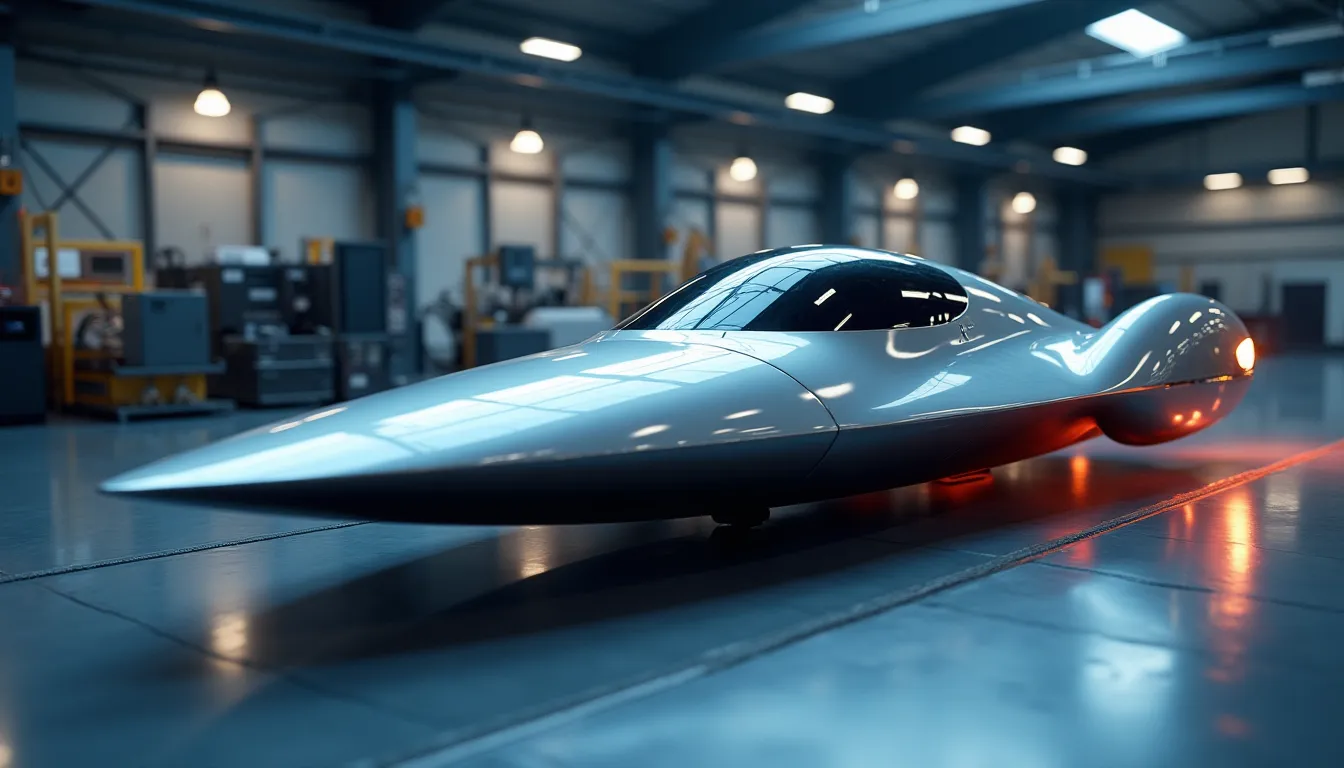
In a significant leap forward for military capabilities, the U.S. Army and Navy successfully conducted a joint test launch of a common hypersonic missile from Cape Canaveral in March 2026. This milestone marks a critical step towards fielding a survivable Mach 5+ weapon system designed to target high-value, heavily defended assets that traditional missile systems struggle to engage. As nations race to develop hypersonic capabilities, understanding these advancements is crucial for defense strategies globally.
Recent Developments in Hypersonic Technology
The recent test launch underscores a collaborative effort between the U.S. Army and Navy to enhance the development and deployment of hypersonic weapons. This partnership aims to streamline production timelines and reduce costs while validating the capabilities of a system that can strike targets previously deemed unreachable.
Accelerated Funding for Development
In response to the growing hypersonic threat from adversaries like Russia and China, the U.S. Congress has approved an accelerated funding profile, adding $0.9 billion to the Department of Defense’s FY23 budget, raising the total allocation to $4.7 billion. The Pentagon’s budget for hypersonic research continues to rise, with the FY25 request reaching $6.9 billion, showcasing a marked strategic shift towards closing the operational gap in hypersonic weapon systems.
Global Response and Innovations
Meanwhile, the European Union’s TWISTER project, led by MBDA, aims to deliver a new endo-atmospheric interceptor by 2030. This system is designed to counter maneuvering intermediate-range ballistic missiles and hypersonic threats, boasting a range of 3,000 km. Such advancements highlight a global recognition of the strategic necessity to develop countermeasures against hypersonic technology.
Understanding Hypersonic Weapons
Hypersonic weapons are defined by their ability to travel at speeds exceeding Mach 5 (approximately 3,800 mph), which presents significant challenges for existing missile defense systems. These weapons utilize two primary propulsion methods:
- Scramjet Engines: Enabling high-altitude cruise capabilities, allowing missiles to maintain speed and maneuverability.
- Glide Vehicles: These systems fly a depressed trajectory, leveraging potential energy to achieve hypersonic speeds.
The combination of speed and non-ballistic maneuverability drastically reduces reaction time for defensive systems, posing a formidable challenge to traditional interception technologies.
The U.S. Position in the Global Landscape
Currently, the U.S. finds itself lagging behind Russia and China in operational hypersonic weapon systems. While the U.S. has made significant strides in research and development, it has yet to field operational missiles. This delay is concerning given that both Russia and China are advancing hypersonic technologies that include both conventional and nuclear capabilities, enhancing the survivability of their respective nuclear triads.
Advancements in Tracking and Defense Systems
In addition to offensive capabilities, defensive measures are rapidly evolving. The U.S. Missile Defense Agency (MDA) and Space Development Agency (SDA) have initiated the launch of hypersonic tracking satellites under mission USSF-124. These satellites are integral to tracking and intercepting hypersonic threats, a capability that is under scrutiny by Congress regarding the effectiveness and accountability of agency responsibilities.
L3Harris has also made strides in this area, completing critical reviews for the SDA’s Tracking Layer programs, securing a $919 million contract, and launching multiple missile-tracking satellites in early 2024. The integration of advanced sensor modules equipped with MEMS IMUs (Inertial Measurement Units) enhances tracking precision critical for responding to hypersonic threats.
Future of Hypersonic Technology
As hypersonic technology continues to evolve, several key factors will shape its future:
- Market Dynamics: Hypersonic glide vehicles are projected to dominate the market, with an estimated 43.6% share by 2025. The military sector is anticipated to maintain a stronghold, accounting for 67.5% of this market share, driven by escalating defense budgets and strategic deterrence needs, especially in the Asia Pacific region, which accounts for 35.3% of the global market.
- Technological Innovations: The incorporation of artificial intelligence and machine learning into missile defense systems will empower predictive analytics and autonomous decision-making capabilities, optimizing response times against hypersonic threats.
- Emerging Products: The industry is witnessing advancements in precision accelerometers and control systems that enhance navigation and tracking capabilities, critical for both offensive and defensive systems in hypersonic scenarios.
Conclusion
The race for hypersonic dominance is intensifying, with the U.S. making notable advancements through collaborative military efforts, increased funding, and the development of innovative tracking systems. However, challenges remain as adversaries continue to develop their own capabilities. As nations invest in hypersonic technology, the strategic landscape of defense will inevitably shift, necessitating ongoing adaptations in both offensive and defensive strategies to address this new frontier in warfare. The future of hypersonic technology promises to reshape military engagements and defense policies worldwide, making it an area of critical importance for military planners and defense contractors alike.
References
-
Aerospace Defence: Advancements in Aircraft and Missiles (www.defence-industries.com) Hypersonic missiles can travel at speeds exceeding Mach 5, making them extremely difficult to intercept and providing military forces with an unprecedented edge … The aerospace industry has witnessed a remarkable shift in aircraft technology, characterized by a relentless pursuit of superior performance, enhanced manoeuvrability, and cutting-edge stealth capabilities. One of the most significant advancements has been the development of next-generation fighter jets, such as the F-35 Lightning II and the Chengdu J-20, which exemplify the integration of advanced avionics, composite materials, and sophisticated radar systems. … Additionally, the development of hypersonic missiles has emerged as a game-changer in modern warfare, offering unparalleled speed and maneuverability that render traditional missile defence systems obsolete. Hypersonic missiles can travel at speeds exceeding Mach 5, making them extremely difficult to intercept and providing military forces with an unprecedented edge in both offensive and defensive operations. With ongoing research and development, efforts are underway to harness the full potential of hypersonic technology while ensuring its responsible and strategic deployment in global security frameworks. Furthermore, the evolution of missile defence systems, such as the Aegis Ballistic Missile Defence System and the Terminal High Altitude Area Defence (THAAD), has enhanced the capabilities of nations to counter ballistic missile threats and ensure comprehensive protection of vital assets and population centres. These systems leverage advanced radar technology and kinetic interception mechanisms to detect, track, and neutralize incoming ballistic missiles, thereby strengthening national defence capabilities and fostering regional stability. … A key trend in modern aerospace defence systems is the seamless integration of aircraft and missile technologies, enabling comprehensive and synergistic defence capabilities. … Moreover, the convergence of artificial intelligence and machine learning algorithms has empowered aerospace defence systems with predictive analytics and autonomous decision-making capabilities, optimizing response times and enhancing the overall effectiveness of military operations. … To sum up, the development of aerospace defence systems serves as a testament to human ingenuity and determination in the midst of shifting security landscapes. The progress in aircraft and missile technology has reshaped the limits of military capabilities, enabling nations to preserve their autonomy and shield their populations from emerging dangers.
-
Debate Continues Over Hypersonic Technology and Modern Air … (www.facebook.com) - 6/19/2026 The system uses advanced radar and AI-guided interceptors that can track and destroy targets moving too fast for current American defense …
-
Hypersonics - Northrop Grumman (www.northropgrumman.com) - 5/19/2026 Northrop Grumman’s Hypersonics technology creates a new class of strategically important weapons for the U.S. military. Scramjet technology ushers in a new era for faster, more survivable, highly capable weapons. Not only does scramjet propulsion advance speeds greater than Mach 5 and maneuverability never seen before in traditional missiles, but it also leads to a smaller form factor missile while offering more capability.
-
Hypersonics | Lockheed Martin (www.lockheedmartin.com) - 4/15/2026 Advanced missile and hypersonic vehicle technologies will enhance end-to-end strike force systems, increasing the potential for deterring future threats. ARRW … In March 2026, the U.S. Army and Navy successfully conducted a joint test launch of a common hypersonic missile from Cape Canaveral Space Force Station. This inter-service partnership aims to field a survivable, Mach 5+ weapon system that accelerates delivery timelines and reduces costs for defeating high-value, heavily defended targets.
-
Hypersonic Weapons on the Front Line (www.japcc.org) - 10/7/2023 The US Congress has enacted an accelerated profile to develop and test hypersonic weapons adding 0.9 Billion Dollar to the Department of Defense’s FY23 funding … Hypersonic weapons travel at speeds greater than Mach 5 without following a standard ballistic missile profile. Hypersonic weapons achieve their immense speed in one of two ways: using advanced engines as the high-altitude cruise missiles or as glide vehicles flying a depressed trajectory using the potential energy available to ballistic missiles. This combination of speed and altitude leads to significantly less reaction time compared to ordinary cruise or ballistic missiles. … The Council of the European Union (EU) TWISTER (Timely Warning and Interception with Space-based TheatER surveillance) project was approved on 12 November 2019 to provide a ‘new endo-atmospheric interceptor [that] will address a wide range of threats including manoeuvring intermediate ranges ballistic missiles, hypersonic or high-supersonic missiles’. ^7^ Led by MBDA (Matra, BAe Dynamics, and Alenia), the new missile system has an expected in-service date of 2030 with a range of 3,000 km, providing coverage for both hypersonic weapons and Intermediate-Range Ballistic Missiles (IRBM). … Despite years of early research, the US lags behind Russia and China in fielding hypersonic weapons. The US Congress has enacted an accelerated profile to develop and test hypersonic weapons adding 0.9 Billion Dollar to the Department of Defense’s FY23 funding request, bringing the total to 4.7 Billion Dollar. … In FY22, 255 Million Dollar was allocated for defence against hypersonic weapons, while offensive hypersonic development received approximately sixteen times that amount. … Hypersonic weapons could also be a solution to counter adversaries’ modern long-range Anti-Access/Area Denial (A2/AD) systems.^19^ Russia and China are developing their hypersonic weapons to be both conventional and nuclear-capable, increasing the survivability and diversity of their nuclear triads in response to NATO’s capability to defend against ballistic missiles.
-
Hypersonic Technology Market Size, Share and Growth 2034 (www.imarcgroup.com) *Defense contractors are accelerating the development of hypersonic glide vehicles, cruise missiles, and air-launched weapons to strengthen military deterrence … Countries are actively advancing defense technologies, with hypersonic systems leading military modernization efforts. Governments are making substantial investments in hypersonic weapons, which travel at speeds exceeding Mach 5, rendering them extremely difficult to detect and intercept. … The Pentagon’s budget for hypersonic research has been increasing year after year, with contracts awarded to major defense companies like Lockheed Martin, Raytheon, and Northrop Grumman. For instance, the Pentagon’s budget in the financial year 2025 requested $6.9 billion for hypersonic research, which was up from $4.7 billion in the request from the 2023. … The Pentagon’s Missile Defense Agency (MDA) and Space Development Agency (SDA) launched the hypersonic tracking satellites in 2024. The mission, USSF-124, will include satellites designed to track and intercept hypersonic missiles from threats like Russia and China. The joint effort faces congressional scrutiny regarding the responsibilities of MDA and SDA in missile tracking. … As per the hypersonic technology market forecast, hypersonic glide vehicle leads the market with around 43.6% of market share in 2025. … Military leads the market with around 67.5% of market share in 2025. …
- September 2024: L3Harris achieved key advancements in U.S. hypersonic missile defense by successfully completing critical reviews for the Space Development Agency’s (SDA) Tranche 1 and Tranche 2 Tracking Layer programs. L3Harris secured a USD 919 mln contract for Tranche 2 and launched five missile-tracking satellites in February 2024, which will further enhance the nation’s missile defense capabilities. …
and avAsia Pacific currently dominates the hypersonic technology market, accounting for a share of 35.3%, driven by rising defense budgets, strategic deterrence needs, advanced missile programs, and strong investments in propulsion and aerodynamics research.*
-
How The U.S. Fell Behind In Hypersonic Technology - YouTube (www.youtube.com) - 12/29/2021 Hypersonic air travel is anything that travels at Mach 5, or five times the speed of sound. The U.S. was once a leader in developing … Hypersonic air travel, for both military and commercial use, could be here within the decade. The $770 billion National Defense Authorization Act signed into law Tuesday calls for investing billions into hypersonic research and development, making them a top priority for Washington. The next step is congressional approval to allocate the money for the technology to the Pentagon. … Hypersonic is anything traveling above Mach 5, or five times the speed of sound. That’s roughly 3,800 mph. … The U.S. doesn’t have operational hypersonic missiles yet, but it’s a top priority for Washington. According to the Government Accountability Office, funding for hypersonic research increased by 740% between 2015 and 2020. The latest defense budget alone increased funding by 20%. … And the latest defense budget request $3.8 billion for hypersonic research. … production on a hypersonic missile by September 2022. … {ts:601} The Defense Department views hypersonic weapons as one of its highest priorities and says it’ll have warfighting capabilities within the next few years. Three military branches and DARPA, the Defense Advanced Research Projects Agency have their own missile programs well underway, and based on the latest defense bill, they’re expecting to be deployed between 2022 and 2025. I would say over the next five years, we expect to see several systems deployed in kind of limited operational capabilities. So these are leave behind prototypes. So things like intermediate range boost glide vehicles, so like long range hypersonic weapons. Starting with the Air Force, they hope to deploy an early operational version of their air launch rapid response weapon in 2022. The Army’s aiming to launch their long range hypersonic weapon in 2024, followed by the Navy’s conventional prop strike in 2025. But these timelines will be fluid as real life testing ramps up.
-
Hypersonics | Raytheon - RTX (www.rtx.com) We’re applying our advanced weapon expertise to develop air-breathing hypersonic scramjet systems that use fast-moving air around them to provide oxygen for …