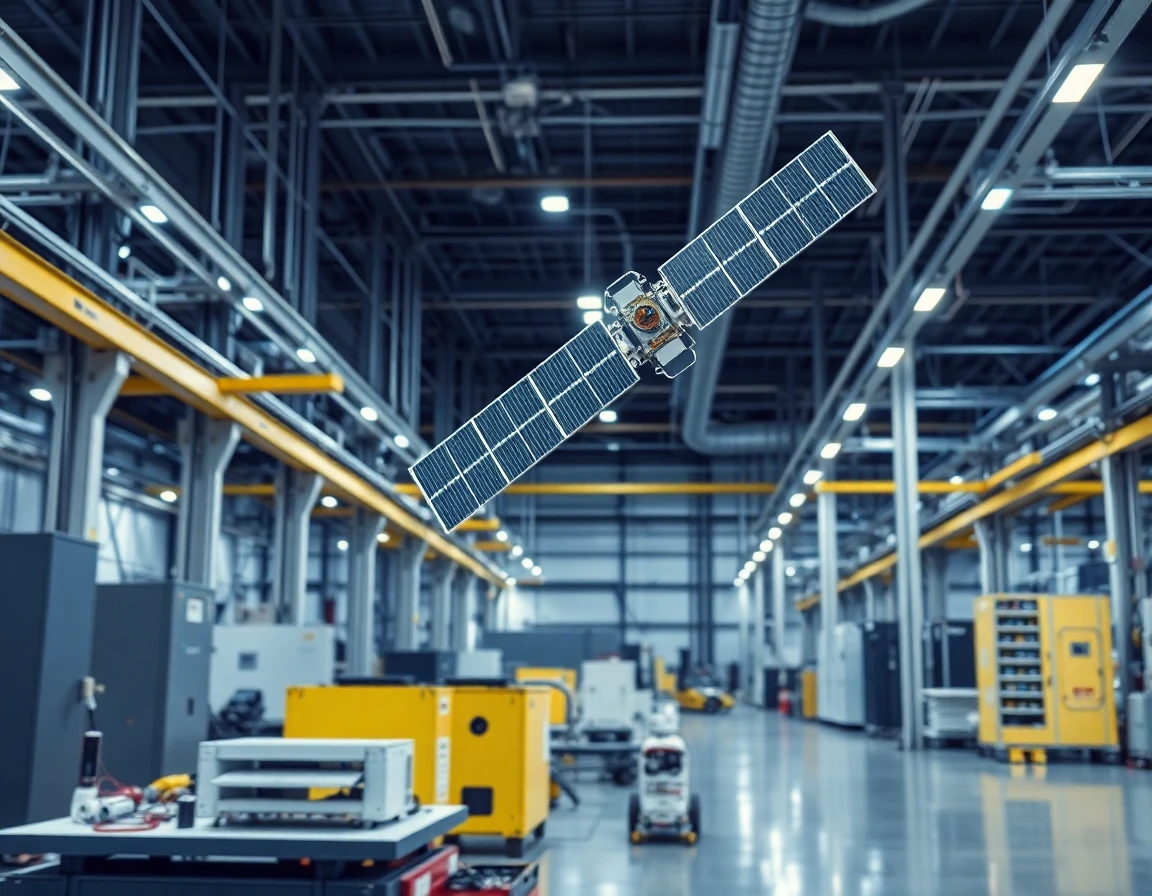
The landscape of global communications is undergoing a monumental transformation, driven by the rapid expansion of satellite constellation networks. These intricate systems of interconnected satellites are poised to redefine internet accessibility and communication capabilities across the globe.
Understanding Satellite Constellations
A satellite constellation refers to a group of satellites that work in concert to provide comprehensive coverage over a designated area. Unlike traditional satellite systems, which often rely on a single satellite to cover vast distances, constellations consist of multiple satellites orbiting the Earth at varying altitudes and inclinations. This configuration allows for continuous coverage and improved signal strength, especially in remote and underserved regions.
The Technical Backbone: Precision Accelerometers and Inertial Navigation Systems
At the heart of these satellite constellations are advanced technologies that ensure precise positioning and stable operation. High-precision accelerometers play a critical role in maintaining the satellites’ correct orbits by providing accurate motion sensing capabilities. Coupled with sophisticated inertial navigation systems, these technologies enable seamless coordination among the satellites, minimizing latency and enhancing data transmission reliability.
Current Leaders in Satellite Constellation Networks
Several companies are leading the charge in the development of satellite constellation networks. Notable examples include SpaceX’s Starlink, OneWeb, and Amazon’s Project Kuiper. Each of these projects aims to create a global broadband network, capable of delivering high-speed internet to remote areas where traditional infrastructure is lacking.
SpaceX’s Starlink
Starlink, perhaps the most well-known satellite constellation initiative, aims to deploy thousands of small satellites in low Earth orbit (LEO). According to SpaceX, the constellation will eventually consist of around 12,000 satellites, providing global coverage and high-speed internet services.
“Elon Musk’s vision with Starlink is not just for profit; it’s about bridging the digital divide,” says Dr. Sarah Thompson, an aerospace engineer and industry analyst. “This constellation can potentially transform how people in rural areas access information and services.”
OneWeb’s Global Connectivity Goals
OneWeb is another key player, with plans to launch a constellation of 648 satellites to provide internet access worldwide. The company focuses on connecting schools, hospitals, and emergency services in remote areas, enhancing overall global connectivity.
Amazon’s Project Kuiper
Not to be outdone, Amazon’s Project Kuiper aims to deploy over 3,000 satellites to deliver broadband internet worldwide, with a particular emphasis on rural and underserved regions. This initiative promises to enhance the competitive landscape of satellite communications and drive innovation.
The Impacts of Satellite Constellations on Global Communications
The expansion of satellite constellations holds significant implications for global communications.
Enhancing Internet Access
One of the most immediate impacts is the enhancement of internet access. According to the International Telecommunication Union (ITU), approximately 3.7 billion people remain unconnected to the internet, primarily in developing regions. Satellite constellations can bridge this gap by providing reliable internet services without the need for extensive ground infrastructure.
Supporting Disaster Recovery
Satellite constellations also play a crucial role in disaster recovery efforts. During natural disasters, ground-based communication networks often fail. However, satellite communications remain operational, providing essential connectivity for emergency services and humanitarian aid organizations. The advanced thermal management systems employed in these satellites ensure that they can withstand extreme conditions and remain functional in crises.
Future Developments and Considerations
As the technology continues to evolve, future developments may include the integration of artificial intelligence (AI) for optimizing satellite operations and enhancing data processing capabilities. Additionally, advancements in satellite propulsion systems could lead to more efficient orbit management and reduced space debris.
However, the growing number of satellites presents challenges, including potential collisions and increased space congestion. Industry experts emphasize the need for effective regulatory frameworks to manage space traffic and ensure the long-term sustainability of satellite operations.
“Collaboration among international space agencies is essential to address the challenges posed by the increasing number of satellites in orbit,” says Dr. Mark Chen, a space policy advisor. “Without proactive measures, we risk creating a hazardous environment in low Earth orbit.”
Conclusion
In conclusion, the expansion of satellite constellations represents a transformative shift in global communications. By leveraging advanced technologies such as high-precision accelerometers and inertial navigation systems, these networks are set to deliver unprecedented internet access and connectivity. As industry leaders continue to innovate and expand their constellations, the potential for a more connected world becomes increasingly tangible. However, it is crucial to address the challenges that accompany this growth to ensure a sustainable future for satellite communications.
This article sheds light on the ongoing advancements in satellite constellations and their role in reshaping global communications. Stay tuned for further updates as the industry evolves and new developments emerge.
References
-
satellite constellation Research - defensenews.com (defensenews.com)
-
satellite constellation Research - aviationweek.com (aviationweek.com)
-
satellite constellation Research - spacenews.com (spacenews.com)