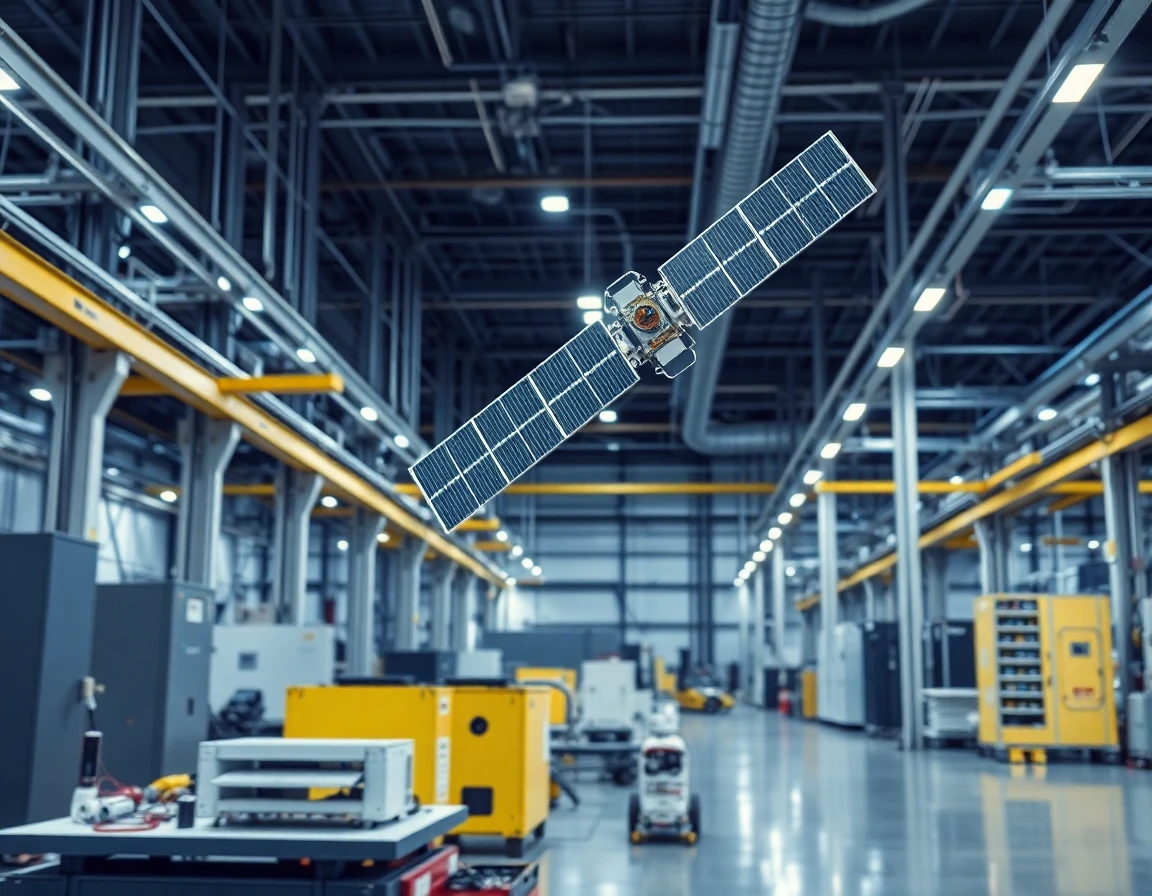
In the modern age, where connectivity is paramount, satellite constellations are emerging as a transformative force. These networks of satellites, orbiting the Earth, are significantly expanding global communications and internet coverage, paving the way for unprecedented access to information and services.
Understanding Satellite Constellations
A satellite constellation refers to a group of satellites working together to provide comprehensive coverage over a specific area. Unlike traditional single-satellite systems, constellations can maintain constant communication links by utilizing multiple satellites in different orbits. This approach enhances bandwidth capacity, reduces latency, and increases reliability, particularly in remote areas where terrestrial infrastructure is lacking.
The Driving Forces Behind Expansion
The rapid expansion of satellite constellations can be attributed to several key factors:
- Technological Advancements: Innovations in satellite miniaturization and propulsion systems have made it feasible to deploy large numbers of small satellites, often referred to as SmallSats or CubeSats.
- Increased Demand: The surge in demand for global internet access, driven by the COVID-19 pandemic, has accelerated the drive for satellite-based solutions, especially in underserved regions.
- Strategic Investments: Companies like SpaceX with its Starlink, Amazon’s Project Kuiper, and OneWeb are investing heavily in deploying satellite constellations, making significant headway in the commercial space sector.
Technical Aspects of Satellite Constellations
Modern satellite constellations utilize advanced technologies to ensure efficient operation and communication. Key components include:
- Precision Accelerometers: These instruments are crucial for maintaining the correct positioning and trajectory of satellites, allowing for precise control and data transmission.
- Thermal Management Systems: Essential for regulating temperatures within satellites to ensure that onboard systems operate efficiently even in the harsh conditions of space.
- Advanced communication technology: The integration of high-capacity lithium niobate optical chips is revolutionizing signal processing and data transmission, enhancing the throughput of satellite communication systems.
The Impact on Global Connectivity
The implications of expanding satellite constellations are far-reaching. By providing consistent global internet coverage, these networks are set to redefine how individuals and businesses access information:
- Bridging the Digital Divide: Satellite constellations are crucial for connecting rural and remote areas that lack traditional broadband infrastructure. This can lead to improved educational, economic, and health outcomes for underserved populations.
- Enabling IoT and Smart Cities: With enhanced connectivity, satellite constellations will facilitate the growth of the Internet of Things (IoT), enabling smart city initiatives and the deployment of connected devices in real-time.
- Disaster Response and Recovery: Satellite communication offers a reliable means of communication in disaster-stricken areas where terrestrial networks may be compromised, ensuring that emergency services can coordinate effectively.
Expert Insights on Future Developments
Industry experts are optimistic about the future of satellite constellations. Dr. Emily Wong, a satellite communications researcher, stated, “The potential of satellite constellations to provide universal internet access is not just a dream; it is becoming a reality. The continued innovation in satellite technology is paving the way for a connected world.”
Moreover, as the number of satellites in orbit increases, so does the need for regulatory frameworks to manage space traffic and mitigate space debris risks. Organizations like the International Telecommunication Union (ITU) are working to establish guidelines for the sustainable use of space.
Conclusion: A New Era of Connectivity
The expansion of satellite constellations is ushering in a new era of connectivity that promises to transform global communications. As technology continues to advance and investments pour into this sector, we can expect to see further enhancements in service quality and accessibility. The integration of sophisticated technologies, such as precision accelerometers and lithium niobate optical chips, will play a crucial role in this evolution.
With the potential to bridge digital divides and enable new technologies, satellite constellations are not just a technical advancement but a critical driver of socio-economic development worldwide. The future of connectivity is indeed written in the stars.
References
-
satellite constellation Research - defensenews.com (defensenews.com)
-
satellite constellation Research - aviationweek.com (aviationweek.com)
-
satellite constellation Research - spacenews.com (spacenews.com)