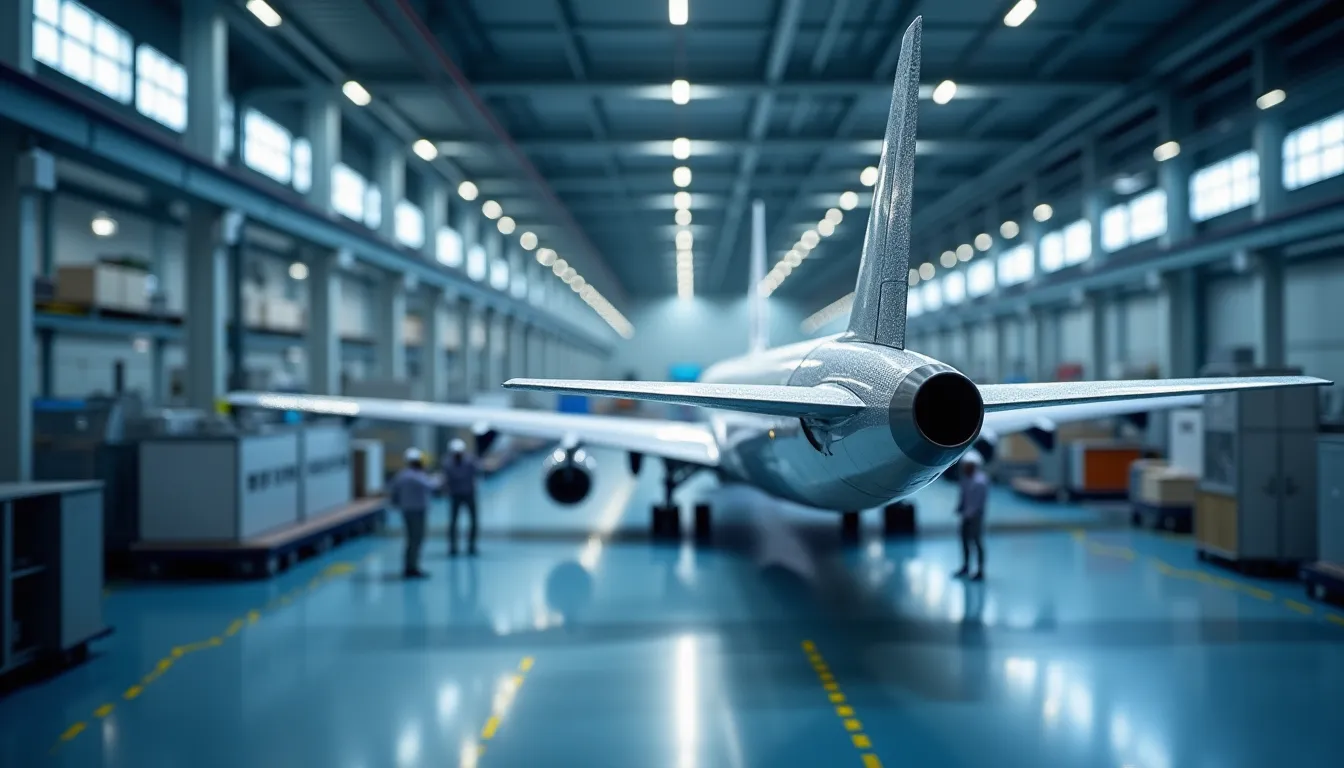
The aerospace industry stands at the forefront of technological advancement, driven significantly by revolutionary materials and innovative manufacturing techniques. As companies strive for increased efficiency, reduced weight, and enhanced performance, the evolution of aerospace materials has become a pivotal focus area.
The Role of Advanced Aerospace Materials
Aerospace materials are crucial in developing aircraft and spacecraft, affecting everything from structural integrity to fuel efficiency. Traditionally dominated by metals like aluminum and titanium, the industry is now pivoting towards composites and advanced alloys. Carbon fiber reinforced polymers (CFRPs) and lightweight titanium alloys are increasingly favored for their superior strength-to-weight ratios.
Benefits of Composite Materials
Composite materials, such as CFRPs, offer significant advantages in terms of durability and weight reduction. These materials are now commonly used in high-performance components, including wings, fuselage, and tail structures. According to Dr. Emily Carter, a materials scientist at AeroTech Innovations, “The shift towards composite materials in aerospace is not just about weight savings; it’s about enhancing the overall performance and longevity of aircraft.”
Moreover, these advanced materials can withstand extreme temperatures and pressures, making them ideal for aerospace applications.
Innovative Manufacturing Techniques
The aerospace sector has also embraced advanced manufacturing techniques, such as additive manufacturing and precision machining, to improve production efficiency and reduce waste. Additive manufacturing allows for complex geometries and lightweight structures that traditional methods cannot achieve. This technique is particularly beneficial for producing intricate parts for engines and airframes.
Additive Manufacturing in Aerospace
Additive manufacturing, or 3D printing, is transforming how aerospace components are designed and produced. By creating parts layer by layer, manufacturers can minimize material waste and produce lighter components tailored to specific performance requirements. For instance, the production of lightweight brackets and supports for aircraft can significantly reduce overall aircraft weight, leading to improved fuel efficiency.
Dr. David Tran, a senior engineer at Skyward Technologies, states, “The ability to print components on-demand not only streamlines the supply chain but also allows for rapid prototyping, which is essential in today’s fast-paced aerospace environment.”
Integrating Advanced Technologies
As aerospace materials evolve, integrating them with advanced technologies becomes essential. For example, the use of precision fiber optic sensing systems in inertial navigation systems has been enhanced by advanced materials, providing improved accuracy and reliability in navigation and control systems. These systems are vital for both civil and military aviation, ensuring that aircraft can operate safely under a variety of conditions.
Thermal Management Systems
In addition to structural components, thermal management systems have also benefited from advancements in aerospace materials. New thermal insulation materials help manage heat in aircraft engines and electronic systems, essential for maintaining performance and safety. As aircraft become more reliant on complex electronic systems, effective thermal management becomes increasingly critical.
Future Developments in Aerospace Materials
Looking ahead, the aerospace industry is poised for further innovations in materials science. Researchers are exploring bio-inspired materials and nanocomposites that could offer even greater performance characteristics. The potential for self-healing materials, which can repair damages automatically, is particularly exciting.
Dr. Sarah Leung, a leading researcher at the National Aerospace Laboratory, notes, “The future of aerospace materials lies in their ability to adapt and respond to environmental changes. Self-healing materials could revolutionize maintenance and safety protocols, reducing downtime and costs.”
Conclusion
The transformation brought about by advanced aerospace materials and manufacturing techniques is reshaping the aerospace industry. By embracing innovations in materials science and manufacturing processes, aerospace companies can achieve greater efficiency, improved performance, and enhanced safety. As the industry continues to evolve, the integration of cutting-edge materials with technologies like precision fiber optic sensing will be crucial in defining the future of aerospace production.
As we move forward, the collaboration between materials scientists, engineers, and manufacturers will be paramount in harnessing the full potential of these revolutionary aerospace materials.
References
-
aerospace materials Research - defensenews.com (defensenews.com)
-
aerospace materials Research - aviationweek.com (aviationweek.com)
-
aerospace materials Research - spacenews.com (spacenews.com)