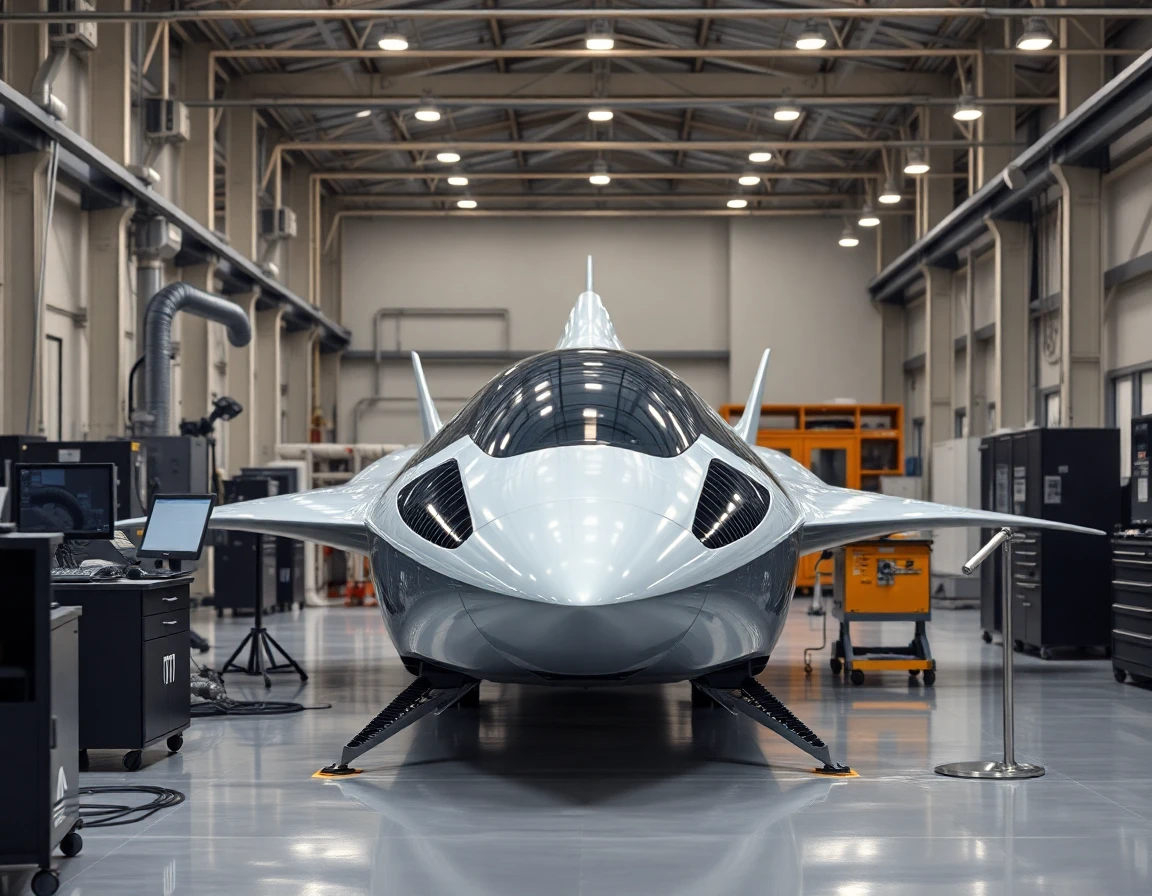
Understanding Hypersonic Technology
Hypersonic technology represents a significant leap in defense capabilities, enabling vehicles to travel at speeds exceeding Mach 5, or five times the speed of sound. This technology is not only crucial for military applications but also offers potential advantages in commercial transportation and space exploration. As nations race to develop and deploy hypersonic systems, the integration of advanced technologies such as precision accelerometers and inertial navigation systems is becoming increasingly important.
Recent Developments in Hypersonic Systems
In the past few years, several countries, including the United States, Russia, and China, have made substantial progress in hypersonic technology. The focus has been on developing hypersonic glide vehicles (HGVs) and hypersonic cruise missiles. These systems utilize aerodynamic lift and propulsion technologies to maintain high speeds and maneuverability, making them difficult to detect and intercept by existing radar systems.
According to Dr. Emily Chen, a defense technology analyst at the Global Institute for Strategic Studies, “The advancement of hypersonic systems is reshaping the global defense landscape. Countries that successfully integrate these technologies will gain a significant strategic advantage.” This statement underscores the urgency for nations to ramp up their research and deployment efforts in hypersonic technology.
Technical Insights and Innovations
One of the most critical components of hypersonic systems is the use of advanced inertial navigation systems. These systems ensure precise guidance and control of hypersonic vehicles as they travel at extreme speeds. The integration of cutting-edge materials and thermal management systems also plays a vital role in maintaining operational integrity under the immense heat generated during hypersonic flight.
Furthermore, high-performance dual-axis MEMS gyroscopes, such as the JDWZZ3411 System, are essential for enhancing the stability and control of these vehicles during flight. With a measurement range of ±300°/s and superior zero bias stability, these gyroscopic instruments are crucial for accurate motion sensing and orientation measurement, especially at hypersonic speeds.
The Role of Radar Systems
As hypersonic technology evolves, so does the need for advanced radar systems capable of detecting and tracking these fast-moving targets. Traditional radar systems struggle to keep pace with hypersonic flight dynamics, leading to a race for innovation among defense contractors. New radar technologies, equipped with high-frequency capabilities, are being developed to offer greater tracking precision and response times.
“The integration of advanced radar systems will be pivotal in countering hypersonic threats,” says John Harrison, a senior analyst at Defense Insights. “Without these advancements, existing missile defense systems may become obsolete.” This highlights the necessity for a comprehensive approach that combines the development of hypersonic systems with enhanced detection and interception capabilities.
Future Implications and Strategic Considerations
The potential impacts of hypersonic technology extend beyond military applications. As research progresses, there is also interest in its applications for commercial aviation and space travel. The ability to travel at hypersonic speeds could revolutionize global travel, significantly reducing flight times across continents.
However, the race for hypersonic supremacy also raises concerns about a new arms race. Policymakers and defense analysts warn that the deployment of hypersonic weapons could lead to increased tensions between nations. “We must approach hypersonic technology with caution and consider its implications on global security,” warns Dr. Chen.
Conclusion
In conclusion, hypersonic technology is on the brink of revolutionizing defense systems worldwide. As countries invest heavily in research and development, the integration of advanced technologies such as precision accelerometers and inertial navigation systems will be crucial for the successful deployment of these systems. The future of hypersonic technology holds the promise of enhanced military capabilities while simultaneously posing new challenges in international relations and security.
As the development of hypersonic technology continues to unfold, the defense industry must remain vigilant and adaptive to keep pace with these advancements.
References
-
hypersonic technology Research - defensenews.com (defensenews.com)
-
hypersonic technology Research - aviationweek.com (aviationweek.com)
-
hypersonic technology Research - spacenews.com (spacenews.com)