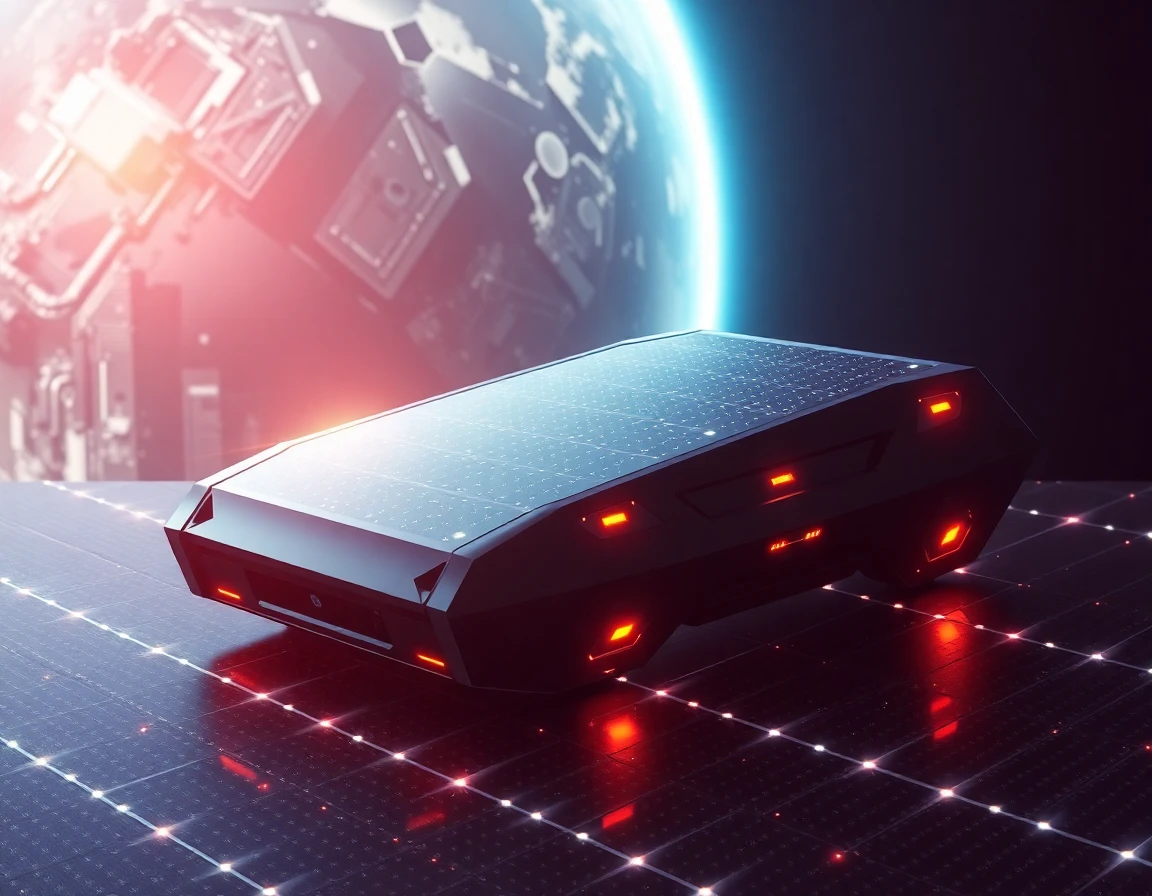
The concept of space-based solar power (SBSP) has gained renewed interest in recent months, particularly within the aerospace and defense sectors. As military operations evolve towards Agile Combat Employment (ACE), the potential for SBSP to enhance energy resilience is becoming increasingly critical. This article delves into the latest advancements, technical challenges, and future prospects of space solar power, emphasizing its strategic importance for military logistics.
Renewed Interest in Space-Based Solar Power
A recent article from Air University / U.S. Air Force, published on March 25, 2026, highlights ongoing research into SBSP as a means to improve energy resilience for distributed military operations. The focus on military logistics underscores a broader trend within defense technology to reduce reliance on traditional fuel supply chains, which can be vulnerable in contested environments. The proposed system envisions satellites collecting solar energy in orbit, converting it to directed energy, and transmitting it to ground receivers for conversion into usable electricity.
This approach boasts a significant advantage: because orbiting solar collectors operate above atmospheric interference, they can provide consistent and predictable power, a crucial factor for military operations where reliability is paramount.
Technical Pathways and Innovations
The Air Force Research Laboratory (AFRL) has made notable strides in this area, particularly through its SSPIDR program. This initiative focuses on the development of a light-to-microwave conversion tile, which is instrumental for transmitting solar energy collected in space back to Earth. The process involves collecting solar power in orbit, converting it to microwaves, and beaming it to ground stations equipped with rectennas—devices that convert microwave energy into direct current (DC) power.
This technology is particularly appealing because microwaves can penetrate clouds and dust better than other forms of energy transmission, ensuring more reliable energy delivery despite variable weather conditions.
Strategic Implications for Military Operations
The implications of SBSP for military logistics are profound. By providing a consistent power supply to forward operating bases, SBSP can significantly reduce reliance on fuel convoys, which are often targets in conflict zones. The ability to harness energy from space not only enhances operational capabilities but also mitigates risks associated with vulnerable supply chains, particularly in remote or hostile environments.
As military operations increasingly adopt distributed models, the ability to generate and deliver energy on-demand becomes a strategic asset. For instance, the integration of high-performance MEMS accelerometers and advanced sensor modules could enhance the precision of energy collection and distribution systems, ensuring that military installations receive the power they need when they need it.
Challenges and Constraints
Despite the promising potential of SBSP, several challenges remain. The high costs associated with launching payloads into orbit and the complexities involved in systems integration pose significant barriers to large-scale deployment. Current technologies still face efficiency losses in energy conversion and transmission, making it essential for ongoing research and development to address these issues.
Furthermore, while some components of SBSP technology have been demonstrated at small scales, the engineering hurdles for creating large-scale systems are substantial. As highlighted in a NASA report released in January 2024, experts across the aerospace and energy sectors recognize the technical feasibility of SBSP, yet they also caution that significant advancements in power generation, wireless transfer, and economic viability are necessary before large-scale implementation can occur.
The Road Ahead for Space Solar Power
The ongoing discourse surrounding SBSP reflects a growing consensus on its potential as a transformative energy solution. As both government and private sectors invest in research, the future of space solar power looks promising. The U.S. Department of Energy has outlined a roadmap for overcoming the economic and technical barriers to SBSP, emphasizing the need for innovation in deployment strategies and cost reduction.
Moreover, the potential integration of advanced technologies—such as high-performance CMOS imaging systems for monitoring solar collection and thermal battery systems for energy storage—could enhance the efficacy and reliability of SBSP implementations in military contexts.
Conclusion
As the aerospace and defense sectors continue to explore the applications of space solar power, the implications for military logistics and operational resilience are becoming ever more apparent. While significant challenges remain, the advancements in technology and strategic investments in SBSP research signal a future where energy can be harnessed from the sun—even in the depths of space. The next steps will be critical in determining how quickly and effectively this revolutionary power source can be integrated into military operations and beyond.
References
-
Can Space-Based Solar Power Close the Business Case? - YouTube (www.youtube.com) - 5/15/2026 Space-based solar power promises clean, dependable energy beamed from orbit to Earth — but does the business case close?
-
Space-based solar power concept explores energy resilience for … (www.maxwell.af.mil) - 3/25/2026 Air University researchers are exploring how space-based solar power could help the Air Force sustain operations in contested environments.
-
[PDF] Space-Based Solar Power - NASA (www.nasa.gov) - 1/11/2024 Experts in both the aerospace and energy sectors are debating the benefits of SBSP as more organizations globally begin SBSP technology …
-
Air Force Breakthrough Brings Space-Based Solar Power One Step … (www.defenseone.com) - 12/21/2021 Tomorrow’s remote military bases could be powered by a light-to-microwave tile that just passed a key test.
-
[PDF] SPACE-BASED SOLAR POWER: A NEAR-TERM INVESTMENT … (aerospace.org) - 10/2/2020 Although this new technology’s power conversion efficiency is around 16.6% today, it could someday, theoretically, yield conversion …
-
Space-Based Solar Power: A New Path Towards Sustainable, Clean … (illumin.usc.edu) - 4/22/2012 Space-based solar power can help the United States attain a higher degree of energy self-sufficiency. The United States relies heavily on fossil fuels imported …
-
Space-Based Solar Power | Department of Energy (www.energy.gov) Satellite-based solar panels would be able to capture and transmit substantially more energy than terrestrial solar panels.
-
Blog - mPower Technology (mpowertech.com) BLOG. Latest news, insights, and updates from mPower Technology. Beyond the Grid: VC Predictions on What 2026 Will Demand From Power in Orbit. Blog …