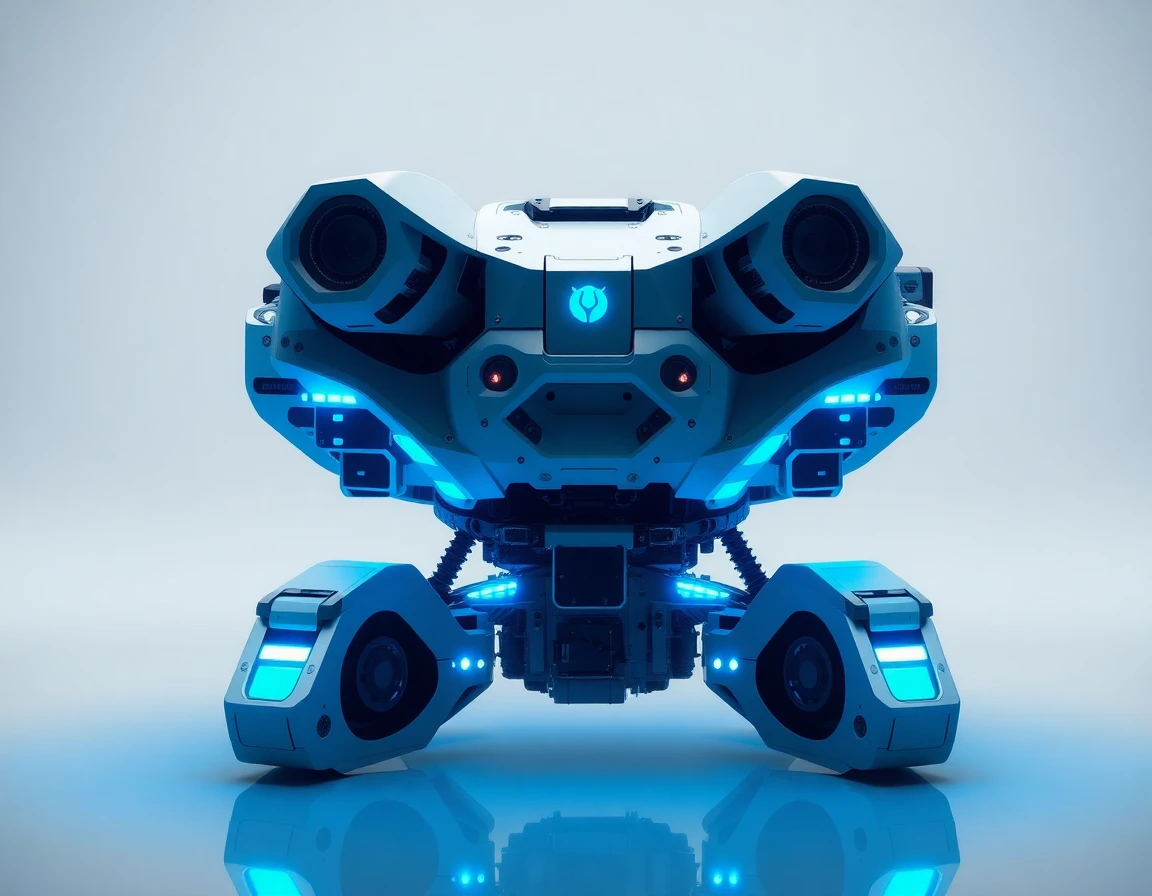
The landscape of autonomous defense systems is rapidly evolving, driven by advancements in artificial intelligence (AI), collaborative combat technologies, and counter-unmanned aerial systems (C-UAS). Recent developments highlight the U.S. military’s commitment to integrating trustworthy AI into its operations, enhancing both combat effectiveness and operational reliability. In this article, we explore key advancements in autonomous systems, showcasing how defense contractors are competing to lead in this vital sector.
U.S. Army’s Focus on AI Safeguards
On January 12, 2026, the U.S. Army took a significant step toward enhancing the safety and reliability of autonomous systems by awarding a $6.3 million contract to Advanced Technology International. This contract, aimed at developing the Generative Unwanted Activity Recognition and Defense (GUARD) prototype, seeks to address concerns regarding unpredictable AI behaviors in military applications. The GUARD software is designed to create comprehensive AI risk profiles, ensuring that autonomous systems can operate within defined behavior parameters. The implications of this initiative could pave the way for follow-on contracts, emphasizing the Army’s prioritization of trust in AI-driven operations.
The Air Force’s Collaborative Combat Aircraft Program
The U.S. Air Force is currently evaluating Northrop Grumman’s Talon (YFQ-48A) drone as a part of its Collaborative Combat Aircraft (CCA) program. This state-of-the-art drone has been meticulously designed for various roles, including strike, reconnaissance, jamming, and decoy operations. Remarkably, the Talon was developed, built, and made flight-ready in under two years, utilizing the advanced Beacon testbed technology. The semi-autonomous capabilities of the Talon have garnered praise from Air Force officials, who view it as a crucial asset for power projection in contested environments.
As competition intensifies, Northrop Grumman, Anduril, and General Atomics are leading the charge in the CCA space, with a focus on affordability and continuous innovation. The Air Force’s ongoing assessments of these platforms are expected to result in second-increment contracts in 2026.
Navy’s AI-Enabled Autonomy Demonstrations
On the same day as the Army’s GUARD contract announcement, the Naval Air Systems Command showcased its commitment to integrating AI-enabled autonomy into future combat aircraft. The demonstration, held at Patuxent River, Maryland, highlighted advancements in collaborative unmanned systems, demonstrating the Navy’s strategic direction in enhancing operational capabilities through automation.
Advancements in Counter-UAS Technologies
The fiscal year 2026 National Defense Authorization Act (NDAA) places strong emphasis on counter-unmanned aerial systems (C-UAS). The Joint Interagency Task Force 401 has been established to streamline the integration of AI sensors, kinetic interceptors, and electromagnetic warfare capabilities across military branches. This initiative aims to bolster defenses against increasingly sophisticated drone threats, while also linking developments in hypersonic missile defense, exemplified by the Army’s Long Range Hypersonic Weapon (LRHW).
International Collaborations and Exhibitions
Recent global events, such as the UMEX 2026 exhibition in Abu Dhabi, showcased an array of cutting-edge technologies, including AI combat drones, robotic ground vehicles, and advanced counter-drone systems. Notably, the EDGE Group unveiled a mobile laser system—the LD 3535mm gun—designed for precision engagement of hostile drones. Such exhibitions serve as crucial platforms for nations to demonstrate their technological prowess and foster international partnerships.
In a move to enhance collaborative efforts, General Atomics Aeronautical Systems (GA-ASI) signed a memorandum of understanding with Qatar’s Barzan Holdings on January 19, 2026, focusing on advanced battle management software. This partnership aims to improve autonomy, situational awareness, and intelligence capabilities, illustrating the global shift towards integrated military solutions.
Industry Initiatives and Workforce Development
The push for U.S. leadership in autonomous systems took center stage at a recent event in Tulsa, Oklahoma, on January 22, 2026. Local leaders emphasized the need for federal funding and workforce development to ensure the U.S. remains competitive against global adversaries, particularly China. Companies like Applied Intuition Defense are leading the charge by providing software infrastructure for next-generation autonomous warfare, underscoring the private sector’s role in this technological evolution.
Conclusion
The advancements in autonomous defense systems are reshaping military operations worldwide, underscoring the critical need for AI reliability and integration. As the U.S. military continues to prioritize AI trustworthiness and innovate in collaborative combat systems, the defense sector is witnessing a transformative era. The ongoing competition among defense contractors, coupled with international collaborations, ensures that the future of warfare will be defined by enhanced autonomy and advanced technology. As these developments unfold, the implications for global security and military readiness will be profound.
References
-
Tulsa makes its push to be global leader in autonomous systems (tulsaflyer.org) - 1/23/2026 Lt. Gov. Matt Pinnell speaks at a Jan. 22, 2026, event co-hosted by AUVSI and Tulsa Innovation Labs in Greenwood.
-
First Look AI Combat Drones and Robotic Systems Revealed at … (www.youtube.com) - 1/21/2026 Step inside UMEX 2026, the leading international exhibition for unmanned systems and autonomous technologies, held in Abu Dhabi, UAE.
-
GA-ASI and Barzan Holdings Sign MOU - General Atomics (www.ga.com) - 1/20/2026 GA-ASI and Barzan Holdings Sign MOU. DOHA, QATAR – 19 January 2026 – General Atomics Aeronautical Systems, Inc. (GA-ASI) –– the world leader in …
-
Army moves to assess AI’s ‘unpredictable behaviors’ and safeguard … (defensescoop.com) - 1/12/2026 Army moves to assess AI’s ‘unpredictable behaviors’ and safeguard autonomous systems. The new deal is for the Generative Unwanted Activity …
-
What Are the Top Defense Technology Priorities for 2026? A … - IDGA (www.idga.org) - 1/8/2026 As of January 2026, Norrthrop Gruman, Anduril and General Atomics are the frontrunners to win the autonomous wingman program for the Air Force.
-
US Air Force eyes autonomous Northrop Grumman drone for CCA … (www.defensenews.com) - 1/2/2026 Northrop Grumman significantly revamped its original CCA pitch to the Air Force, resulting in the Talon drone.
-
Navy demonstrates AI-enabled autonomy for future collaborative … (www.navair.navy.mil) Navy demonstrates AI-enabled autonomy for future collaborative combat aircraft. Published: Jan 12, 2026. Naval Air Systems Command, Patuxent River, Md.
-
Applied Intuition Defense: Software-driven defense autonomy (www.appliedintuitiondefense.com) - 12/11/2025 Applied Intuition Defense accelerates the deployment of next-generation autonomous warfare capabilities with software infrastructure.