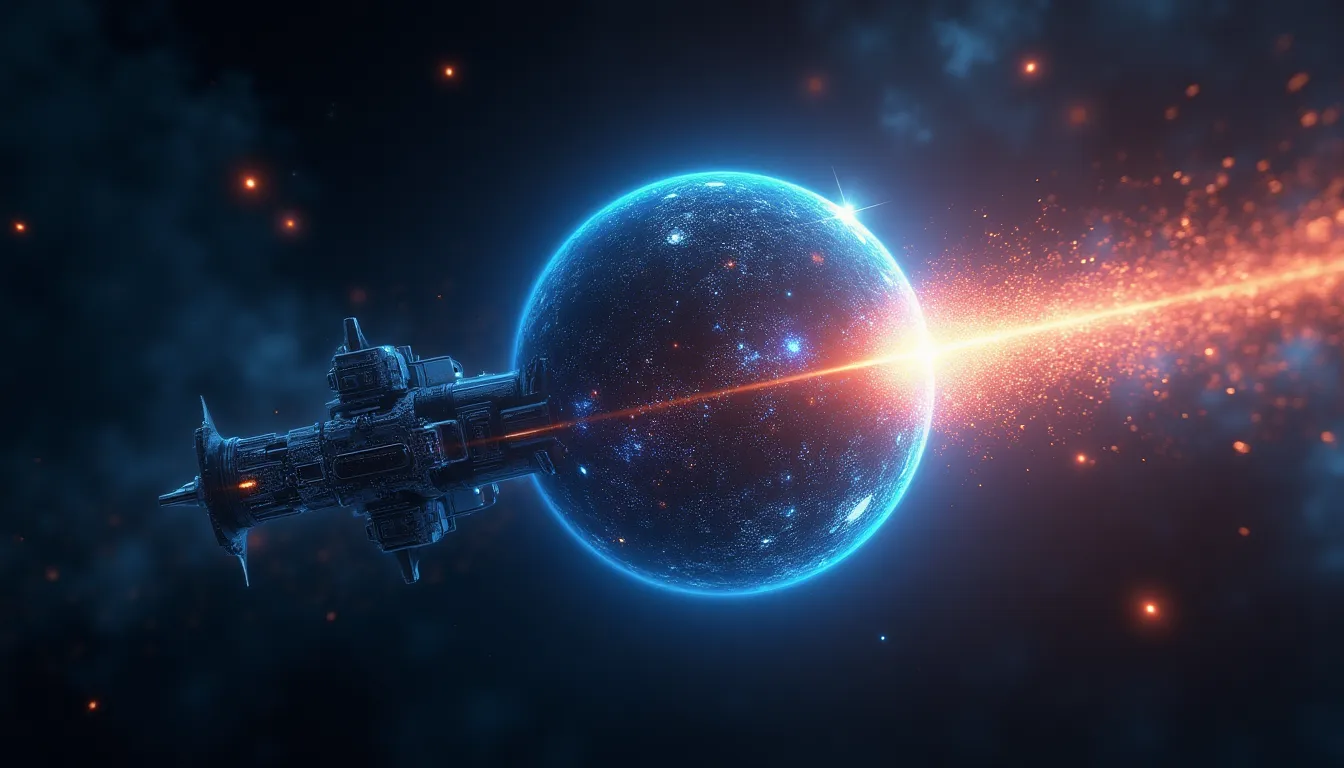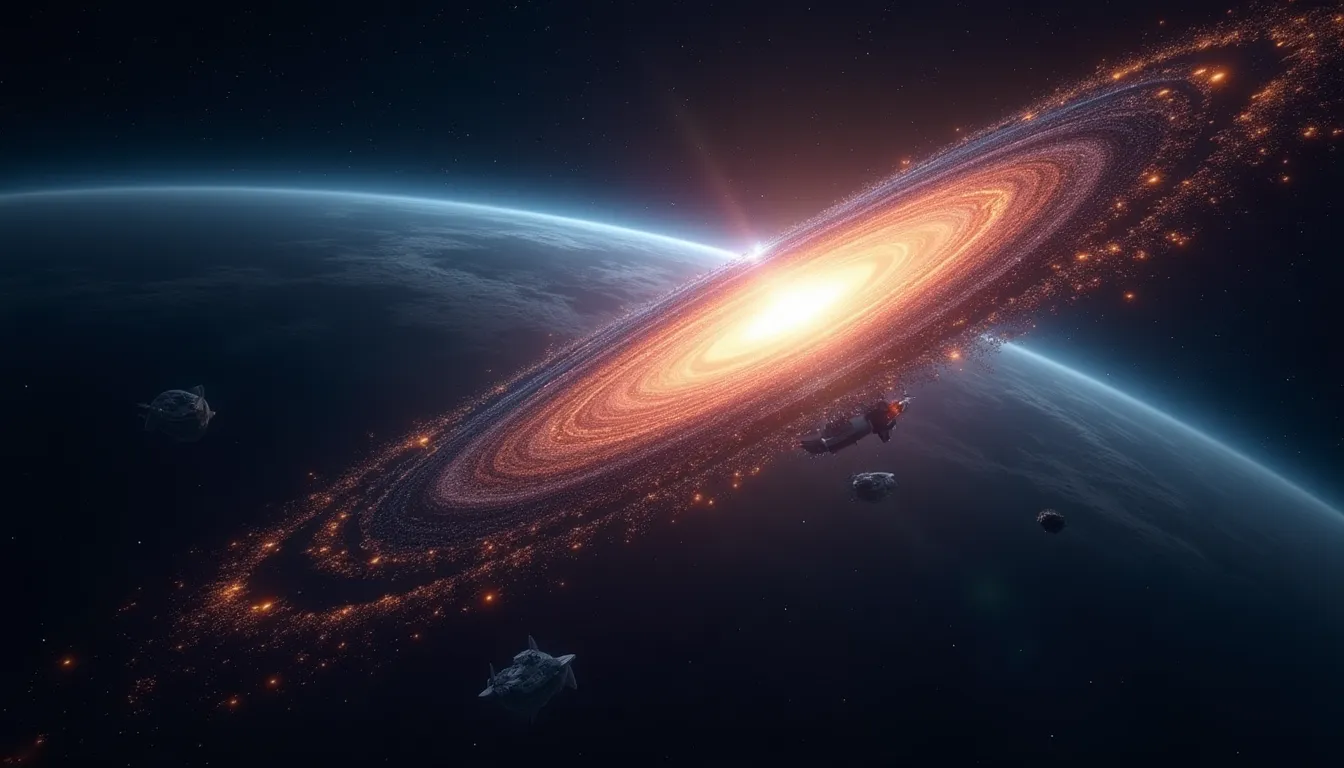
As the demand for sustainable energy sources intensifies, space solar power (SSP) emerges as a promising frontier in the aerospace and defense industries. Recent advancements, particularly from prestigious institutions like Caltech and tech giants such as Google, have reignited interest in harnessing solar energy from space. This article delves into the latest research, commercial initiatives, and the technical hurdles that lie ahead for SSP.
Recent Research and Demonstrations
The California Institute of Technology (Caltech) has made significant strides in SSP with its Microwave Array for Power-transfer Low-orbit Experiment (MAPLE). In 2023, Caltech successfully demonstrated wireless power transmission from space to Earth, albeit on a small scale. This landmark experiment validated critical SSP concepts under actual conditions, paving the way for future applications. According to Dr. Paul D. Smith, the lead researcher, “The success of MAPLE marks a pivotal moment for space solar power, illustrating its feasibility and potential.”
Caltech is also gearing up for a groundbreaking mission to launch experimental solar cells aboard a SpaceX rocket to the International Space Station (ISS) in 2026 or later. The aim is to achieve a levelized cost of energy (LCOE) from space solar power as low as $0.03 per kWh, making it competitive with terrestrial solar energy. This ambitious target is a key focus for researchers aiming to make SSP a viable option for global energy needs.
Commercial Initiatives: Project Suncatcher
In the realm of commercial applications, Google has unveiled Project Suncatcher, which aims to build solar-powered data centers in low Earth orbit (LEO). These innovative data centers will leverage solar panels positioned in sun-synchronous orbits to generate nearly continuous power, dramatically reducing energy and cooling demands for AI computing.
Google plans to deploy prototype satellites equipped with custom Tensor Processing Units (TPUs) by early 2027. The anticipated reduction in launch costs—projected to fall below $200 per kilogram—is expected to make the economics of space data centers competitive by the mid-2030s. This initiative demonstrates how private enterprises are keenly exploring the potential of SSP to enhance computing capabilities while promoting sustainability.
The Starcloud Initiative
Meanwhile, U.S. startup Starcloud is set to launch a satellite infused with NVIDIA’s H100 GPU in November 2025, aiming to increase orbital computing capacity by a staggering 100 times. In collaboration with SpaceX, Starcloud plans to deploy advanced satellites designed to improve data transmission capabilities by 2026, thereby contributing to the burgeoning infrastructure of space-based data centers.
Technical and Operational Challenges
Despite the promising advancements, several engineering challenges remain that could impede the widespread adoption of SSP. Key issues include:
- Efficient Heat Management: Space data centers face unique thermal challenges that differ significantly from terrestrial cooling methods. Solutions such as advanced radiator systems and innovative water recycling techniques are under exploration.
- Radiation Resilience: Hardware must be designed to withstand the harsh radiation environment of space, requiring robust materials and shielding strategies to ensure long-term operational capability.
- High-Bandwidth Optical Communication: Establishing reliable high-bandwidth links between satellites is essential for real-time data transfer and operational efficiency.
Advanced Technologies at Play
To overcome these challenges, advanced technologies are being integrated into SSP systems. For instance, high-performance MEMS accelerometers are crucial for precision navigation and stability in satellite operations. Additionally, systems like the ZQXXSGDSS high-performance single-tube PIN quadrant detectors are vital for laser beam positioning and tracking, enhancing communication between satellites.
Upcoming Events and Broader Context
The increasing momentum behind SSP is underscored by the upcoming International Conference on Energy from Space, scheduled for November 19-21, 2025, in Côte d’Azur, France. This conference will serve as a platform for global collaboration and discussions on SSP technologies, reflecting the growing interest in the field.
Moreover, space weather events pose operational risks for satellites engaged in SSP, as highlighted by the recent R3 geomagnetic storm on November 4, 2025. Such events emphasize the critical need for robust space weather preparedness strategies within satellite operations.
Conclusion
Space solar power stands at the intersection of innovation and sustainability, with the potential to revolutionize how we harness energy. As institutions like Caltech and companies like Google push the envelope of what’s possible, the future of SSP appears increasingly bright. However, addressing the technical challenges and ensuring operational resilience will be essential to fully realize the promise of this transformative technology. With ongoing research and development, the dream of abundant, clean energy from space may soon become a reality, paving the way for a more sustainable future.
References
-
Google’s Bold Climate Actions: AI in the Amazon and Solar Power in … (carboncredits.com) - 11/8/2025 Google’s Bold Climate Actions: AI in the Amazon and Solar Power in Space! November 10, 2025 … They include restoring forests on Earth and …
-
Events for November 2025 - SpacePolicyOnline.com (spacepolicyonline.com) - 11/8/2025 Space Energy Insights and the Space Frontier Foundation will hold the International Conference on Energy from Space 2025 from November 19-21 …
-
Why Google and tech leaders bet on solar-powered space data … (reccessary.com) - 11/6/2025 In November, U.S. startup Starcloud plans to launch a satellite carrying NVIDIA’s H100 GPU, boosting its computing capacity by a factor of 100.
-
R3 Event Occurred on 4 November, 2025 (www.swpc.noaa.gov) - 11/5/2025 An R3 Event occurred today, 4 Nov at approximately 12:34 EST from Region 4274. The last time we hit an R3 level was June 19th of this year.
-
Google wants to build solar-powered data centers — in space (www.semafor.com) - 11/4/2025 The tech giant released a paper Tuesday outlining plans to launch its AI chips into low-earth orbit, allowing them to run off solar power.
-
Researchers envision a ‘bright harvest’ from space-based solar power (pv-magazine-usa.com) - 10/22/2025 05 November 2025 Illinois is set to issue procurements for 3 GW of battery storage, under a bill expected to be signed by Governor JB Pritzker.
-
ESA - Flying through the biggest solar storm ever recorded (www.esa.int) - 10/15/2025 On the ground, beautiful auroras were visible as far south as Sicily while the storm collapsed the electric grid and provoke damaging surges of …
-
A Glimpse at the Future of Space-Based Solar Power (www.nrucfc.coop) - 8/11/2025 Space-based solar power is being explored by scientists as a solution to deliver energy from orbital solar arrays back down to Earth.
-
The Future of Energy: Space Solar - Dubai Future Foundation (www.dubaifuture.ae) Space-based solar power (SBSP) is the concept of capturing solar energy in space and transmitting it wirelessly back to Earth using high- …