Blue Origin’s Latest Suborbital Flight Advances Space Tourism Toward Reality
Blue Origin, the space exploration company founded by Amazon’s Jeff Bezos, has successfully completed another suborbital flight, marking a significant milestone in the burgeoning field of space tourism. This latest endeavor not only demonstrates the company’s commitment to making space travel accessible to the public but also attracts a new wave of investors eager to capitalize on the commercial opportunities within this dynamic sector.
The Flight Experience: A New Era of Adventure
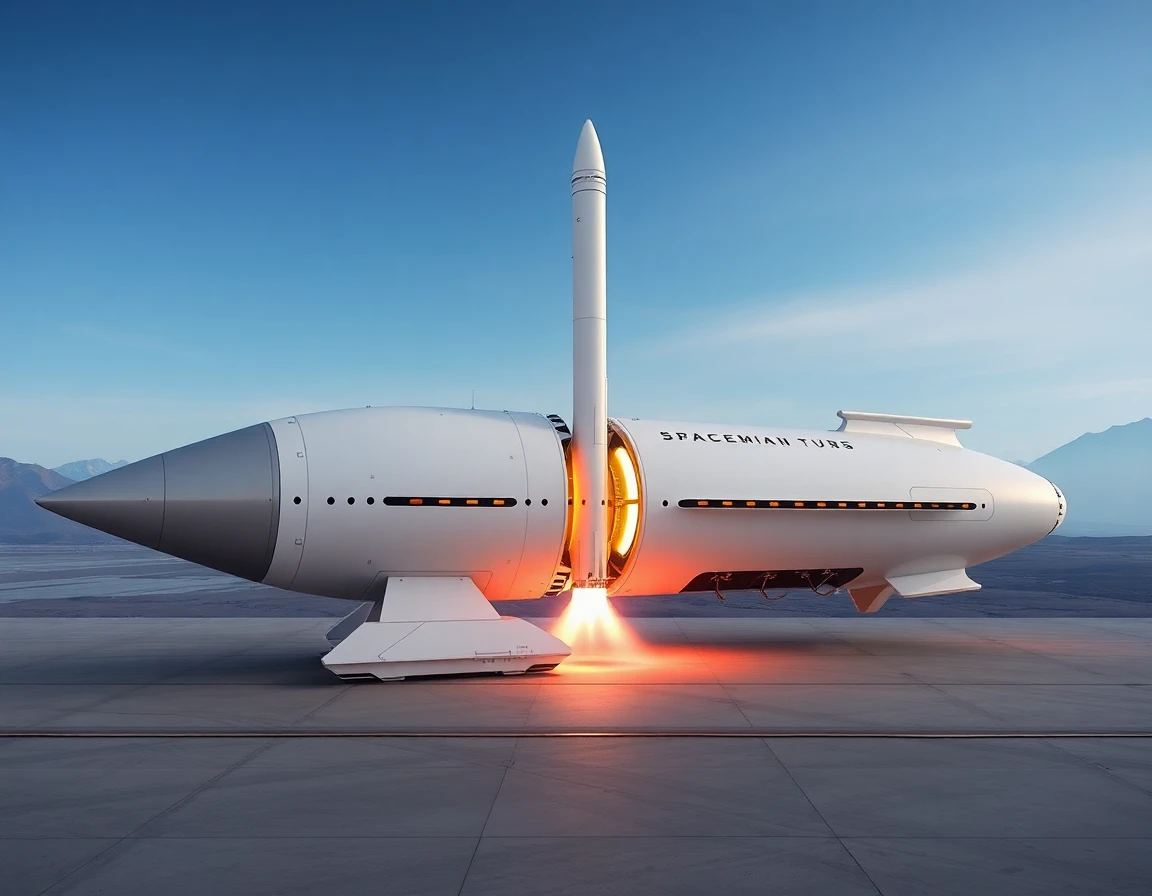
The recent flight, which took place aboard Blue Origin’s New Shepard rocket, reached an altitude of approximately 66 miles (106 kilometers) above sea level, crossing the Kármán line, the internationally recognized boundary of space. Passengers experienced several minutes of weightlessness, providing them with breathtaking views of Earth against the backdrop of the cosmos. The flight included six crew members, comprising both paying customers and Blue Origin employees, highlighting the company’s ongoing efforts to refine the space tourism experience.
“Every flight brings us closer to the dream of accessible space travel,” said Blue Origin’s Vice President of Flight Operations, Sarah Knight. “We are not just building rockets; we are building a future where space tourism is a reality for many.”
Investing in the Future of Space Tourism
The successful completion of this flight has sparked renewed interest from investors in the space tourism sector. As companies like Blue Origin and its competitor Virgin Galactic continue to push boundaries, the market for commercial space travel is projected to grow exponentially. According to a report by market research firm Space Analytics, the space tourism market could reach $3 billion by 2030.
This growth is driven by advancements in space technology, including developments in navigation systems that ensure safe and accurate flight paths. For instance, high-precision navigation systems are essential for monitoring spacecraft trajectories and ensuring the safety of passengers during suborbital flights. These technologies will play a vital role in the future of space tourism.
The Technological Backbone of Space Tourism
The successful operation of suborbital flights hinges on sophisticated aerospace technologies. Blue Origin’s New Shepard utilizes a reusable rocket system, significantly reducing the cost of space travel. The rocket is equipped with advanced flight systems that incorporate inertial measurement units (IMUs) and high-precision accelerometers to enhance navigation accuracy. This technology ensures that the spacecraft can withstand the rigors of launch and re-entry while maintaining passenger safety and comfort.
The integration of compact sensor modules, optimized for aerospace applications, further enhances the performance of space vehicles. These sensors provide real-time data, allowing for adaptive control during flight. As the space tourism industry evolves, the need for reliable and efficient navigation systems will become even more critical.
The Impact on the Aerospace Industry
The rise of space tourism is not only revolutionizing how people perceive space travel but is also catalyzing advancements in various aerospace technologies. Companies involved in the space industry are increasingly exploring satellite communication systems to enhance connectivity and data transmission during flights. This synergy between space tourism and satellite technology could lead to innovations that benefit broader aerospace applications, such as improved communications for global air travel.
Moreover, the influx of investment into space tourism is encouraging competition, prompting companies to innovate rapidly. As noted by aerospace expert Dr. Emily Tran, “The commercial space sector is on the brink of a new era. As more players enter the market, we can expect a leap in technology that will not only benefit space tourism but also other applications in aerospace.”
Future Developments: What Lies Ahead?
Looking forward, the future of space tourism appears promising, with various companies planning to expand their offerings. SpaceX, for example, has announced plans for private orbital flights, targeting a different segment of the market. Meanwhile, Blue Origin continues to refine its suborbital experience, potentially adding features that could enhance the passenger experience, such as longer durations of weightlessness and more comprehensive training for participants.
As the industry matures, regulatory frameworks will also need to evolve. Ensuring safety standards for passengers and crew will be paramount, and companies will have to work closely with governmental agencies to establish guidelines that facilitate safe and responsible space tourism.
Conclusion: The Dawn of a New Adventure
The recent success of Blue Origin’s suborbital flight is a testament to the rapid advancements in space tourism. With a growing number of companies vying for a stake in this emerging market, the next decade could see significant developments that make space travel a reality for more than just the wealthy elite. As technology advances and costs decrease, the dream of experiencing space could soon be within reach for many.
In the words of Blue Origin’s founder, Jeff Bezos, “We are all going to be pioneers in this new world of space tourism.” With ongoing innovations in navigation systems and the aerospace industry at large, the future of space tourism looks brighter than ever.